






If your heated bed is “a little warped,” the temptation is to throw more mesh bed leveling at it and hope. Sometimes that works. Sometimes you’re compensating for the wrong problem (a warped removable sheet, a bad Z-offset, or mounting tension), and you’ll chase your tail for weeks.
This guide is for PLA/PETG hobbyists using a PEI spring steel sheet. It’s intentionally practical: a short diagnostic flow, the safest fixes first, and clear “replace it” thresholds.
Pro tip: Do your checks at printing temperature. A bed that looks fine cold can change shape once it’s heat-soaked.
How to fix a warped 3D printer bed: a quick decision tree
Use this order. It’s the fastest way to avoid “fixing” the wrong thing.
- Confirm the removable sheet is seated flat (and not warped).
- Tram/level the bed hot, then run mesh bed leveling.
- Set Z-offset last.
- If the surface is still inconsistent: shim, use glass as a diagnostic, or replace the part that’s actually bent.
- If temperature readings are erratic: treat it as a sensor/wiring problem, not flatness.
Step 0: rule out the most common “false warp”
Before you blame the aluminum bed, make sure the removable PEI spring steel sheet is actually sitting flat.
What to do
- Let the bed cool.
- Remove the PEI spring steel sheet.
- Wipe the magnetic base clean (dust, filament bits, or a single chip can create a hump).
- Re-seat the sheet carefully from one edge to the other (don’t just slap it down).
Done when…
- The sheet “snaps” down evenly across the whole magnet.
- You can’t rock it by pressing on corners.
If the sheet itself is warped
If you can see a wave when the sheet is off the printer, treat it as “PEI spring steel sheet warped” and stop trying to tune around it.
A good rule from people who sell and maintain these surfaces: don’t over-flex the sheet during part removal. The more you bend it like a taco, the more likely it is to stop laying flat. See 3docity’s guide to caring for a PEI spring steel plate (updated 2025).
Step 1: confirm whether it’s warp, tramming, or Z-offset
You’re trying to separate four different issues that all look like “my bed is warped”:
- The sheet is warped (fix: replace sheet).
- The bed isn’t trammed (fix: mechanical leveling / tramming).
- Z-offset is wrong (fix: adjust Z-offset).
- The bed has real shape error (fix: mesh leveling, shims, or replacement).
If your first layer sticks in some spots but not others, that’s a classic sign the surface/mesh isn’t consistent.
Bed leveling vs Z offset (the mix-up that wastes the most time)
Sovol’s EU bed-adhesion guide has a clean definition: bed leveling (tramming) is about consistent nozzle-to-bed distance, while Z-offset is the absolute nozzle height (Sovol EU, 2026). If you keep changing both, you can’t tell what actually helped.
Step 2: measure flatness (quickly) with a straightedge
If you want to stop guessing, measure.
What you need
- A metal straightedge/ruler
- A thin feeler gauge set (paper works as a backup)
What to do
- Heat-soak the bed at your usual temperature (PLA often 55–65°C; PETG often 70–85°C).
- Place the straightedge across the surface in three directions: front-to-back, left-to-right, and diagonally.
- Use a feeler gauge to check the biggest gap you can slide under the straightedge.
Done when…
- You have a rough “peak-to-valley” number at printing temperature.
Small, smooth dips/bumps are often compensable with mesh bed leveling. Big, irregular deviations usually aren’t worth your time.
Step 3: run the hot workflow (tram → mesh → Z-offset)
This order gives you signal instead of noise.
3.1 Tram/level the bed hot
What to do
- Heat the bed (and ideally the nozzle) to printing temperature.
- Tram the bed using your printer’s normal method.
- If you want a baseline procedure, follow Sovol EU’s first-layer checklist (2025) that uses paper/feeler gauge across corners and center.
Done when…
- Your nozzle-to-bed “drag” feels consistent at the points you tram.
3.2 Run mesh bed leveling
What to do
- Run your mesh probing with the bed already heated.
- Save the mesh and make sure your printer actually loads it before printing.
Done when…
- A full-bed first-layer test looks more uniform than before.
3.3 Set Z-offset last (in small steps)
Sovol recommends adjusting Z-offset in very small increments (0.02–0.05 mm) and confirming with a simple first-layer test until your lines are consistent.
Done when…
- Your first layer is boring: even line width and predictable “squish” everywhere.
Step 4: fix a truly uneven heated bed (without doing anything sketchy)
If you’ve confirmed it’s not the sheet and you’ve already trammed/meshed/Z-offset, you have three practical options.
Option A: shim low spots (if your bed design allows it)
Shimming is boring, but it works for “slightly off” beds. The goal isn’t perfection. It’s reducing the error so mesh compensation doesn’t have to work as hard.
Done when…
- Your mesh variance drops meaningfully and first layers become consistent across the full plate.
Option B: use a glass plate as a flat reference (with trade-offs)
A glass plate can help if your underlying surface is shaped and you want a flatter reference surface.
Trade-offs:
- It adds mass and can slow heat-up.
- It can change adhesion behavior compared to PEI.
- It won’t fix a crooked gantry or inconsistent Z-offset; it just makes those problems easier to see.
Treat glass as a diagnostic first: if first layers suddenly become consistent, your issue was mostly surface flatness.
Option C: replace the part that’s actually bent
Replace the sheet if:
- It doesn’t lie flat even after careful re-seating.
- You can see a persistent wave/bow when it’s off the printer.
Replace or service the bed system if:
- You can’t get a consistent first layer even after shimming.
- The surface changes drastically between cold and hot.
- You have heating faults (next section).
Step 5: don’t ignore heatbed sensor/wiring red flags
A bed can look “uneven” because it’s heating unpredictably, not because it’s physically warped.
Sovol’s heatbed troubleshooting article emphasizes basic safety: unplug before touching wiring or connectors, and don’t keep printing if you find burnt or melted connectors (Sovol: “Troubleshoot common heatbed issues” (2025)).
If your temperature readings are erratic, Prusa suggests a simple sanity check: use a hairdryer to warm the underside of the bed and watch whether the displayed temperature changes smoothly (Prusa: “Heatbed not heating up properly”). If the reading doesn’t respond, the thermistor or its wiring may be the real issue.
⚠️ Warning: If you suspect a wiring/connector problem, don’t “just try another print.” Heatbed faults can be a safety issue.
Step 6: prevention checklist (so it doesn’t come back)
You don’t prevent bed warp with magic settings. You prevent it by reducing stress and keeping your surface consistent.
- Heat-soak before you probe: run leveling/meshing at the same temp you print.
- Stop over-flexing the sheet: flex just enough to pop parts, not enough to bend the sheet into a taco.
- Clean the right way: IPA wipes are fine between prints, but skin oils build up. A periodic wash with dish soap and warm water is a better reset. For example, Bambu Lab’s PEI cleaning instructions recommend washing a PEI plate with warm water and detergent.
- PETG note: PETG can stick aggressively to some surfaces. If you’re tearing up PEI, use a release layer (like glue stick) and avoid ripping parts off hot.
A neutral Sovol mention (optional)
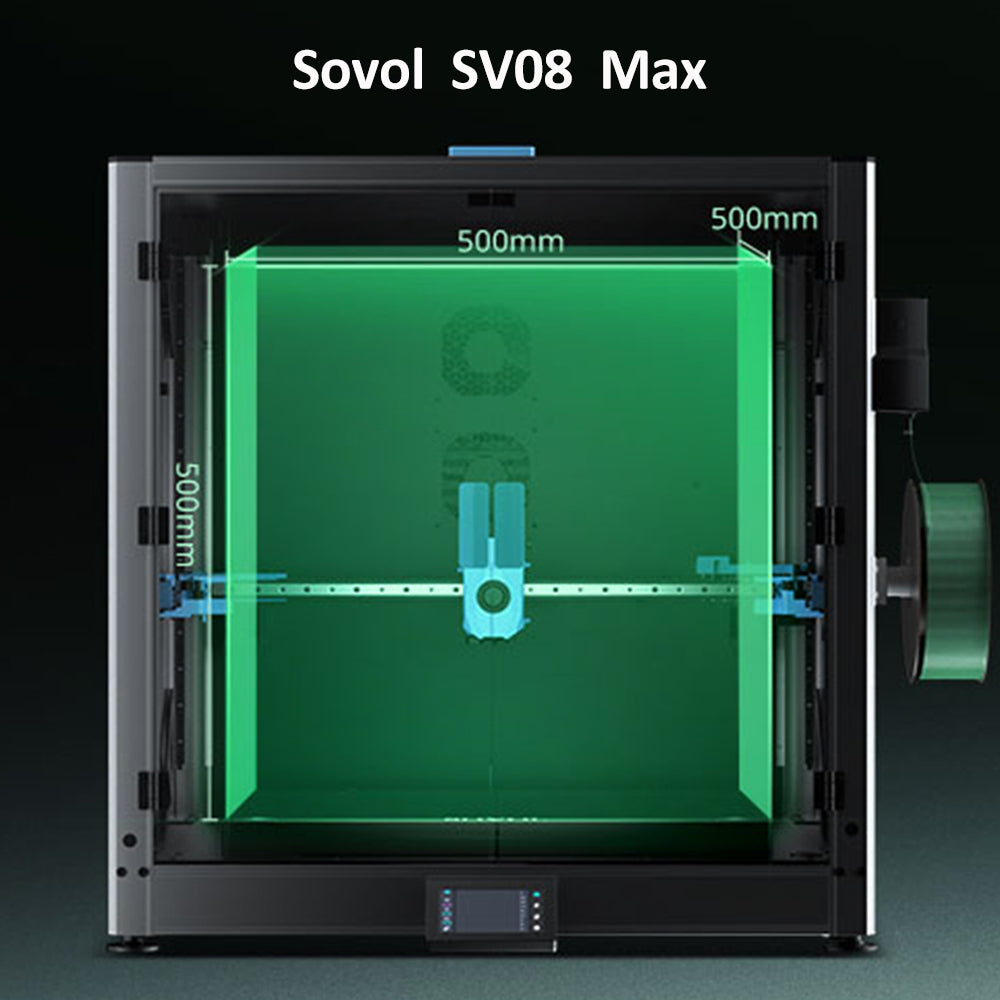
If you want a reference point for a modern CoreXY printer, here’s the Sovol SV08. Regardless of brand, the workflow above is what saves time: confirm the sheet, measure hot, then tram → mesh → Z-offset.
FAQ
How much warp is “too much”?
If mesh compensation can’t get you a consistent first layer without making some areas over-squished while others barely stick, it’s too much for comfort. For hobby printing, you’re aiming for “consistent first layer,” not metrology-grade flatness.
Should I keep using mesh bed leveling if my bed is warped?
Yes, for small deviations. Mesh is a compensation tool, not a substitute for a badly seated sheet, loose hardware, or an electrical heating problem.
Is it usually the bed or the sheet?
More often than people want to admit: the sheet (not seated flat, debris under it, or over-flexed). That’s why the guide starts there.
Will a glass plate fix everything?
It can give you a flatter surface, but it won’t fix a crooked gantry, inconsistent Z-offset, or a heater/sensor issue.
Next step (deeper first-layer tuning): If you want a complete first-layer diagnostic framework, Sovol EU’s bed adhesion troubleshooting guide (2026) is a solid companion once your surface is reasonably flat.
