
Filament Dryer
3 prodotti

Sull'asciugatrice di filamenti
PLA: 50°C (122°F)
ABS: 65°C (149°F)
PEGT: 65°C (149°F)
Nylon: 75°C (167°F)
Essiccanti: 65°C (149°F)
PVA: 45°C (113°F)
TPU/TPE: 55°C (131°F)
ASA: 65°C (149°F)
PP: 55°C (131°F)
FIANCHI: 65°C (149°F)
PC: 75°C (167°F)
PEEK: 120°C (248°F)
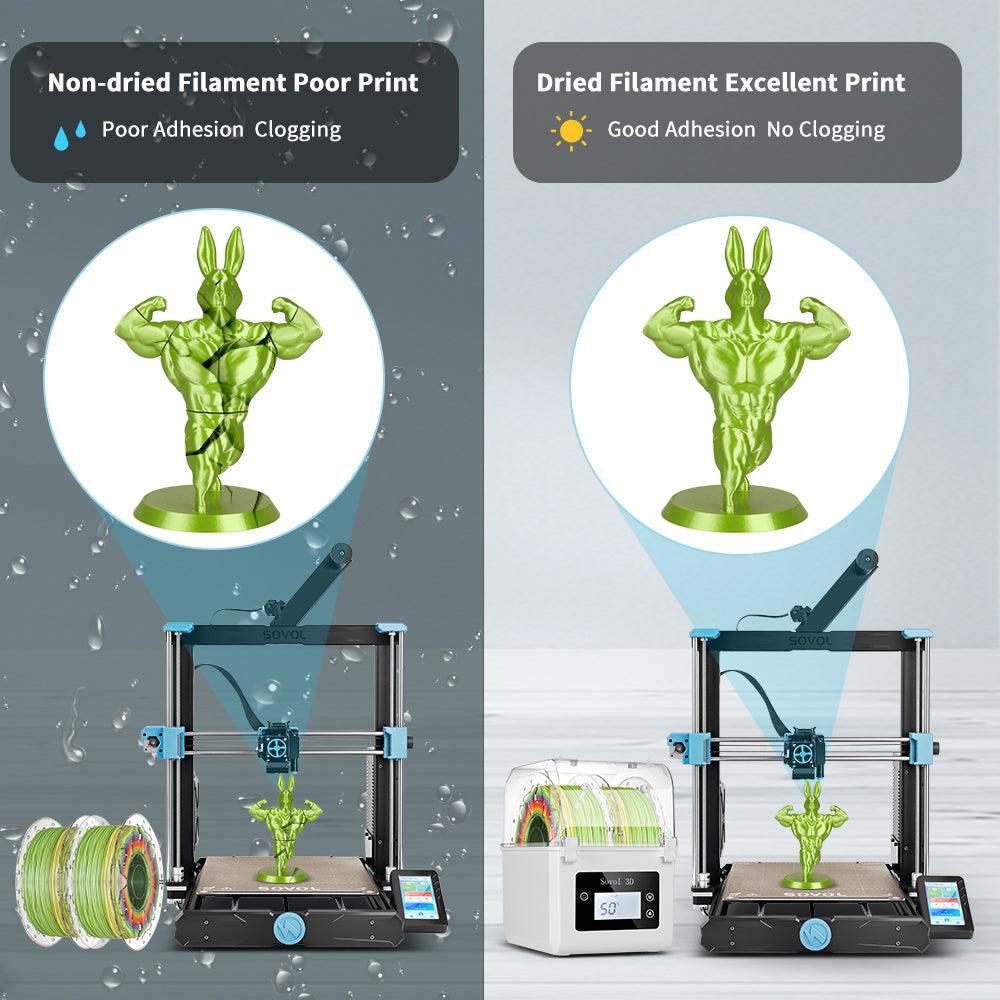
Prendendo ad esempio il PLA, una conservazione impropria o l'esposizione a un'umidità elevata (oltre il 70%) può causare evidenti problemi di adesione. L'umidità presente nel filamento bolle e si trasforma in vapore durante l'estrusione, causando la formazione di bolle nella stampa. Si potrebbero udire scoppiettii e crepitii, oppure vedere vapore, che non solo compromettono la qualità di stampa, ma possono anche danneggiare l'estrusore. Questo problema è ancora più evidente con i filamenti igroscopici. In genere, un singolo processo di stampa può durare da poche ore a diverse decine di ore. Pertanto, quando si stampa in ambienti umidi come i garage, un essiccatore per filamenti diventa ancora più importante.
Una volta estratto il filamento da un sacchetto sigillato, con il tempo l'umidità inizia a penetrare. Se il filamento viene conservato in un luogo umido o esposto all'aria, è necessario asciugarlo. Il filamento bagnato può compromettere la qualità di stampa (fallimento della stampa). D'altra parte, il filamento asciutto migliora notevolmente la percentuale di successo, garantendo stampe di qualità superiore con superfici lisce, delicate, pulite e ordinate, prive di filamenti visibili.
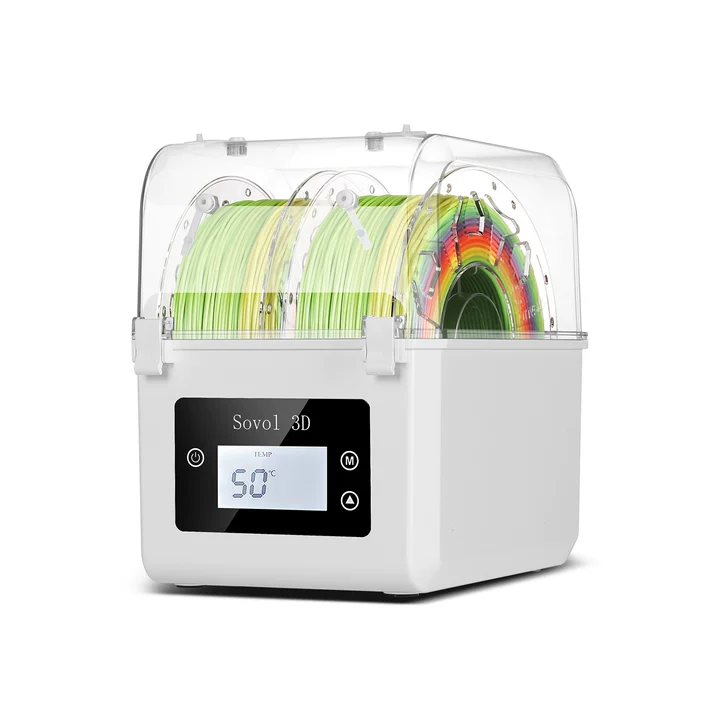
Fortunatamente, esiste una macchina in grado di rimuovere l'umidità dal filamento: l'essiccatore di filamento. Non solo conserva il filamento, ma può anche asciugarlo quando necessario.
Once filament is removed from a sealed bag, it gradually begins absorbing moisture from the environment. In humid conditions, even properly stored filament may eventually require drying before printing.
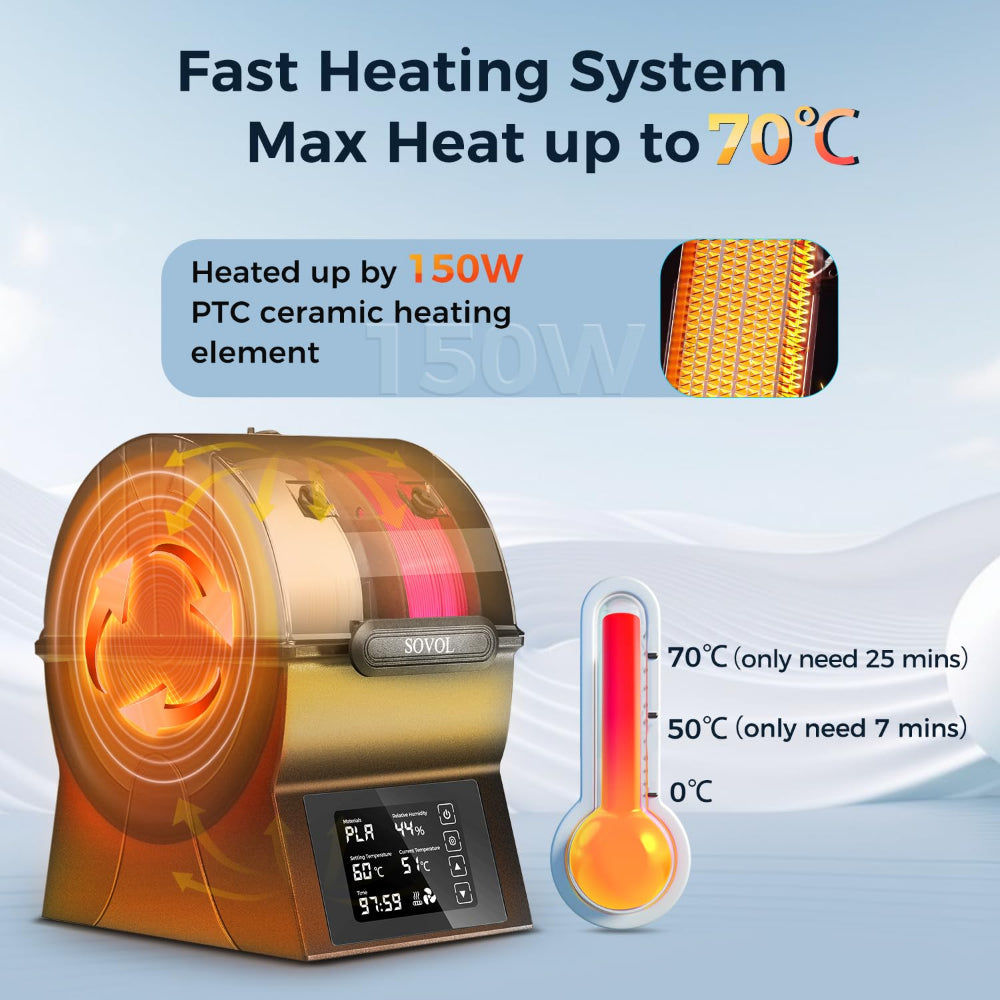
A filament dryer uses controlled heat and airflow to remove moisture from the filament. Unlike simple storage boxes with desiccants, a dryer actively restores filament condition by reducing absorbed moisture before or during printing.
Dry filament helps improve:
- Print success rate
- Surface quality
- Dimensional accuracy
- Layer bonding
- Overall printing consistency
Different materials require different drying temperatures. A suitable filament dryer should provide accurate temperature control and enough heating capability for the materials you commonly print.
Sovol offers multiple filament drying solutions designed for different printing needs:
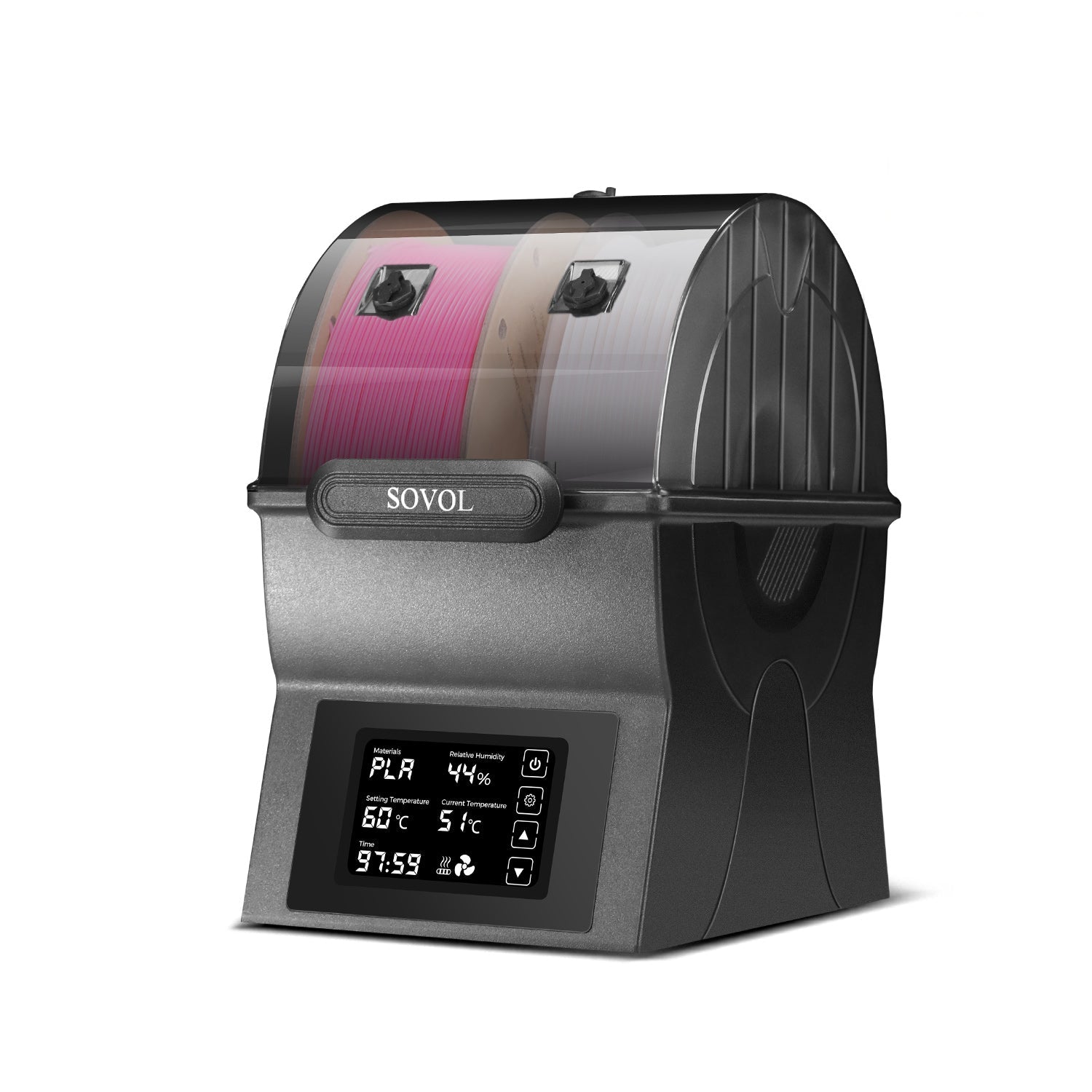
- SH01 Filament Dryer – A compact and affordable option for everyday materials such as PLA, PETG, TPU, and more.
- SH02 Filament Dryer – Provides a wider temperature range for users working with more material types.
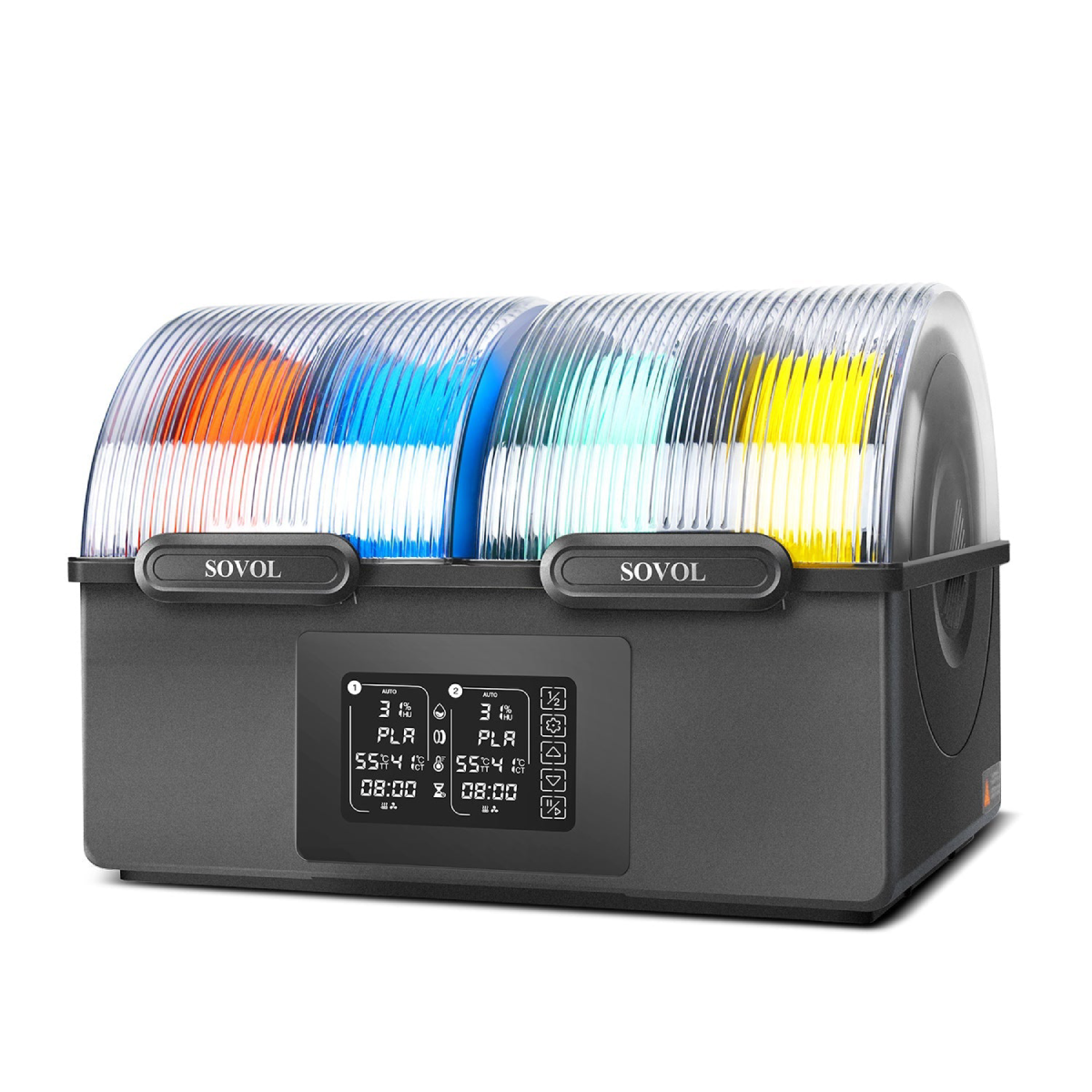
- SH03 Filament Dryer – A high-capacity solution with dual chambers, higher heating power, and advanced temperature control for demanding materials.
Whether you print PLA for everyday projects or moisture-sensitive materials like Nylon and TPU, proper filament storage and drying can help you achieve more reliable and higher-quality prints.