
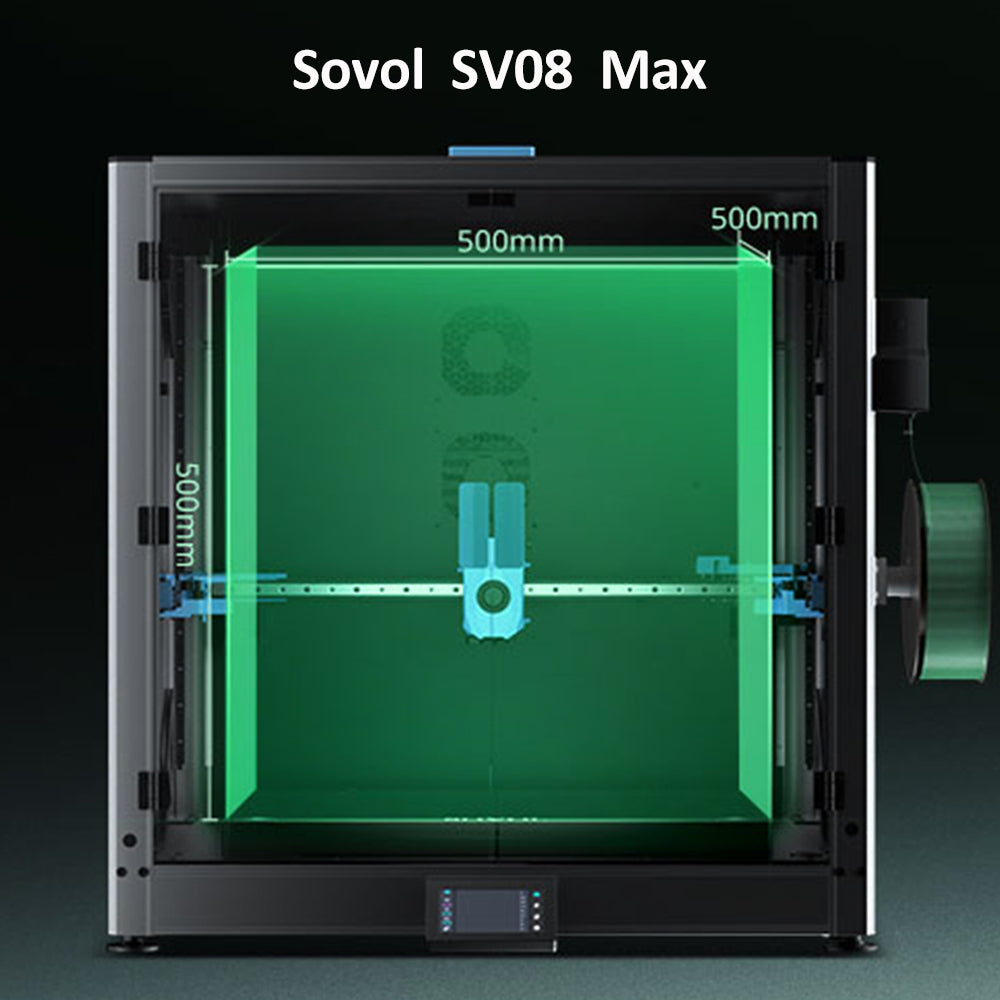
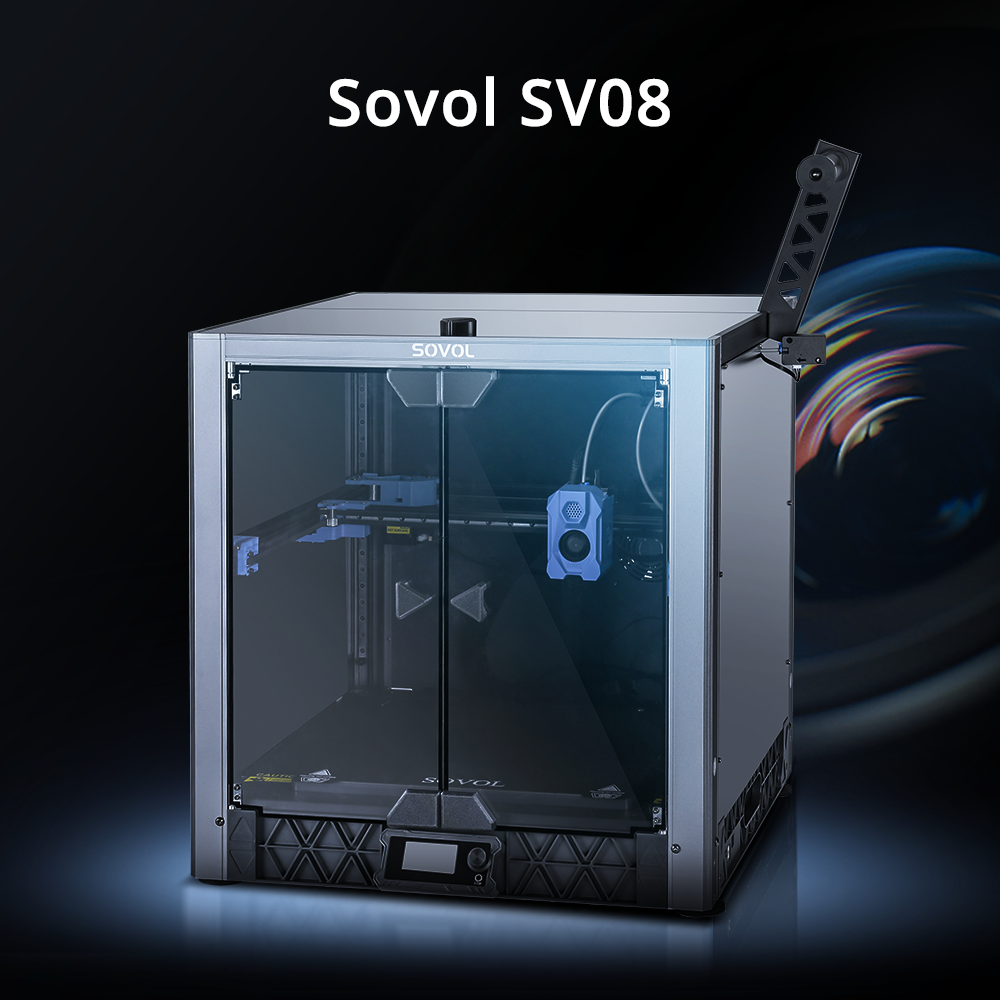

Der Sovol SV08 Max wirkt auf den ersten Blick wie ein Traum für ambitionierte Einsteiger: riesiges Bauvolumen, CoreXY-System, hohe Geschwindigkeit, Klipper-Steuerung und ein 500 × 500 × 500 mm³ Druckraum. Die eigentliche Frage ist aber nicht: „Ist er stark genug?“
Die bessere Frage lautet: Ist der Sovol SV08 Max für Anfänger sinnvoll – oder ist er eher ein Upgrade für Nutzer, die schon erste 3D-Druck-Erfahrung haben?
Die kurze Antwort: Für absolute Anfänger ist ein Großformatdrucker anspruchsvoller als ein kleiner Einstiegsdrucker. Für Einsteiger mit etwas Lernbereitschaft oder Nutzer, die von einem kleineren Drucker aufsteigen, kann der SV08 Max aber sehr attraktiv sein – besonders wenn große Bauteile, Prototypen oder Batch-Drucke geplant sind.
Für wen ist der Sovol SV08 Max geeignet?
Der SV08 Max passt am besten zu Nutzern, die mehr wollen als kleine Deko-Modelle. Sein großes Bauvolumen lohnt sich vor allem dann, wenn du wirklich Teile drucken möchtest, die auf normalen Desktop-Druckern nicht oder nur geteilt funktionieren.
Er ist besonders interessant für:
- Maker, die große Projekte, Cosplay-Teile oder funktionale Bauteile drucken möchten
- Einsteiger mit technischem Interesse, die bereit sind, Kalibrierung und Slicer-Grundlagen zu lernen
- Nutzer, die bereits einen kleineren 3D-Drucker hatten und mehr Bauvolumen suchen
- Werkstätten, Schulen und kleine Teams, die Prototypen in Originalgröße drucken möchten
- alle, die mehrere Teile oder Varianten in einem Druckjob produzieren wollen
Wenn du dagegen nur gelegentlich kleine PLA-Figuren drucken willst, ist ein 500-mm-Drucker wahrscheinlich größer, teurer und komplexer als nötig.
Schnellentscheidung: Ist der SV08 Max für dich sinnvoll?
Situation |
Empfehlung |
|---|---|
Du willst große Prototypen, Gehäuse oder Cosplay-Teile drucken |
Ja, der SV08 Max passt sehr gut |
Du hast schon einen kleinen Drucker genutzt und willst upgraden |
Ja, besonders wegen Bauvolumen und CoreXY |
Du bist kompletter Anfänger, aber technisch neugierig |
Ja, wenn du dir Zeit für Setup und Lernkurve nimmst |
Du willst nur kleine, einfache PLA-Modelle drucken |
Eher überdimensioniert |
Du möchtest gar nicht kalibrieren oder Profile verstehen |
Nicht ideal |
Warum der SV08 Max für Einsteiger trotzdem spannend ist
1. Das 500-mm-Bauvolumen löst echte Projektgrenzen
Viele Anfänger merken erst nach einigen Monaten, dass ihr erster Drucker nicht an der Qualität scheitert, sondern an der Größe. Ein 220- oder 250-mm-Druckbett reicht für Figuren, Halterungen und kleine Ersatzteile. Für große Gehäuse, Helme, Architekturmodelle, Vorrichtungen oder Prototypen wird es schnell eng.
Mit 500 × 500 × 500 mm³ kannst du viele Projekte in einem Stück drucken oder mehrere Teile gleichzeitig auf dem Druckbett platzieren. Das spart Kleben, Schleifen, Ausrichten und Nacharbeit.
2. CoreXY ist für große Drucker sinnvoll
Bei großen Druckern zählt nicht nur die Größe des Druckbetts. Auch das Bewegungssystem muss große Wege sauber und stabil fahren können. Der SV08 Max nutzt eine CoreXY-Kinematik, bei der die bewegte Masse geringer bleibt als bei vielen klassischen Bettschubser-Systemen.
Für die Praxis bedeutet das: Wenn der Drucker sauber aufgebaut und kalibriert ist, kann CoreXY bei großen Bauteilen und höheren Geschwindigkeiten helfen, Wände und Kanten kontrollierter zu drucken.
3. Automatische Kalibrierung nimmt Arbeit ab – ersetzt sie aber nicht komplett
Der SV08 Max bietet laut Produktdaten ein kontaktloses Eddy-Current-Leveling. Das ist bei einem großen Druckbett besonders hilfreich, weil kleine Höhenunterschiede über 500 mm Fläche schnell sichtbar werden.
Trotzdem gilt: Automatisches Leveling ersetzt nicht alle Grundlagen. Auch beim SV08 Max solltest du Z-Offset, Fluss, Temperaturen und Slicer-Profile verstehen. Der Vorteil ist, dass der Drucker dir einen Teil der wiederkehrenden Arbeit abnimmt.
4. Monitoring und Sicherheitsfunktionen helfen bei langen Drucken
Große Drucke dauern länger. Dadurch werden Funktionen wie Filament-Erkennung, Stromausfall-Wiederaufnahme und Kameraüberwachung wichtiger. Sie machen den Druck nicht magisch fehlerfrei, aber sie reduzieren das Risiko, dass ein langer Job unbemerkt scheitert.
Wo Anfänger mit einem großen 3D-Drucker Probleme bekommen können
1. Große Drucke verzeihen weniger Fehler
Ein kleines Testteil kann auch mit mittelmäßiger Kalibrierung noch gut aussehen. Bei einem großen Bauteil summieren sich kleine Probleme: schlechte Haftung, feuchtes Filament, falsche Temperatur, zu hohe Geschwindigkeit oder ein instabiler Untergrund.
Das heißt nicht, dass Anfänger keinen großen Drucker nutzen können. Es heißt nur: Du solltest strukturiert starten und nicht direkt mit einem 30-Stunden-Druck beginnen.
2. Geschwindigkeit ist nicht der erste Qualitätshebel
Der SV08 Max ist auf hohe Geschwindigkeit ausgelegt. Für Anfänger ist aber wichtig: Schneller Druck ist nicht automatisch besserer Druck. Am Anfang solltest du zuerst stabile Ergebnisse erzielen und erst danach die Geschwindigkeit erhöhen.
Eine gute Reihenfolge ist:
- PLA verwenden
- erste Schicht sauber einstellen
- Fluss und Temperatur kalibrieren
- kleine Testmodelle drucken
- mittlere Bauteile drucken
- erst danach große Langzeitdrucke starten
3. Große technische Materialien brauchen mehr Kontrolle
PLA und PETG sind für den Einstieg einfacher. Wenn du ABS, ASA, Nylon oder andere technische Materialien drucken willst, spielen Einhausung, Temperaturstabilität und Belüftung eine deutlich größere Rolle. Bei 500-mm-Bauteilen ist Warping kein Randthema.
SV08 Max vs. kleiner Einsteiger-3D-Drucker
Kriterium |
Kleiner Einsteiger-Drucker |
Sovol SV08 Max |
|---|---|---|
Bauvolumen |
Meist 220–300 mm |
500 × 500 × 500 mm³ |
Lernkurve |
Einfacher, weniger Risiko |
Mehr Möglichkeiten, aber mehr Verantwortung |
Projektgröße |
Kleine Modelle und Ersatzteile |
Große Prototypen, Cosplay, Vorrichtungen, Batch-Drucke |
Platzbedarf |
Relativ gering |
Deutlich größer, stabiler Standort nötig |
Upgrade-Potenzial |
Schnell begrenzt durch Bauvolumen |
Sehr viel Spielraum für größere Projekte |
Wann ist der SV08 Max für Anfänger sein Geld wert?
Der SV08 Max lohnt sich besonders, wenn du nicht nur „mal ausprobieren“ möchtest, sondern konkrete größere Projekte im Kopf hast. Ein großer Drucker ist dann sinnvoll, wenn er dir echte Arbeit spart oder Projekte ermöglicht, die sonst gar nicht funktionieren.
Gute Gründe für den SV08 Max:
- du willst große Teile ohne Aufteilen drucken
- du möchtest mehrere kleinere Teile gleichzeitig produzieren
- du brauchst Prototypen in Originalgröße
- du willst von Anfang an mehr Bauvolumen als ein Standarddrucker bietet
- du bist bereit, dich mit Slicer, Materialien und Kalibrierung zu beschäftigen
Weniger gute Gründe:
- du willst nur den schnellsten Drucker, ohne Einstellungen zu lernen
- du hast keinen Platz für eine große Maschine
- du möchtest ausschließlich kleine Deko-Modelle drucken
- du erwartest, dass ein teurerer Drucker jede Kalibrierung überflüssig macht
Sovol SV08 Max: Großformat für ambitionierte Einsteiger
Wenn du einen 3D-Drucker suchst, der nicht nach den ersten Projekten zu klein wird, ist der Sovol SV08 Max eine starke Wahl. Er bietet 500 × 500 × 500 mm³ Bauvolumen, CoreXY-Kinematik, Klipper-Steuerung und Funktionen, die lange Druckjobs besser kontrollierbar machen.
- ideal für große Prototypen, Cosplay-Teile und Vorrichtungen
- 500-mm-Klasse für mehr Projektfreiheit
- CoreXY-System für große und schnelle Druckbewegungen
- aktive Produktverfügbarkeit im EU-Shop
Erste Woche mit dem SV08 Max: So startest du sauber
Wenn du als Anfänger oder Umsteiger mit dem SV08 Max startest, solltest du nicht sofort das größte Projekt drucken. Eine ruhige erste Woche spart später viel Frust.
- Tag 1: Aufbau prüfen, festen Standort wählen, Filamentführung sauber einrichten
- Tag 2: PLA verwenden und erste Schicht testen
- Tag 3: Z-Offset, Temperatur und Fluss kalibrieren
- Tag 4: kleine Testmodelle und einfache Funktionsteile drucken
- Tag 5: mittlere Teile mit längerer Druckzeit testen
- Tag 6: Batch-Druck mit mehreren Teilen ausprobieren
- Tag 7: erstes größeres Projekt starten, aber mit konservativen Einstellungen
Dieser Ablauf klingt langsamer, bringt dich aber schneller zu stabilen Ergebnissen. Besonders bei großen Druckern ist Geduld am Anfang fast immer günstiger als ein gescheiterter Langzeitdruck.
Fazit: Anfängergerät oder Upgrade?
Der Sovol SV08 Max ist kein klassischer Mini-Einstiegsdrucker. Dafür ist er zu groß, zu leistungsfähig und zu projektorientiert. Er ist eher ein Großformatdrucker für ambitionierte Anfänger, Umsteiger und Maker, die von Anfang an mehr Bauvolumen und mehr Reserven wollen.
Wenn du nur kleine Modelle drucken willst, ist er wahrscheinlich überdimensioniert. Wenn du aber große Prototypen, Cosplay-Teile, Vorrichtungen oder mehrere Teile gleichzeitig drucken möchtest, kann der Sovol SV08 Max sehr sinnvoll sein – vorausgesetzt, du nimmst dir Zeit für Setup, Kalibrierung und saubere Profile.
Die ehrlichste Empfehlung lautet: Für absolute Gelegenheitsnutzer eher zu groß. Für lernbereite Einsteiger und Upgrader mit großen Projekten sehr spannend.
