
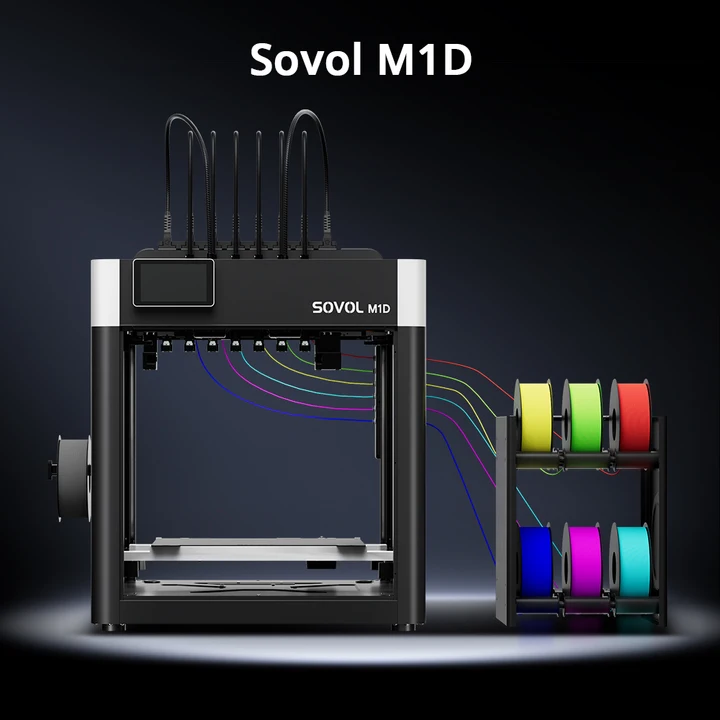
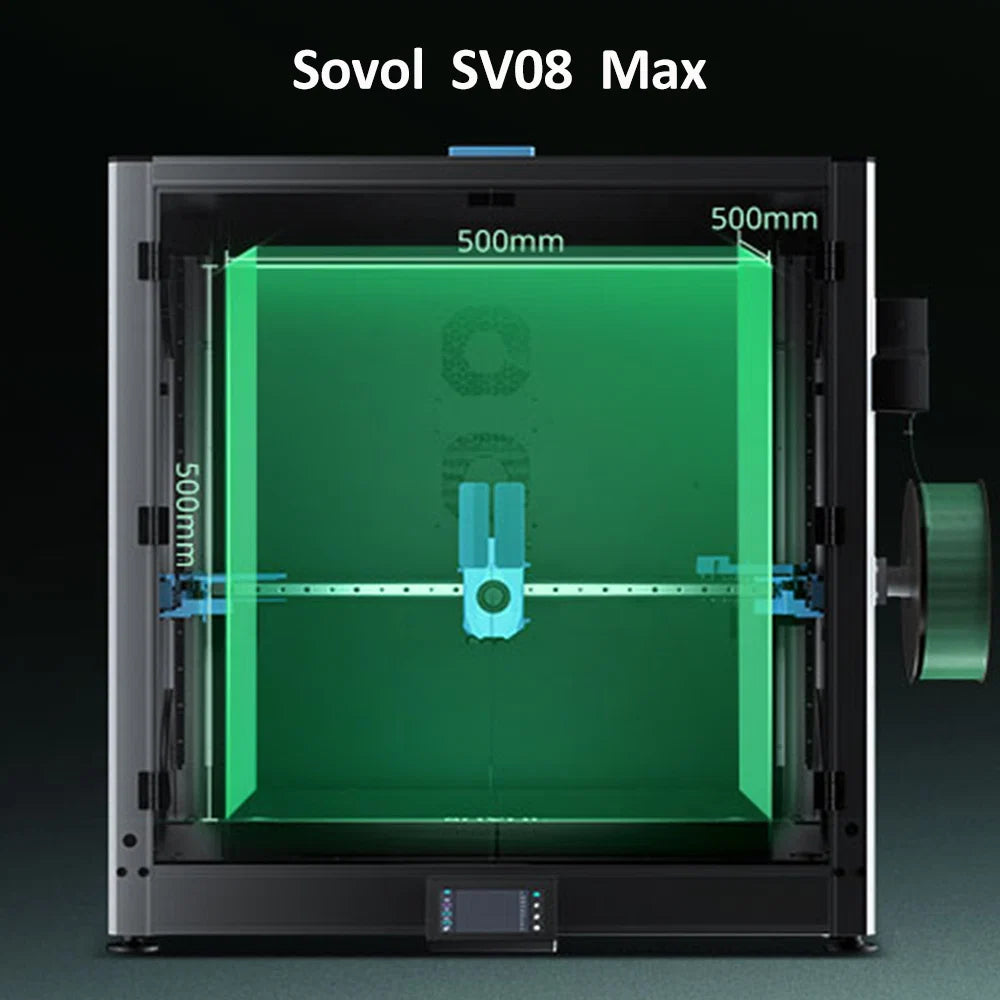






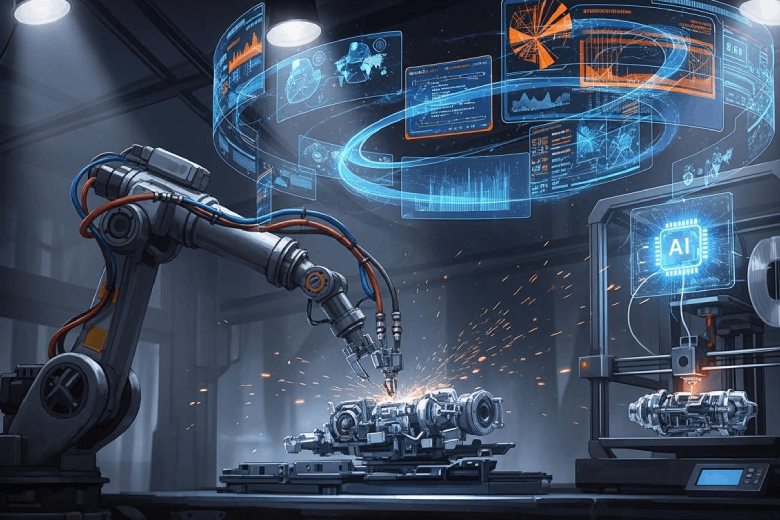
Manufacturers expect ai+3D printing to redefine production by 2025, as artificial intelligence and cutting-edge technologies accelerate digital transformation. The ai and automation market for 3D printing will reach $3.31 billion in 2025, while the global 3D printing market expands to USD 29.29 billion.
- ai+3D printing drives rapid changes in efficiency, cost, and sustainability across industries.
- Digital transformation powered by ai enables smarter workflows and predictive quality.
|
Evidence Description |
Impact on Manufacturing |
|---|---|
|
Increases efficiency in metal additive manufacturing |
|
|
Automation minimizes human intervention |
Increases throughput and ensures better product quality |
|
ai-driven additive manufacturing enables faster design and smarter printing |
Produces more efficiently than ever before |
ai+3D printing will deliver industry-specific transformation in 2025, making manufacturing more agile and cost-effective.
Key Takeaways
- AI and 3D printing will reshape manufacturing by 2025, enhancing efficiency, reducing costs, and promoting sustainability.
- Standardization across industries will ensure safety and consistency in 3D printing, especially in healthcare and aerospace.
- Localized and on-demand manufacturing will reduce transportation costs and lead times, making production more responsive to customer needs.
- AI-driven design and predictive maintenance will improve product quality and reduce errors, giving companies a competitive edge.
- Sustainable materials and closed-loop recycling will become essential, helping manufacturers meet environmental standards and reduce waste.
3D Printing Trends for 2025
Standardization Across Industries
Manufacturers recognize that 3d printing trends for 2025 will center on standardization. Companies in healthcare, aerospace, and automotive sectors now treat additive manufacturing as a standard tool for production. Specialized standards address unique requirements such as material traceability and performance testing. These standards ensure product safety and consistency in regulated environments.
- Regulatory frameworks, including the EU's Medical Device Regulation and FAA's aerospace certification, shape how manufacturers implement standards. These frameworks complicate compliance but drive innovation in process validation.
- Process validation remains a challenge. Manufacturers must develop new protocols for volumetric 3D printing to improve repeatability and reliability.
- Quality control standards continue to evolve. New measurement protocols help ensure safety and reliability in critical applications.
|
Industry |
Standardization Focus |
Impact on Additive Manufacturing |
|---|---|---|
|
Healthcare |
Material traceability, safety |
Reliable medical devices, faster approval |
|
Aerospace |
Performance testing, certification |
Lightweight parts, improved reliability |
|
Automotive |
Consistency, durability |
Efficient production, reduced recalls |
Enhanced multi-material printing stands out as a cutting-edge trend. Aerospace companies benefit from complex structures with varying material properties. Automation and robotics integration also drive efficiency and scalability, especially in automotive and aerospace sectors. Sustainability advances, such as using recycled and biodegradable materials, address environmental concerns and promote eco-friendly manufacturing.
Localized and On-Demand Manufacturing
Localized and on-demand manufacturing represents a major shift in 3d printing trends. Decentralized manufacturing enables companies to produce goods closer to customers, reducing transportation costs and lead times. During the COVID-19 pandemic, 3D printing allowed rapid response manufacturing for personal protective equipment and ventilator components. Medical institutions in remote areas used 3D printers to manufacture equipment locally, decreasing reliance on centralized factories.
- Villages in Africa used 3D printing to create agricultural tools and water purification equipment. This approach promoted local self-sufficiency and minimized the need for imported goods.
- Community maker spaces leveraged 3D printing technology to foster grassroots innovation and economic diversification.
General Electric achieved a 75% cost reduction per jet engine fuel nozzle by using additive manufacturing. Siemens Mobility reduced inventory costs by 85% through on-demand production of replacement parts for trains. Adidas reported a 50% increase in customer satisfaction for domestically produced shoes, which lowered shipping costs and emissions.
A study by Deloitte found that companies using 3D printing during the pandemic experienced a 70% reduction in lead times compared to those relying on traditional supply chains.
The global 3d printing market continues to expand as companies adopt decentralized manufacturing models. Cutting-edge trends in additive manufacturing, such as automation, multi-material printing, and sustainability, drive this growth. AI plays a crucial role in optimizing workflows, predicting quality, and enabling smarter production. By 2025, manufacturers will rely on AI and additive manufacturing to deliver products faster, more efficiently, and with greater customization.
AI-Driven Design in 3D Printing
Artificial intelligence continues to transform additive manufacturing workflows in 2025. Companies now rely on ai-driven design to streamline processes and improve accuracy. Engineers use ai to automate critical design tasks, which leads to faster iterations and fewer errors. Designers optimize geometric shapes and select materials more efficiently. Ai algorithms generate multiple design iterations, reducing manual trial and error. Ai-powered design for manufacturability tools offer instant feedback, enhancing speed and accuracy during design reviews. The shift from manual to ai-driven processes reduces lead times and costs. Ai identifies risks early, which improves overall design reliability. Ai also accelerates the slicing process, saving time compared to traditional methods. Automated systems enhance decision-making and resource management. Faster slicing speeds prove crucial in time-sensitive industries such as aerospace and healthcare.
Generative Design Automation
Generative design automation stands out among 3d printing trends for 2025. Engineers use ai to create complex structures that maximize performance and minimize material waste. Diabatix's ColdStream software automates the design of cooling solutions for electronic devices and machinery. This technology uses generative ai to optimize heat dissipation pathways, which reduces design time and enhances manufacturability. Engineers predict thermal performance before prototyping, ensuring reliability in critical industries like aerospace and automotive. The Generative Machine Company, working with Ai Build, pioneers 5-axis desktop 3D printing technology. This innovation enables the production of intricate geometries without support structures. Manufacturers achieve better surface finishes and improved part properties. These advancements represent a leap in additive manufacturing capabilities, allowing for designs previously unattainable with traditional methods.
Tip: Generative design automation allows manufacturers to explore thousands of design and optimization possibilities in minutes, making it a key driver for innovation in 2025.
Predictive Quality and Maintenance
Predictive quality and maintenance have become essential in additive manufacturing. Ai algorithms trained on large databases distinguish between errors and successful prints. Real-time monitoring occurs every 30 seconds, with images evaluated by ai to detect defects. Operators receive immediate notifications if a defect appears, allowing for quick intervention. The ai system continuously learns from misjudgments by incorporating feedback from captured images. This approach improves defect detection rates and reduces waste. Manufacturers in aerospace and healthcare rely on predictive quality control to ensure reliability and safety. Ai-driven predictive maintenance schedules repairs before failures occur, minimizing downtime and extending equipment life. These capabilities support the broader shift toward automated, data-driven manufacturing in 2025.
- Ai-driven predictive quality control increases defect detection rates.
- Real-time monitoring and instant notifications enable rapid response.
- Continuous learning from feedback improves accuracy over time.
Additive manufacturing in 2025 depends on ai to deliver faster, more reliable, and more innovative products. Companies that embrace ai-driven design and predictive maintenance gain a competitive edge in a rapidly evolving market. 3d printing trends show that automation, simulation, and data-driven decision-making will shape the future of manufacturing.
3D Printing Innovations in Materials
Advanced and Smart Materials
3d printing innovations in 2025 will focus on advanced and smart materials that transform additive manufacturing. Engineers now use bio-based polymers to create sustainable products. These polymers offer durability and flexibility for many industries. Researchers have introduced smart materials that adapt to their environment. Polyetherimide mixed with carbon nanotubes forms lightweight lattice structures. These structures provide strength and reduce weight in aerospace and automotive applications.
- Smart materials can sense and respond to temperature, pH, or mechanical stress.
- Self-sensing capabilities allow parts to monitor environmental changes.
- Implants made with smart materials adapt to dynamic conditions inside the human body.
- Automotive manufacturers use smart materials to monitor vehicle health.
- Aerospace companies rely on real-time monitoring of aircraft performance.
ai plays a key role in designing and optimizing these materials. Engineers use ai to predict how materials will behave under different conditions. ai-driven simulations help manufacturers select the best materials for each application. In 2025, additive manufacturing will rely on smart materials to create products that are safer and more efficient.
Sustainable and Biodegradable Options
Manufacturers in 2025 prioritize sustainable materials and biodegradable filaments to reduce environmental impact. ai helps identify the most eco-friendly options for each project. Additive manufacturing uses biodegradable filaments like PLA, which require less energy and produce fewer greenhouse gases than petroleum-based plastics.
|
Material |
Production Energy Use |
Greenhouse Gas Emissions |
Decomposition Conditions |
|---|---|---|---|
|
PLA |
63% fewer than petroleum-based plastics |
Biodegradable under specific conditions, compostable in industrial facilities |
Recycled filament also supports sustainability goals. Companies divert waste from landfills and lower carbon emissions by over 50% compared to virgin plastics.
|
Material Type |
Carbon Emissions Reduction |
Waste Diversion |
|---|---|---|
|
Recycled Filament |
Over 50% compared to virgin plastics |
Diverts waste from landfills, reducing methane gas release |
ai-driven additive manufacturing enables precise control over material use, minimizing waste. In 2025, manufacturers will choose sustainable materials and biodegradable filaments to meet environmental standards and customer expectations. 3d printing innovations continue to drive progress toward a greener future.
Speed, Efficiency, and Cost
AI Optimization for Faster Printing
Manufacturers in 2025 rely on ai optimization to achieve faster printing processes in additive manufacturing. They use ai-driven optimization to automate complex steps, which leads to improved speed and efficiency. Many companies adopt advanced software tools that balance print quality and speed. These tools, such as PrusaSlicer and IdeaMaker, help engineers adjust settings for each project. The result is faster printing processes and less wasted material.
Factories benefit from ai-powered error detection. These systems identify problems before they cause downtime or waste. Operators receive alerts when the system detects an issue, so they can act quickly. Automated processes now handle tasks that once required manual input. This shift allows workers to focus on higher-value activities.
Note: AI-driven optimization not only increases speed but also improves consistency in additive manufacturing. Companies see fewer failed prints and better use of resources.
The following table highlights how ai optimization supports faster printing in industrial settings:
|
Evidence Type |
Description |
|---|---|
|
Automated Processes |
AI optimization automates various processes in 3D printing, leading to faster production times. |
|
Error Detection |
AI-powered tools identify and address errors before they escalate, reducing downtime and waste. |
|
Smart Optimization |
Tools like PrusaSlicer and IdeaMaker help balance print quality and speed, enhancing efficiency. |
In 2025, additive manufacturing companies that invest in ai-driven optimization gain a clear advantage. They deliver products faster and respond quickly to market demands.
Price Competition and Accessibility
The landscape of additive manufacturing in 2025 shows rapid changes in price competition and accessibility. Entry-level 3D printers now cost less than $200, while five years ago, prices started above $1,000. This drop makes additive manufacturing more accessible to students, small businesses, and hobbyists.
- Entry-level printers accounted for 48% of global revenues in 2024, surpassing industrial systems.
- Asian suppliers, especially from China, drive fierce price competition by offering affordable machines and materials.
- More people can experiment with additive manufacturing, which encourages innovation and creativity.
Lower prices and greater accessibility mean that additive manufacturing will continue to grow in 2025. Companies and individuals can adopt new technologies without large investments. As a result, the industry sees more diverse applications and faster adoption of advanced solutions.
Large-Format and Multi-Material Printing
Industrial-Scale Applications
Manufacturers in 2025 see large-format 3D printing as a game changer for industrial-scale production. The development of the LFAM print head allows companies to convert existing robotic systems into high-throughput 3D printing centers. This approach enables the creation of large parts measured in meters, which expands the possibilities for industries such as aerospace, automotive, and construction. Companies no longer need to invest in expensive specialized large-format printers. They can use their current infrastructure, which leads to significant cost savings.
- LFAM technology supports efficient production of large, complex structures.
- Factories can create both sculptures and functional industrial parts with this method.
- Manufacturers reduce costs by leveraging equipment they already own.
In 2025, ai plays a central role in optimizing these processes. Ai-driven systems monitor print quality, adjust parameters in real time, and predict maintenance needs. This integration ensures that large-scale 3d printing delivers consistent results. Ai also helps engineers design parts that use less material without sacrificing strength. As a result, companies achieve higher efficiency and lower waste.
Hybrid and Multi-Material Capabilities
Hybrid manufacturing and multi-material 3D printing open new doors for innovation in 2025. Multi-material printing allows engineers to combine different materials in a single print job. This capability enhances design flexibility, reduces assembly steps, and improves part performance. Manufacturers use these methods to produce functional prototypes, production aids, and end-use parts with both functional and aesthetic benefits.
- Hybrid manufacturing combines the flexibility of 3D printing with the precision of CNC machining.
- This process enables the creation of complex parts with intricate internal structures and precise surface finishes.
- Engineers face challenges such as process integration and material compatibility, but hybrid manufacturing shows promise for prototyping and low-volume production.
Ai supports hybrid manufacturing by automating material selection and optimizing print paths. In 2025, ai-driven tools analyze part requirements and recommend the best combination of materials and processes. This approach leads to better product quality and faster development cycles. Companies that adopt ai and hybrid manufacturing gain a competitive edge in a rapidly changing market.
Tip: In 2025, manufacturers who invest in ai-powered hybrid manufacturing will see faster innovation and improved product performance.
Digital Collaboration and Visualization
Cloud-Based 3D Modeling
Manufacturers in 2025 rely on cloud-based 3D modeling to drive collaboration and efficiency. Teams can access design files from anywhere, which supports flexible work environments. Cloud platforms allow engineers to work together in real time, even if they are in different countries. This approach increases productivity and speeds up the design process. Many companies use ai-powered tools within these platforms to automate repetitive tasks and improve design accuracy. In 2025, cloud-based solutions help manufacturers scale projects quickly and respond to market changes.
The following table highlights the main benefits and challenges of cloud-based 3D modeling for collaborative manufacturing projects:
|
Benefits |
Challenges |
|---|---|
|
Enhanced Collaboration |
Technical design issues |
|
Cost Efficiency |
Security concerns |
|
Improved Data Security and Management |
Need for scalability |
|
Accessibility and Flexibility |
|
Cloud-based 3D modeling also improves data security and management. Companies can control who accesses sensitive files, which reduces the risk of data loss. However, technical design issues and security concerns remain important challenges. Manufacturers in 2025 address these issues by investing in advanced ai-driven security protocols and scalable infrastructure.
VR/AR Integration in Design
In 2025, virtual reality (VR) and augmented reality (AR) technologies transform the design and prototyping process. Designers use VR to create virtual prototypes of car designs, which helps them visualize and interact with models in a 3D environment. This process improves design accuracy and reduces errors. Architects and engineers use VR and AR for building information modeling (BIM), allowing real-time modifications and better stakeholder engagement.
- VR and AR enable rapid iterations and customization by displaying 3D objects in real-world locations.
- AR reduces unnecessary printing by letting designers visualize prototypes before physical production, saving materials and resources.
- These technologies help teams identify and fix design issues before making physical models.
In 2025, ai enhances VR and AR by analyzing user interactions and suggesting design improvements. Teams collaborate more effectively, and projects move from concept to production faster. Manufacturers who adopt ai-driven VR and AR tools gain a competitive edge in the evolving landscape of additive manufacturing.
Automation and Robotics in Manufacturing
Autonomous Production Cells
Manufacturers in 2025 rely on autonomous production cells to boost efficiency and maintain supply chain resilience. These cells use ai to optimize workflows and machine settings in real time. Smart factories now prevent quality issues before they occur. Edge ai processes data locally, allowing immediate decisions on the factory floor. This rapid response helps avoid defects and accidents.
- ai systems adjust production processes without human input.
- Autonomous robots interact and learn from each other, improving coordination.
- Digital twins simulate and optimize production scenarios, reducing downtime.
- Companies use ai-driven automation for lights-out manufacturing, where factories operate with minimal human presence.
Digital twins play a key role in digital supply chains. They create virtual models of production lines, letting engineers test changes without stopping actual operations. This approach supports supply chain resilience by identifying risks and improving flexibility. In 2025, more companies adopt these technologies to stay competitive and meet changing market demands.
Note: Autonomous production cells powered by ai help manufacturers respond quickly to disruptions, making supply chain resilience a reality.
Collaborative Robots (Cobots)
Collaborative robots, or cobots, have become essential in 3D printing environments by 2025. These robots work alongside humans and machines to keep production running smoothly. Cobots load and unload 3D printers, ensuring continuous operation. They also create custom end effectors for specific manufacturing tasks.
- Cobots sometimes act as 3D printers, integrating printing directly into their workflow.
- Their flexibility allows manufacturers to adapt quickly to new products or changes in demand.
- Cobots support supply chain resilience by filling labor gaps and maintaining productivity during disruptions.
ai enables cobots to learn from their environment and improve over time. This learning ability makes them valuable for digital supply chains, where adaptability and speed matter most. In 2025, manufacturers who use ai-powered cobots see faster production cycles and greater reliability.
Sustainability and Circular Manufacturing
Waste Reduction Strategies
Manufacturers in 2025 prioritize waste reduction as a core part of sustainability initiatives. They use 3D printing to build parts layer by layer, which improves material utilization and lowers waste. Engineers implement careful design techniques to reduce material usage. Optimized designs support complex geometries and lightweight structures, maintaining strength while minimizing waste output. On-demand production eliminates the need for molds, reducing surplus inventory and lowering storage costs.
|
Strategy |
Description |
|---|---|
|
Precise Material Usage |
3D printing consumes only the required materials, improving sustainable production. |
|
Optimized Design |
Supports lightweight and complex shapes, reducing material usage. |
|
On-Demand Production |
Reduces waste from surplus inventory and lowers storage costs. |
Manufacturers also prioritize sustainable materials with lower environmental impacts. They use biodegradable or recycled materials to enhance sustainability. Companies like Greentown Labs develop innovative recycling solutions and collaborate with organizations to collect and process waste materials. These efforts enable recycling of plastic scraps generated during 3D printing. In 2025, ai helps optimize designs and material selection, further reducing waste and supporting sustainability initiatives.
3D printing reduces material waste by utilizing only the necessary amount of material, which has a significant positive environmental impact. However, the production of feedstock materials remains energy-intensive, and emissions from 3D printing require careful management.
Closed-Loop Recycling
Closed-loop recycling gains momentum in 2025 as manufacturers seek circular manufacturing solutions. In metal additive manufacturing, reclaimed metal powders produced from sustainable materials support closed-loop recycling. The Melt-to-Powder process converts recycled metal waste into high-quality powders that meet strict standards for additive manufacturing.
Manufacturers develop chemical and physical recycling methods to degrade 3D printed waste plastics into useful molecules. Additives enhance the performance of recycled plastics, such as modified PETG combined with graphite and carbon fiber. The recycled composite material maintains performance after secondary printing, demonstrating its viability for circular manufacturing.
- Chemical and physical recycling methods degrade waste plastics into useful molecules.
- Additives improve recycled plastics for secondary printing.
- Recycled composites maintain performance, supporting circular manufacturing.
In 2025, ai enables manufacturers to track material flows and optimize recycling processes. This approach supports sustainable production and reduces environmental impact. The table below compares sustainability metrics between traditional manufacturing and ai-enhanced 3D printing.
|
Aspect |
Traditional Manufacturing |
AI-Enhanced 3D Printing |
|---|---|---|
|
Waste Minimization |
Higher waste levels |
Lower waste generation |
|
Energy Consumption |
Generally higher |
Significant energy savings |
|
Environmental Impact |
Greater impact |
Reduced environmental impact |
|
Material Limitations |
Broader material types |
Limited material types |
|
Quality Control |
Established standards |
Variability in quality |
Manufacturers in 2025 rely on ai to advance sustainability initiatives and circular manufacturing. They continue to address challenges such as energy consumption and emissions, striving for a greener future.
Industry-Specific 3D Printing Trends
Healthcare and AI-Driven Tissues
Healthcare continues to lead innovation in 3D printing as 2025 approaches. Hospitals and research centers use bioprinting technology to create custom implants, prostheses, and even bioprinted organs. Surgeons rely on precise anatomical models for surgical planning, improving patient outcomes. AI plays a critical role in this field. It creates 3D cell scaffolds that support cell growth and tissue formation. AI also optimizes scaffold designs for porosity, mechanical strength, and biocompatibility. Medical teams utilize digital blueprints from MRI and CT scans, allowing bioprinting technology to place bioinks made of living cells layer by layer. The goal is to mimic the structure and function of human organs. AI algorithms analyze the quality of printed tissues, detecting defects that could affect functionality. By 2025, healthcare professionals aim to print organs and tissues on demand, addressing the global shortage of donor organs. For example, bioprinting functional kidneys could reduce pressure on the healthcare system.
|
Application |
Description |
|---|---|
|
Bioprinting living tissues |
AI creates 3D cell scaffolds that support cell growth and tissue formation. |
|
Optimizing scaffold designs |
AI optimizes scaffold designs for proper porosity, mechanical properties, and biocompatibility. |
|
Enhancing surgical planning |
AI algorithms analyze the quality of printed tissues, detecting defects that could affect functionality. |
- Custom implants and prostheses improve patient care.
- Bioprinting technology uses AI to advance tissue engineering.
- Printed anatomical models support precise surgical planning.
By 2025, AI-driven bioprinting technology will help address organ shortages and transform healthcare delivery.
Aerospace, Automotive, and Consumer Goods
Aerospace, automotive, and consumer goods industries experience rapid growth in 3D printing applications as 2025 nears. Aerospace companies manufacture lightweight, complex parts for aircraft and defense equipment. These components increase efficiency and lower production costs. AI enables engineers to design parts with intricate shapes that traditional methods cannot achieve. Astronauts use 3D printing to produce tools and parts on-demand in space, enhancing mission flexibility.
Automotive manufacturers rely on 3D printing for rapid prototyping and tooling. Companies like Ford and Porsche create prototype components quickly, allowing immediate testing and adjustments. AI streamlines the design process, helping engineers develop lighter, more fuel-efficient parts. The shift toward manufacturing large, functional parts continues in 2025, supported by high-performance materials such as nickel and titanium alloys.
|
Industry |
Key Trends |
|---|---|
|
Healthcare |
Custom implants, prostheses, and bioprinted organs; precise anatomical representations for surgical planning. |
|
Aerospace |
Lightweight, complex parts for aircraft and defense equipment; increased efficiency and lower production costs. |
|
Automotive |
Rapid prototyping, tooling, and manufacturing of lighter, more fuel-efficient parts. |
|
Consumer Goods |
Production of distinctive, customized goods such as furniture and fashion accessories. |
Consumer goods manufacturers use 3D printing to create customized products that meet specific needs. AI helps designers produce unique furniture and fashion accessories. Rapid prototyping allows companies to test new ideas and bring products to market faster. By 2025, AI and bioprinting technology will continue to drive innovation across these industries.
- Aerospace and automotive industries focus on large, functional parts.
- High-performance materials, including nickel and titanium alloys, support advanced manufacturing.
- Consumer goods benefit from customization and rapid prototyping.
In 2025, AI-powered 3D printing will shape the future of manufacturing in healthcare, aerospace, automotive, and consumer goods.
In 2025, manufacturers see ai and 3D printing as essential for growth. Companies like Mondelez and Czinger Vehicles use ai to accelerate product development and optimize designs. BMW and GE Aviation achieve lighter, stronger parts with ai-driven design. The table below highlights why adapting to these trends in 2025 matters:
|
Trend |
Benefit in 2025 |
|---|---|
|
High-Throughput Techniques |
|
|
ai Integration |
Streamlined processes, lower costs |
|
Localized Manufacturing |
On-demand, waste reduction |
Manufacturers in 2025 can address challenges by using ai for real-time monitoring, predictive modeling, and smarter material selection. To stay ahead in 2025, they should join professional programs, subscribe to industry newsletters, and attend events focused on ai and 3D printing.
FAQ
What advantages does AI bring to 3D printing in manufacturing?
AI improves design accuracy, speeds up production, and reduces errors. Engineers use AI to predict problems before they happen. Companies save time and money by using AI-driven tools.
How does 3D printing support sustainability goals?
3D printing uses only the material needed for each part. This process reduces waste. Many manufacturers choose recycled or biodegradable materials to lower their environmental impact.
Can small businesses benefit from AI and 3D printing?
Small businesses gain access to affordable 3D printers and AI-powered design tools. These technologies help them create custom products, reduce costs, and compete with larger companies.
What industries use AI and 3D printing the most?
Healthcare, aerospace, automotive, and consumer goods industries lead in adopting these technologies. They use AI and 3D printing for custom parts, rapid prototyping, and efficient production.
Is 3D printing safe for making medical devices?
Regulatory standards ensure safety in medical 3D printing. Hospitals and manufacturers follow strict guidelines. AI helps monitor quality and detect defects, making medical devices safer for patients.
