
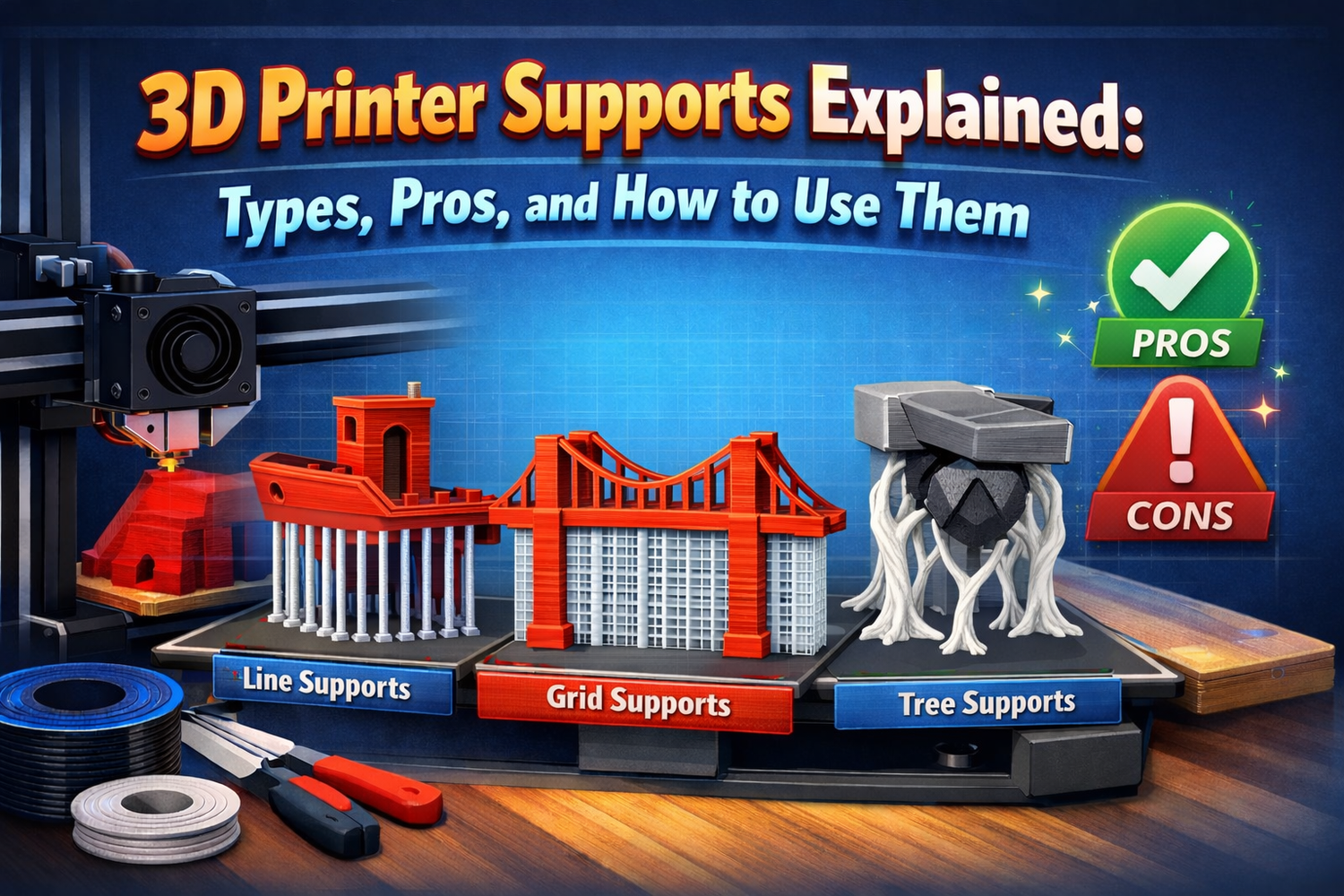
If you've ever printed a model with overhangs or complex geometry, you already know one thing: supports can make or break your print.
But what exactly are 3D printing supports? And how do you choose the right type without wasting material or ruining your surface quality?
In this guide, we’ll break it down in a simple, practical way.
What Are 3D Printing Supports?
Supports are temporary structures printed alongside your model to hold up overhanging parts during the printing process.
Without supports, gravity wins — and your print fails.
Main Types of 3D Printer Supports
1. Linear (Line / Zigzag) Supports
This is the most basic and widely used support structure.
Best for:
- Simple prints
- Fast printing needs
Pros:
- Quick to generate
- Easy to remove
- Uses less material
Cons:
- Less stable for complex models
2. Grid Supports
Grid supports form a crisscross pattern, providing stronger reinforcement.
Best for:
- Large overhangs
- Heavy or dense models
Pros:
- Strong and stable
- Better support for flat surfaces
Cons:
- Harder to remove
- Can damage surface finish
3. Tree Supports
Tree supports branch out like a tree to hold only necessary areas.
Popular in Ultimaker Cura.
Best for:
- Organic shapes (figures, statues)
- Complex geometries
Pros:
- Minimal contact with the model
- Cleaner surface finish
- Saves material
Cons:
- Longer slicing time
- Not ideal for flat overhangs
Support Generation: Automatic vs Manual
Automatic Supports
Generated by slicers like Cura slicing software or PrusaSlicer.
- Fast and beginner-friendly
- May generate unnecessary supports
Manual Supports
Placed by the user.
- Greater control
- Reduces waste
- Requires experience
Support Materials: Standard vs Soluble
Standard Supports (Same Material)
- Usually PLA or PETG
- Affordable and simple
- May leave marks after removal
Soluble Supports
Use special filaments like:
- PVA filament (water-soluble)
- HIPS filament (chemical-soluble)
Advantages:
- Easy removal
- Perfect for complex internal structures
Drawbacks:
- Higher cost
- Requires dual-extruder printers
How to Choose the Right Support?
Here’s a quick rule of thumb:
- Simple model → Linear supports
- Heavy overhang → Grid supports
- Detailed/organic model → Tree supports
- High-end precision → Soluble supports
Pro Tips to Improve Your Prints
- Reduce support density to save material
- Increase support Z-distance for easier removal
- Use tree supports for better surface quality
- Test small sections before printing large models
Final Thoughts
Supports are not just “extra material” — they are a critical part of print success.
Choosing the right type can:
- Improve print quality
- Reduce post-processing time
- Save material and cost
If you want professional-level results, mastering supports is a must.
Ready to Print Better?
If you're serious about achieving clean supports, faster print speeds, and professional-level results, your printer matters just as much as your settings.
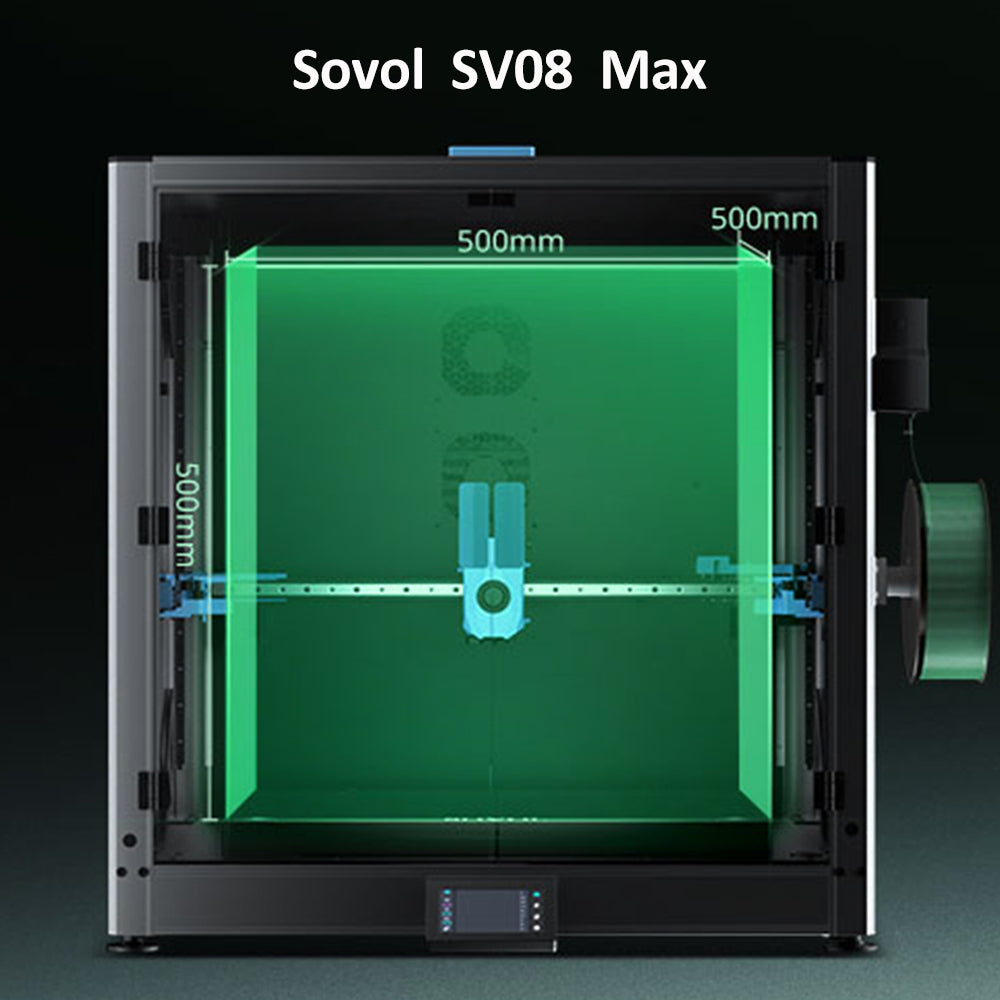
The Sovol SV08 Max 3D Printer is built for exactly that:
- Large build volume for complex models
- Stable high-speed printing
- Perfect compatibility with advanced support structures
👉 Upgrade your printing experience today:
https://sovol.eu/products/sovol-sv08-max-3d-printer
