
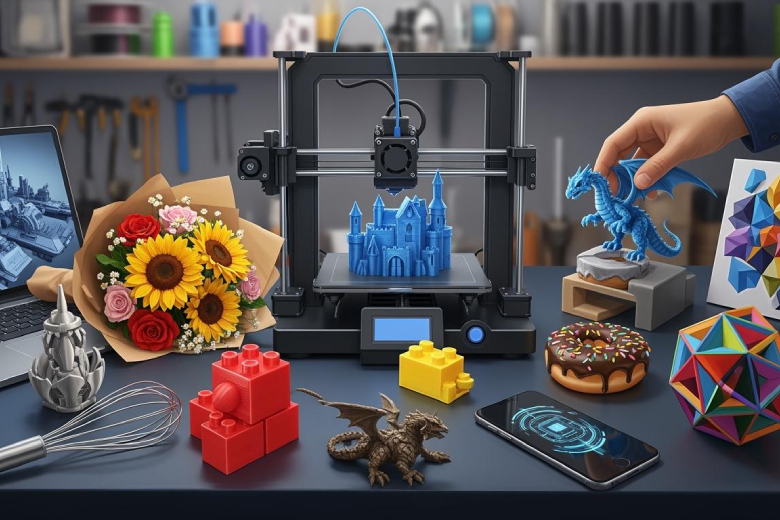
A 3d printer can create some of the craziest things, transforming everyday items into something creative and unexpected. People now use 3d printing to produce objects that once seemed impossible. Many industries have seen a rapid increase in the adoption of 3d printers. By 2021, most users predicted their use would at least double in five years. Nearly half of respondents reported making functional parts with 3d printing, not just prototypes. This shift shows how 3d printing pushes the boundaries of what everyday items can become.
Key Takeaways
- 3D printing can create edible items like pizza and chocolate, allowing for customization and reducing food waste.
- Bioprinting is advancing medical technology by creating human tissues and organs, potentially revolutionizing healthcare in the future.
- Custom kitchen utensils made with 3D printing enhance cooking experiences, allowing for personalized designs that reflect individual styles.
- 3D printing enables the production of replacement parts for household items, saving money and reducing waste by allowing repairs instead of replacements.
- The technology is transforming industries like fashion and construction, offering unique designs and faster building processes that can lower costs.
Edible Creations with 3D Printers
3D Printed Pizza and Chocolate
A 3d printer can produce edible objects that surprise many people. Today, 3d printers are used to create foods like pizza and chocolate. These machines process ingredients such as pastes or purees and layer them to form shapes. The most common edible objects made with 3d printing include:
- Chocolate
- Pancake batter
- Cream
- Pizza (with manual toppings)
NASA began researching 3d printed food in 2006. This research led to the Chef3D printer, which prints pizza. The technology uses additive manufacturing to build food layer by layer. It allows for precise shapes and reduces material waste. Food printing uses computer models to design the final product. The ingredients must be able to move through a nozzle.
3d printing lets people customize their food. For example, a pizza can have different toppings placed exactly where the user wants. Chocolate can be shaped into unique designs that are not possible with traditional methods.
Food Innovation with 3D Printing
3d printing is changing the food industry. It enables chefs and companies to create new products quickly. The technology allows for individualization, so people can tailor their diets to their needs or tastes. This is helpful for allergies or personal preferences.
- 3d printed foods can use sustainable materials and minimize waste.
- Chefs can experiment with flavors and visual presentations.
- Companies can adjust recipes to follow trends or meet consumer demands.
The ability to produce edible objects with a 3d printer shows the versatility of this technology. It opens new possibilities for creativity and innovation in food.
3D Printed Human Organs
Bioprinted Tissues and Skin
Scientists have made big steps in using 3d printing to create human tissues and skin. This process is called bioprinting. It uses living cells instead of plastic or metal. The cells are placed layer by layer to form tissue shapes. Researchers have worked in this field for about 20 years. Today, 3d printing can make small organ parts like skin and cartilage. Some labs have even printed a tiny heart with blood vessels. This heart is only the size of a cherry and cannot beat, but it shows what is possible.
Many experts believe that the first full-sized 3d printed human organ could be ready in 15 to 20 years. They are working to solve problems like making blood vessels inside organs. Different methods, such as laser and inkjet-based printing, are being tested. Some printed tissues look like real organs, but they do not work exactly the same yet. The field is still young, but progress is steady.
- Scientists are optimistic about solving the challenge of vascularization.
- Bioprinting has created tissue models for research and testing.
- Current materials and techniques are not enough for full organ production.
Medical Advances with 3D Printing
3d printing is changing medicine in many ways. Doctors can now use 3d printed surgical guides and implants made for each patient. These guides help surgeons plan and perform operations with more accuracy. Patients heal faster and have better results because the tools fit their bodies perfectly. Hospitals can make these items quickly and at a lower cost.
Certified 3d printed medical products are already used in surgeries, such as for blood vessels or the brain. These products save time and improve care. Some implants have tiny holes that let bone cells grow into them. This helps the body accept the implant and heal naturally. Patients often need fewer surgeries, and their quality of life improves. The healthcare system also benefits from shorter surgery times and better outcomes.
Custom Kitchen Utensils
Personalized Cooking Tools
3D printers have changed the way people think about kitchen utensils. These machines can produce custom tools that fit the needs of any cook. Customization allows users to create utensils that match their cooking style or kitchen theme. For example, a baker can design cookie cutters in any shape or size. This adds a personal touch to baking and makes the process more enjoyable. Using food-safe filaments ensures that these tools are safe for food contact. Custom cookie cutters can also serve as thoughtful gifts for friends and family.
Custom kitchen utensils make baking and cooking more fun. Personalized designs help people express their creativity in the kitchen. Many cooks enjoy using tools that reflect their personality or interests.
The ability to create custom utensils means that everyday items can become unique. People can design spatulas, spoons, or measuring cups with special features. Some designs include handles that fit perfectly in the hand or patterns that match the kitchen decor. Customization helps solve problems, such as making tools for people with disabilities or special needs.
Unique Designs with 3D Printing
3D printing allows for creative designs that are not possible with traditional manufacturing. Custom designs can include shapes, textures, or colors that make utensils stand out. Designers can experiment with new ideas and test them quickly. This technology lets people turn everyday items into works of art.
- Custom kitchen utensils can be made in small batches or as one-of-a-kind pieces.
- Personalized designs can include names, logos, or favorite characters.
- Creative designs help cooks feel inspired and make cooking more enjoyable.
A table can show some examples of custom kitchen utensils made with 3D printing:
|
Utensil |
Custom Feature |
Benefit |
|---|---|---|
|
Cookie Cutter |
Any shape or size |
Personal touch to baking |
|
Spoon |
Ergonomic handle |
Comfortable grip |
|
Measuring Cup |
Unique color or pattern |
Easy to identify |
Custom kitchen utensils show how 3D printing can transform everyday items. Personalized designs and creative features make cooking tools more useful and fun.
Replacement Parts for Home
3D Printed Household Fixes
A 3d printer can help people repair many things around the house. When a small part breaks, it is often hard to find a replacement. Sometimes, the original manufacturer no longer makes the part. With 3D printing, people can create replacement parts for many everyday items. This technology allows users to design or download models for the exact piece they need. Printing at home saves time and money.
Here are some common household items that people fix with 3D printing:
|
Type of Household Item |
Examples |
|---|---|
|
Electrical Appliances |
Toaster switches, kettle parts |
|
General Household Items |
Various simple replacement parts |
People use 3D printing to repair broken handles, knobs, or clips. These small parts often break first, but they are easy to print. Many people share designs online, so it is simple to find a model for common repairs. This process keeps everyday items working longer and reduces the need to buy new products.
Tip: Printing your own replacement parts can save money and prevent waste.
Reducing Waste with 3D Printing
3D printing helps the environment in several ways. It uses only the material needed for each object, so there is less waste than with traditional methods. There is no need to make molds or cut away extra material. People can print just one part instead of buying a whole new item.
Ways 3D printing reduces waste include:
- Optimizing designs to use less support material.
- Using printers with special features, like dual-extrusion and soluble supports.
- Recycling failed prints and leftover material into new filament.
- Joining old or failed prints into new projects.
Some companies offer programs to recycle used filament. This makes it easier for people to reuse materials and keep plastic out of landfills. 3D printing also allows for on-demand manufacturing. People can make replacement parts only when needed, which saves resources and energy.
Repairing everyday items with 3D printing is practical and sustainable. It keeps products in use and helps protect the environment.
3D Printed Jewelry and Accessories
Custom Rings and Necklaces
3d printing has changed how people create jewelry. Designers can now make custom rings and necklaces with unique shapes and patterns. This process uses digital models to produce pieces that fit personal tastes. Custom jewelry is popular because it allows buyers to choose the size, color, and style. Many small jewelers use 3d printing to offer regional designs that reflect local culture.
Customization gives people the chance to own jewelry that matches their personality. It also helps jewelers respond quickly to new trends.
Stilnest, a company selling 3d printed jewelry, has increased its revenue by using innovative marketing. The jewelry market remains fragmented, with many small businesses serving local customers. There are no exact numbers for the global market size, but the demand for custom designs continues to grow.
A table shows some features of custom jewelry made with 3d printing:
|
Jewelry Type |
Custom Feature |
Benefit |
|---|---|---|
|
Ring |
Personalized engraving |
Unique gift |
|
Necklace |
Custom pendant shape |
Express individuality |
|
Bracelet |
Adjustable size |
Comfortable fit |
Fashion Innovation with 3D Printing
3d printing brings new possibilities to the fashion world. Companies combine the latest trends with advanced technology to stand out. Designers can create complex designs that traditional methods cannot achieve. This technology allows for quick changes and on-demand production, which reduces inventory and improves efficiency.
- 3d printing enables unique designs for jewelry, shoes, and clothing.
- Personalization is a major trend, letting brands offer tailored products.
- Designers like Danit Peleg use 3d printing for individuality, flexibility, and sustainability.
Sustainable materials make 3d printed designs environmentally friendly. The ability to adjust designs quickly helps brands keep up with changing styles. Shoes and clothing can be made to fit each person, promoting comfort and style. 3d printing also supports creativity, allowing artists to experiment with new ideas.
The fashion industry benefits from 3d printing by offering products that are both innovative and personal.
Personalized Phone Cases
Unique Styles with 3D Printers
3D printing has changed how people design phone cases. Many consumers want products that reflect their style. Custom phone cases are now easy to create at home. People can choose colors, patterns, and shapes that match their personality. The design company Freshfiber offers unique designs for phone cases. Their slogan, "Protect your phone with a work of art," shows how 3D printing enables artistic customization. This technology lets users turn their phones into creative accessories.
A table shows some features of custom phone cases made with 3D printing:
|
Feature |
Benefit |
|---|---|
|
Artistic patterns |
Stand out from the crowd |
|
Personalized colors |
Match personal style |
|
Special shapes |
Fit unique phone models |
Many people print custom phone cases for gifts or special occasions. The process allows for quick changes and new ideas. Designers can test different styles without waiting for factory production.
Expressing Individuality
Personalized phone cases help people express their individuality. 3D printing makes it possible to create designs that are not available in stores. About 60% of consumers plan to use 3D printing at home for small items like phone cases. This shows a strong interest in custom products. People also print phone holders and wireless charging stations that match their home decor. These projects highlight the versatility of 3D printing in everyday items.
Tip: Try designing your own phone case to show your personality and creativity.
Customization gives people control over the look and feel of their devices. It also helps them stand out and feel unique. Personalized phone cases are more than just protection; they are a way to make a statement.
Custom Eyeglass Frames
Perfect Fit with 3D Printing
3D printing has changed how people make eyeglass frames. This technology allows for a perfect fit because each frame can match the shape of a person's face. Many people struggle to find glasses that feel comfortable. Standard frames often slip or pinch. With 3D printing, opticians can scan a person's face and design frames that fit exactly. This process helps people who have unique facial features or need special adjustments.
A custom pair of eyeglass frames can improve comfort and vision. The frames can be made lighter or stronger, depending on the user's needs. Some people choose flexible materials for sports or outdoor activities. Others want frames that are very thin and light. 3D printing makes it possible to test different shapes and sizes before making the final product.
Tip: Ask your eye doctor about 3D-printed frames if you have trouble finding glasses that fit well.
Style and Comfort Combined
3D-printed eyeglass frames are not just about fit. They also offer new styles and creative designs. Many designers use 3D printing to explore bold ideas that are hard to make with traditional methods. Some popular design trends include:
- Sculptural – Frames that look like wearable art, with bold shapes and rich textures.
- Sentimental – Designs with personal touches or nostalgic details.
- Punk Quotidien – Styles inspired by subcultures, showing new ideas of beauty.
- Surrealism – Unusual shapes and playful details for a unique look.
- Ultralight – Very thin frames made from advanced materials for extra comfort.
A table shows how 3D printing helps combine style and comfort:
|
Feature |
Benefit |
|---|---|
|
Custom fit |
No slipping or pinching |
|
Unique designs |
Express personal style |
|
Lightweight |
Easy to wear all day |
Custom eyeglass frames let people express themselves while enjoying a comfortable fit. 3D printing gives everyone the chance to wear glasses that match their personality and needs.
3D Printed Plant Pots
Decorative and Functional Designs
3D printing has changed how people create plant pots. Many users now make pots with unique designs that are both decorative and functional. The technology allows for shapes and patterns that are hard to make by hand. People can print pots with geometric patterns, animal shapes, or even custom logos. These designs help plants stand out in any room.
The choice of material is important for plant pots. PLA works well for indoor pots because it is safe and easy to print. PETG is better for outdoor use since it can handle sunlight and rain. The printing profile also matters. A thicker wall and the right layer height make the pot strong and stable. After printing, people remove support structures to prepare the pot for use. This step is important for pots used in hydroponic systems.
Here are some features of 3D printed plant pots:
- Made from recycled plastics, which helps the environment.
- Lightweight, so they are easy to move and arrange.
- Stable enough to hold soil and water without tipping over.
- Modular, which means users can connect several pots together for creative displays.
Tip: Try printing a set of small pots with different designs to create a mini indoor garden.
Enhancing Home Decor
3D printed plant pots do more than hold plants. They improve home decor by adding color and style. People can match the pot designs to their furniture or wall colors. Some pots have built-in trays to catch water, making them more functional. Others use special shapes to fit on windowsills or shelves.
A table shows how 3D printed pots enhance home spaces:
|
Feature |
Benefit |
|---|---|
|
Custom designs |
Match any room style |
|
Modularity |
Flexible arrangement |
|
Lightweight |
Easy to handle and move |
|
Recycled material |
Supports sustainability |
Many city dwellers use modular pots to grow plants in small spaces. The flexibility of 3D printing lets them change the arrangement whenever they want. These functional designs help people enjoy nature indoors, even in apartments.
Toys and Board Game Pieces
3D Printed Action Figures
3D printing has changed how people create action figures. Many fans now make their own figures at home. The technology allows users to produce detailed designs that match their favorite characters. Some people scan existing figures and print new versions with different colors or poses. Others use modeling software to create original designs. This process gives collectors the chance to own unique pieces that are not available in stores.
Toy makers use 3D printers to test new designs quickly. They can print prototypes and adjust them before making final products. This method saves time and money. It also helps designers experiment with new ideas. Some companies offer custom toys that let buyers choose features like facial expressions or accessories.
3D printed action figures help fans express their creativity. They can make figures that fit their interests and hobbies.
A table shows how 3D printing improves action figure production:
|
Feature |
Benefit |
|---|---|
|
Custom designs |
Unique figures for collectors |
|
Fast prototyping |
Quick testing of new ideas |
|
Detailed pieces |
High-quality models |
Custom Board Game Parts
Board games often need special pieces. 3D printing makes it easy to create custom parts for games. Players can print tokens, dice, or game boards with unique designs. This process helps people replace lost pieces or add new ones to their favorite games. Many board game fans share their designs online, so others can print them at home.
Custom board game parts improve gameplay. Players can make pieces that match their style or add new rules to games. Some people print miniature figures for role-playing games. Others create storage trays or card holders with special designs. 3D printing lets users personalize their games and make them more fun.
Tip: Try printing your own board game pieces to enhance your gaming experience.
A list of popular board game parts made with 3D printing:
- Tokens with custom shapes
- Dice with unique designs
- Miniature figures for role-playing games
- Storage trays for organizing pieces
3D printing gives players control over their games. They can create pieces that fit their needs and make their board games stand out.
3D Printed Houses and Buildings
Rapid Construction with 3D Printers
3d printing is changing the way people build houses. Large machines can print walls and structures layer by layer using special concrete mixtures. This process is much faster than traditional building methods. In Georgetown, Texas, one of the largest projects used 3d printing to build 100 houses. This shows that the technology can work on a big scale.
"We are building an entire house in just 20 days here. This speed is a huge advantage."
"Ein klarer Vorteil des 3D-Drucks ist die drastisch verkürzte Bauzeit. Während der Bau eines traditionellen Hauses mehrere Monate oder sogar Jahre dauern kann, kann ein Haus mit 3D-Druck in wenigen Tagen fertiggestellt werden."
Some projects have finished the main structure in just one and a half weeks. Traditional methods would take twice as long. The speed of 3d printing helps people get homes faster and can lower building costs. This technology also uses less material, which reduces waste.
Future of Homebuilding
3d printing will likely shape the future of construction. The technology offers many benefits for builders and homeowners. Here are some ways it could change the industry:
- 3d printing can reduce construction time, as seen in the first 3d-printed family house in Germany.
- Builders can create complex shapes and designs that are not possible with regular methods.
- Fewer workers are needed on-site, which helps with the shortage of skilled labor.
- The process is cost-effective and uses materials more efficiently, leading to less waste.
Architects can design homes with curves and unique features. This freedom was not possible before. The same technology used for houses can also build garages or even a printed car shelter. Some companies are exploring how to print entire neighborhoods. In the future, people may see a printed car parked next to a 3d printed house. These changes could make homes more affordable and help solve housing shortages around the world.
These ten examples show how 3d printing can create objects that surprise and inspire. This technology shapes many parts of daily life, from food to homes. New ideas appear every year as people explore what is possible. Imagine what the future might bring. If you have seen or made something unique with a 3D printer, share your story in the comments below!
