
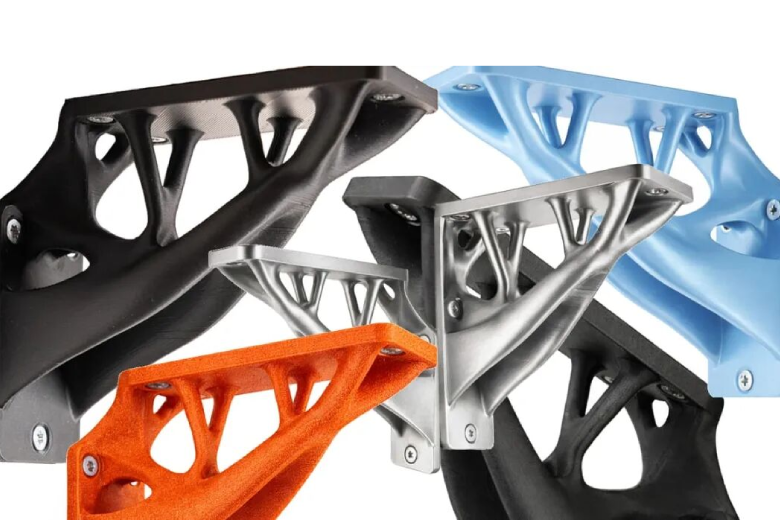
When it comes to 3D printing functional parts — especially load-bearing components like brackets — not all technologies are created equal.
From affordable PLA prints to industrial aluminum metal parts, we explored five major 3D printing technologies: FDM, SLS, MJF, SLA, and LPBF. Below, we break down cost, strength, durability, and real-world usability so you can choose the right process for your next project.
1. FDM with PLA – The Budget Champion
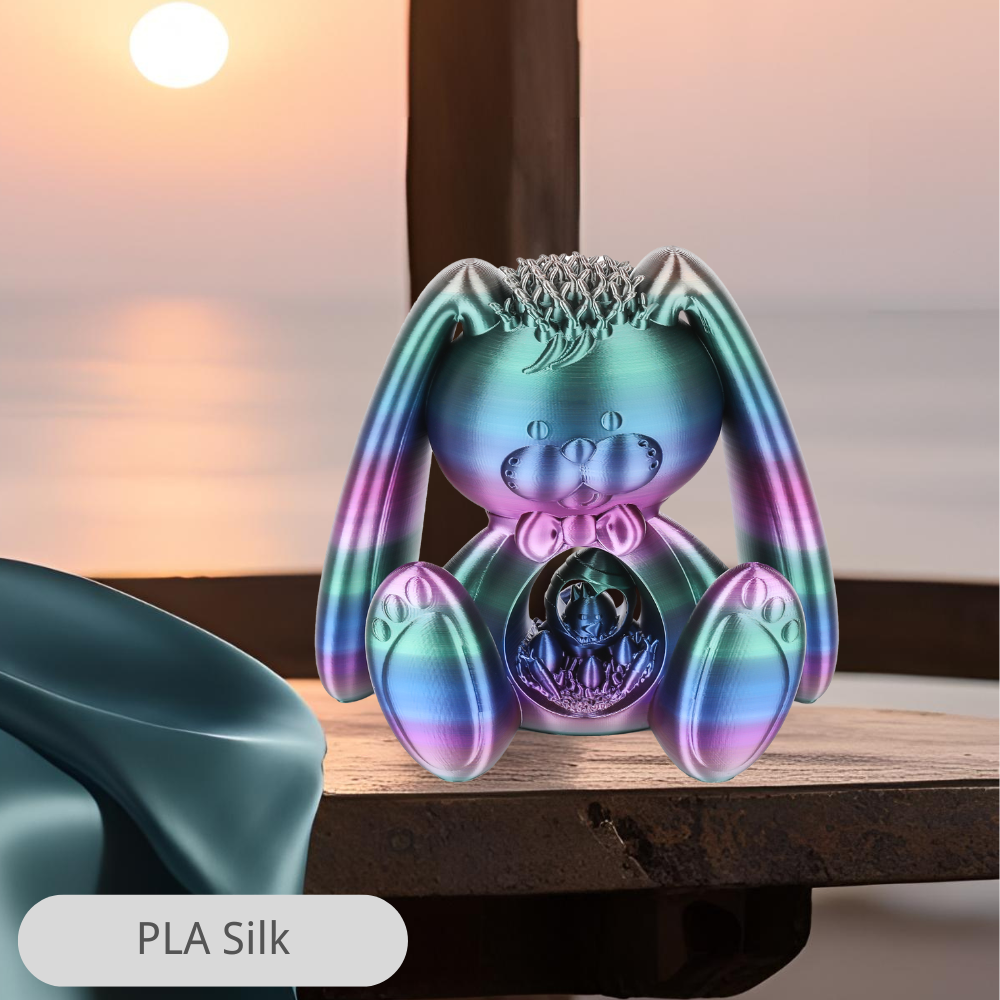
Fused Deposition Modeling (FDM) is the most common desktop 3D printing method. A heated nozzle melts thermoplastic filament and deposits it layer by layer.
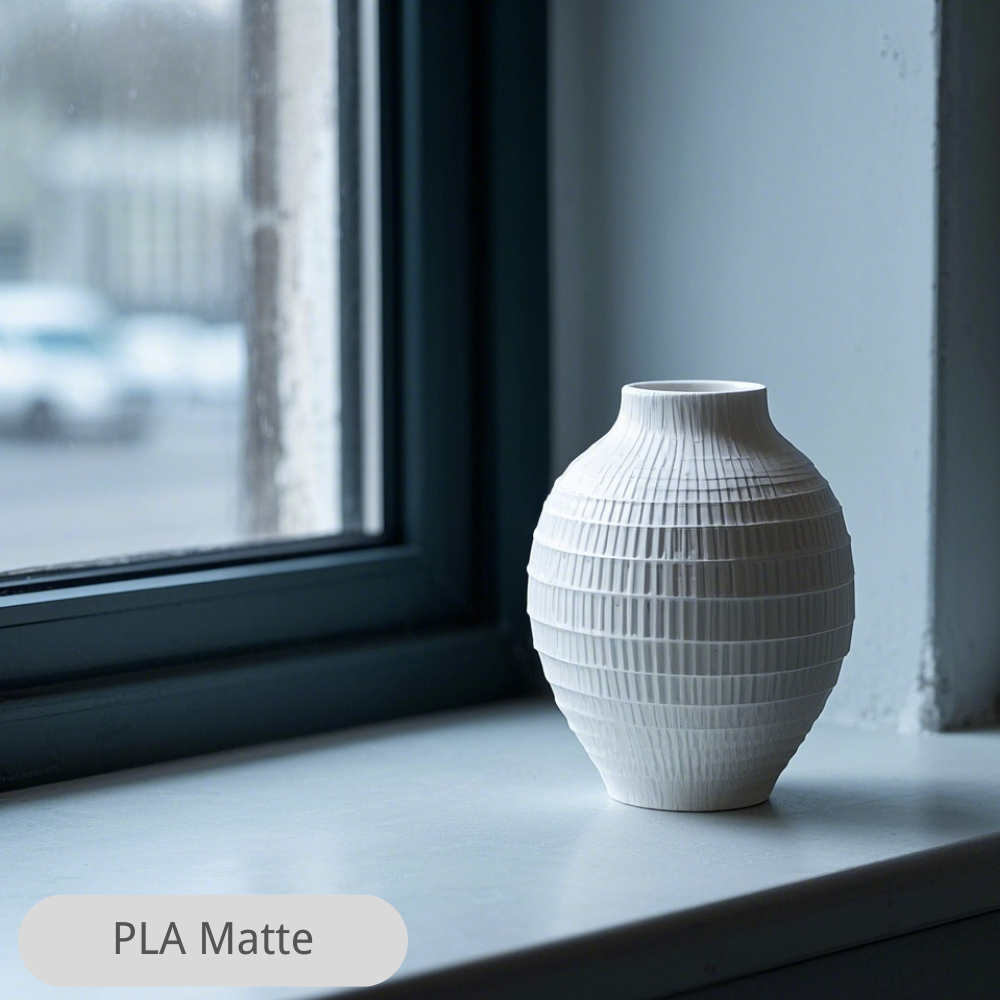
For this test, we chose PLA, a plant-based plastic made from renewable materials like corn starch.
Typical Applications
- Hobby parts
- Classroom projects
- Basic prototypes

Why Choose It?
- Lowest cost option available
- Fast turnaround
- Great for fit testing and light-duty use
- Ideal for hobbyists and budget-conscious makers
Trade-Offs
PLA is not heat-resistant and has limited mechanical strength. Under heavy loads or in warm environments, it can deform.
For decorative shelves, mockups, or temporary fixtures, PLA performs well. However, it’s not recommended for high-load structural brackets.
That said, if you want to prototype a bracket to test fit and positioning before committing to a stronger material, PLA is an excellent starting point.
2. SLS with Nylon PA12 – Strong, Practical, Reliable
Selective Laser Sintering (SLS) uses a laser to fuse nylon powder into solid parts layer by layer. We selected PA12 nylon, one of the most widely used engineering plastics.
The result: durable, lightweight parts with consistent mechanical properties and good heat resistance. SLS parts can also be dyed for a clean finished look.
Typical Applications
- Enclosures
- Snap-fit components
- Automotive clips
- Jigs and fixtures

Why Choose It?
- Excellent strength-to-weight ratio
- No support structures required
- Good surface quality for functional parts
- Ideal for real-world brackets, clips, and housings
For shelf brackets, SLS Nylon PA12 strikes a superb balance between cost and performance. It’s often the best choice for home or workshop use when reliability matters.
3. MJF with Nylon PA12 – Industrial Quality, Premium Price
Multi Jet Fusion (MJF), developed by HP, is another powder-bed nylon process. Compared to traditional SLS, it typically offers:
- Smoother surface finish
- Higher overall mechanical consistency
- Excellent detail resolution
Like SLS, MJF parts can be dyed in various colors.

Typical Applications
- End-use production parts
- Industrial enclosures
- Functional product components
Why Choose It?
- Very consistent mechanical properties
- Better surface finish than SLS
- Outstanding detail and dimensional accuracy
- Ideal for final-use engineering components
MJF generally comes at a higher cost than SLS. However, if you want a bracket that looks polished and performs at an industrial level, MJF is worth considering.
4. SLA with Tough Resin – High Detail, Engineered Performance
Stereolithography (SLA) uses a laser to cure liquid resin into solid plastic. For functional applications, choosing the right resin is critical.
We selected a Tough or Engineering Resin, specifically designed to handle stress and impact. Standard resin, by contrast, is often too brittle for load-bearing applications.
Typical Applications
- Consumer product prototypes
- Medical models
- High-detail visual prototypes

Why Choose It?
- Extremely smooth surface finish
- Exceptional detail accuracy
- Good impact resistance (with tough resin)
- Ideal for visible or precision components
One important consideration: SLA parts can degrade over time under UV exposure.
For indoor shelf brackets that prioritize aesthetics and moderate load requirements, SLA can be an attractive choice — especially when visual quality matters.
5. Metal LPBF with Aluminum – The Ultimate Bracket
Laser Powder Bed Fusion (LPBF) — also known as SLM or DMLS — uses high-powered lasers to melt fine metal powder layer by layer into fully dense metal parts.
We chose aluminum for this comparison, offering exceptional strength while remaining lightweight.
Typical Applications
- Aerospace brackets
- Robotic components
- Machine parts
Why Choose It?
- Extremely strong yet lightweight
- Heat-resistant and highly durable
- Suitable for heavy loads and industrial environments
- Looks and performs like machined metal
This is the most expensive option — but also the strongest and most durable.
If your shelf needs to support serious weight (tools, machinery, or heavy equipment), aluminum metal printing is unmatched.
Final Thoughts: Which Technology Delivers the Best Value?
The “best” 3D printing technology depends entirely on your priorities:
- Budget & prototyping: FDM with PLA
- Best cost-performance balance: SLS Nylon PA12
- Premium industrial finish: MJF
- High detail & visual appeal: SLA (Tough Resin)
- Maximum strength & durability: Metal LPBF
If you’re designing a functional bracket, understanding the real-world trade-offs between price, strength, and long-term performance is critical.
Start with the performance requirements — then choose the material and technology that truly supports your application.
