


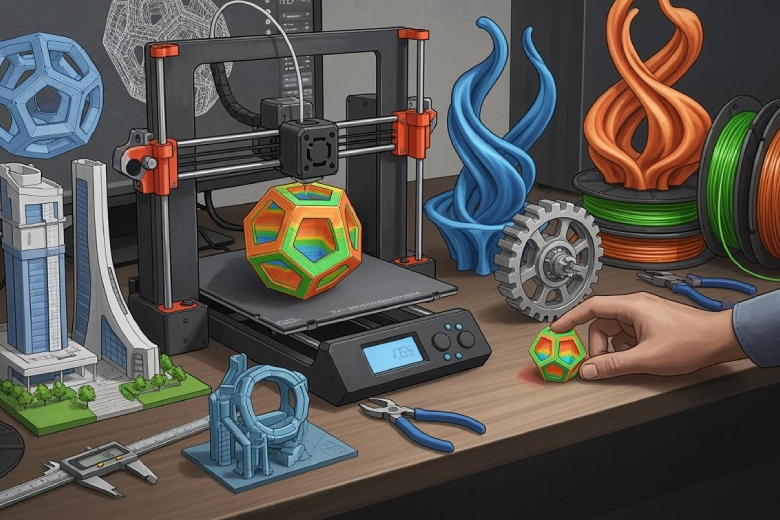
The 3d printing industry changes quickly, with new breakthroughs each year. Companies see strong growth, as shown below:
|
Year |
|
|---|---|
|
2024 |
15.39 billion |
|
2025 |
16.16 billion |
|
2030 |
35.79 billion |
Staying updated helps businesses innovate and stay ahead. Many invest in 3d technology to create unique products, reduce costs, and speed up development. These trends shape how people design, produce, and deliver goods, leading to real advantages in the modern world.
Key Takeaways
- Stay updated on 3D printing trends to innovate and maintain a competitive edge in your industry.
- Embrace sustainable practices by using eco-friendly materials and minimizing waste in your 3D printing processes.
- Leverage advancements in AI and automation to enhance design efficiency and production quality.
- Explore diverse applications of 3D printing across industries, from healthcare to consumer goods, to discover new opportunities.
- Invest in learning 3D modeling software and building a strong portfolio to showcase your skills and attract potential clients.
Industrial 3d printing trends
Advancements in additive manufacturing
Additive manufacturing has seen rapid progress in recent years. Engineers now use bioresorbable electronics that dissolve in medical applications, making devices safer and more efficient. The integration of nanotechnology with additive manufacturing has improved both product properties and the manufacturing process. Multi-material additive manufacturing allows the creation of complex 3d objects for biomedical engineering and electronics. New 3d printing techniques, such as volumetric and composite printing, have enabled breakthroughs in tissue engineering and personalized implants.
Note: The field has also moved toward 4D printing, where materials change shape over time, opening new possibilities for smart devices.
|
Advancement Type |
Description |
|---|---|
|
Materials |
High-performance polymeric, metallic, and ceramic materials for additive manufacturing |
|
Processes |
Advanced processing technology and software/equipment for additive manufacturing |
|
Applications |
Biomedical, electronics, and aerospace products |
|
4D Printing |
Smart materials that change over time |
|
Future Directions |
Multi-dimensional printing and integrated material preparation |
Industry adoption of 3d printing
Many sectors now lead in adopting 3d printing. The aerospace and defense industry uses additive manufacturing for rocket engine parts and structural components. Automotive companies rely on 3d printing for body parts, tooling, and spare parts. Medical and dental fields use additive manufacturing to create devices, surgical tools, and therapeutic tissues. Consumer goods companies use 3d printing for prototyping and direct manufacturing of items like footwear and jewelry. Even the food sector has started using 3d printing to produce cheese, chocolate, and complex dishes.
|
Industry |
Key Applications |
|---|---|
|
Aerospace & Defense |
Combustion chambers, rocket engine parts, structural components |
|
Automotive |
Body parts, tooling equipment, spare parts |
|
Medical and Dental |
Medical devices, surgical instruments, therapeutic tissues |
|
Consumer Goods |
Prototyping, footwear, jewelry |
|
3D Food Printing |
Cheese, chocolate, sushi, pizza |
Impact on production
3d printing has transformed production and supply chains. Companies now manufacture products closer to customers, which reduces lead times. Additive manufacturing minimizes waste, as it uses only the material needed for each part. This approach also increases flexibility, letting companies produce parts on demand and avoid large warehouses. 3d printing lowers the carbon footprint by reducing long-distance shipping. It also improves supply chain resilience, allowing production to continue during disruptions like natural disasters.
|
Description |
|
|---|---|
|
Reduced Lead Times |
Products reach customers faster |
|
Minimized Waste |
Less material wasted compared to traditional manufacturing |
|
Enhanced Flexibility |
On-demand production at specific locations |
|
Lower Carbon Footprint |
Fewer emissions from shipping |
|
Improved Supply Chain Resilience |
Production continues during disruptions |
Despite these benefits, the industry faces challenges. Large-scale 3d printing requires advanced hardware and high-performance materials, which can be costly. Print times for big parts remain longer than traditional methods, and quality standards are still evolving. However, the advantages of additive manufacturing continue to drive innovation across the 3d printing landscape.
Materials and sustainability in 3d printing
Innovative 3d materials
Recent years have brought many changes to 3d printing technologies. Engineers now use lightweight nylons, flexible TPUs, and carbon fiber-based material for stronger and more durable 3d objects. These new material options help create devices that match the strength and flexibility of traditional products. Some 3d printed transtibial sockets have even met ISO standards for load strength. However, more research is needed to compare every 3d printed material with older methods. Biodegradable material, such as polylactic acid, has become popular because it comes from renewable resources like cornstarch. Other material choices include wood-based, hemp-based, and even mushroom mycelium blends. These options help reduce waste and support a circular economy.
Sustainable 3d printing practices
Many companies now focus on making 3d printing more sustainable. They choose material like PLA and recycled filaments to lower their environmental impact. They also design objects to use less material and energy. Energy-efficient printers help save power during the printing process. Recycling failed prints and extra filament keeps waste low. Good ventilation improves air quality in workspaces. Printing several components at once saves energy. Regular printer maintenance prevents waste from failed prints. People also think about the entire life cycle of each 3d printed item, making only what is needed and choosing multipurpose designs.
Polylactic acid stands out as a biodegradable material that breaks down under composting conditions. Hemp-based and wood-based filaments also offer eco-friendly choices, helping to reduce the use of traditional plastics.
Real-world applications
Many real-world applications show how 3d printing technologies support sustainability. Companies recycle plastic into new filament for 3d printing. Projects like Million Waves turn plastic waste into prosthetic devices for people in need. XtreeE uses 3d printing to build artificial coral reefs and restore ocean habitats. Print your City! transforms plastic waste into furniture for communities. WASP builds affordable homes using local material. Solar Voyager uses recycled plastic to make electric vehicles. Upprinting Food creates snacks from food waste, reducing landfill use.
|
Example |
Description |
|---|---|
|
Refil |
Recycles plastics into 3d printing filament for new products |
|
Million Waves Project |
Turns plastic waste into prostheses for developing countries |
|
XtreeE |
Installs 3d printed coral reefs to restore marine habitats |
|
Print your City! |
Makes large furniture from plastic waste |
|
WASP |
Builds affordable housing with local material |
|
Solar Voyager |
Creates electric vehicles from recycled plastic |
|
Upprinting Food |
Produces snacks from food waste |
3d printing technologies use less material and energy than traditional manufacturing. This lowers the carbon footprint and helps protect the environment.
3d printing in healthcare
Medical devices and prosthetics
3d printing has changed how medical professionals create devices and prosthetics. Surgeons and prosthetists use computer-aided design software to make models that match each patient's anatomy. This approach allows for quick adjustments and precise customization.
3d printing provides greater design flexibility and reduces complexity and production time for prosthetic devices. Using computer-aided design (CAD) software, surgeons and prosthetists can create precise models tailored to each patient's anatomy and needs.
Patients benefit from lighter, more comfortable prosthetics. These devices fit better and improve daily life.
- 3d-printed prosthetics provide superior comfort and customization.
- They allow for lighter designs, enhancing wearability.
- Cost savings are achieved through reduced material usage.
- Dynamic behaviors in design improve functionality.
|
Benefit |
3D Printing |
Traditional Methods |
|---|---|---|
|
Customization |
Tailored to individual needs |
Standard sizes |
|
Comfort |
Lighter designs for extended wear |
Heavier, less comfortable designs |
|
Cost Efficiency |
Reduced material consumption |
Higher material costs |
|
Design Flexibility |
Complex structures with dynamic behaviors |
Limited design options |
|
Production Speed |
Rapid prototyping and adjustments |
Slower production times |
Bioprinting advances
Bioprinting uses 3d technology to create living tissues and structures. Scientists now fabricate scaffolds with controlled pore size and interconnectivity. These scaffolds mimic the biochemical environment of bone tissue, which helps with personalized bone reconstruction.
- Improved precision in biomaterial deposition enhances the ability to create complex tissue architectures.
- Development of patient-specific models supports personalized medicine approaches.
- Reduction in reliance on animal testing accelerates drug screening and toxicity studies.
- Potential to address organ shortages by producing functional organs for transplantation.
Researchers also create physiologically relevant tissue models. These models improve drug efficacy assessments and support high-throughput screening. Integration with imaging and sensing technologies increases accuracy in drug development.
Patient-specific 3d solutions
Doctors use 3d printing to make custom devices that improve comfort and treatment success. Surgeons plan and practice complex procedures with anatomical models. These models reduce complications and shorten recovery times.
|
Evidence Description |
Impact on Treatment and Recovery |
|---|---|
|
Custom devices improve comfort, treatment success, and compliance. |
Enhances patient adherence to treatment plans and overall satisfaction with care. |
|
Surgeons can plan and practice complex procedures with anatomical models. |
Reduces complications during surgery and shortens recovery times, leading to better patient outcomes. |
|
3d printing allows fully customized medical devices tailored to a patient’s anatomy. |
Improves fit and function of prosthetics and implants, enhancing patient comfort and effectiveness of the devices. |
|
Custom surgical guides improve implant placement, reduce surgery time, and enhance accuracy. |
Minimizes surgical errors and complications, contributing to faster recovery and better surgical results. |
|
Rapid prototyping capabilities accelerate medical device development. |
Shortens the time from concept to implementation, allowing for quicker access to innovative treatments for patients. |
Doctors create realistic surgical planning models tailored to individual patients. These models help surgeons visualize complex anatomical relationships. Custom implants designed through 3d printing improve surgical outcomes and lead to faster recovery times.
Consumer and desktop 3d printing
Accessibility and affordability
Consumer and desktop 3d printing has become more accessible and affordable in recent years. Technological advancements have made printers easier to use and more efficient. Many schools now include 3d printing in their lessons, which helps students learn new skills and encourages creativity. Funding for equipment continues to grow, showing strong support for this technology in education.
|
Evidence |
Description |
|---|---|
|
Technological Advancements |
New materials and software make 3d printers more efficient and user-friendly. |
|
Educational Sector Adoption |
Schools use 3d printing to enhance learning and engagement. |
|
Demand for Prototyping |
Companies use desktop printers for rapid prototyping, cutting development costs. |
|
Small-Scale Manufacturing |
Entrepreneurs create custom 3d-printed products, saving money and time. |
|
Sustainability Initiatives |
Eco-friendly materials attract consumers who care about the environment. |
Many companies use desktop 3d printers for prototyping. This approach can reduce development costs by up to 50 percent. Entrepreneurs also use 3d printing for small-scale manufacturing, which helps them bring new ideas to market quickly.
Popular 3d uses
People use 3d printing for many different projects at home, in schools, and in small businesses. Students design and print models for science and art classes. Hobbyists create custom tools, toys, and replacement parts. Small businesses produce 3d printed parts for prototypes or finished products. The demand for 3d-printed products continues to grow as more people see the benefits of customization and fast production.
Educational institutions help students gain important skills by using 3d printing in classrooms. This trend increases creativity and prepares students for future careers.
Software improvements
Recent software improvements have made desktop 3d printing easier and more powerful. User interfaces now feature clear navigation and organized menus. Customizable workspaces let users set up the software to match their needs. Built-in tutorials guide beginners through complex tasks, lowering the learning curve.
|
Feature |
Description |
|---|---|
|
Clear Navigation |
Organized menus and labels make tools easy to find. |
|
Customizable Workspaces |
Users adjust the interface for better efficiency. |
|
Guided Tutorials |
Step-by-step guides help users complete advanced printing tasks. |
Software updates also improve print quality, speed, and compatibility with new printers. Cloud integration allows remote monitoring and management of 3d printing jobs. These changes help both beginners and advanced users get better results from their 3d printers.
AI and automation in 3d printing
Smart 3d design
Artificial intelligence is changing how designers approach 3d projects. AI tools now help artists and engineers create models with more detail and realism. These tools can adjust lighting and textures in real time, which makes the design process smoother. Designers use predictive analytics to spot trends and get suggestions for new ideas. Generative design algorithms give users many options based on their needs, which encourages creativity. AI-driven software also speeds up rendering, so projects finish faster. Machine learning improves the look of 3d models by simulating real-world materials. Many beginners find the design process easier because AI assistants guide them through each step.
- AI enhances rendering speed and realism in 3d design.
- Generative design algorithms create a wide range of options.
- Predictive analytics suggest innovative solutions.
Automated workflows
Automation has become a key part of 3d printing production. Fully automated setups lower labor costs and make sure each part meets quality standards. These systems increase the number of parts produced in less time. Manufacturers can customize parts without buying special machines. On-demand production means companies can print replacement parts or tools quickly, which reduces downtime. Automated workflows also lead to fewer mistakes and more consistent results.
Automated 3d printing workflows help companies adapt to changing needs and keep production running smoothly.
- Automated workflows lead to higher quality output with fewer manual errors.
- Consistency in production is achieved at scale.
Future potential
The future of AI and automation in 3d printing looks promising. AI will help reduce downtime by catching errors early, which means faster production and lower costs. Autonomous workflows will handle everything from design to quality checks without much human help. Generative AI will make it easier to explore complex shapes and customize products. Experts believe that fully autonomous systems will soon combine design, slicing, and production into one smooth process. This change will make manufacturing faster, more efficient, and better suited to each project.
The next wave of 3d printing will rely on smart automation and AI to deliver better products in less time.
Quick tips for leveraging 3d printing trends
Staying informed in the 3d printing industry
Staying up to date with 3d printing trends helps individuals and businesses succeed in a fast-changing field. Many experts recommend joining online communities and using trusted resources to learn about new developments. YouTube channels such as 3D Printing Nerd, Maker’s Muse, and Thomas Sanladerer offer step-by-step guides for beginners and advanced users. Free modeling programs like SketchUp and Tinkercad provide tutorials and strong community support. Model sharing sites, including Printables, give access to millions of designs for prototyping and rapid prototyping projects. Online courses from universities teach the basics of 3d printing software and offer certifications. Books like Getting Started With 3D Printing and magazines such as Make Magazine help readers learn at their own pace. Maker spaces in many cities give people a chance to use 3d printers, attend classes, and get advice from experienced users.
|
Resource Type |
Description |
|---|---|
|
YouTube Channels |
Channels like 3D Printing Nerd, Maker’s Muse, and Thomas Sanladerer provide tutorials and tips for beginners. |
|
Free Modeling Programs |
SketchUp and Tinkercad are beginner-friendly CAD programs with built-in tutorials and community support. |
|
Model Sharing Sites |
Printables offers millions of free models and educational resources for 3D printing enthusiasts. |
|
Online Courses |
Courses like the one from the University of Illinois cover 3D printing software and provide certifications. |
|
Books and Magazines |
Titles like Getting Started With 3D Printing and Make Magazine are great for self-paced learning. |
|
Maker Spaces |
Community centers that provide access to 3D printers and offer classes and guidance for beginners. |
Actionable steps for individuals and businesses
Individuals and businesses can take several steps to make the most of current 3d printing trends. These actions help improve skills, grow networks, and boost success in prototyping and rapid prototyping.
- Develop design skills by learning 3d modeling software such as Blender or Tinkercad.
- Create a portfolio to showcase designs and prototyping capabilities.
- Build a strong online presence and attend networking events to market your business.
- Collaborate with other artists and designers to expand prototyping offerings.
- Research the market to identify target audiences and their preferences for rapid prototyping.
- Invest in 3d printing technology and learn to use it for efficient prototyping.
- Create unique designs or work with artists for exclusive rapid prototyping items.
- Ensure legal compliance by obtaining licenses for copyrighted designs.
Prototyping and rapid prototyping play a key role in product development. By following these steps, individuals and businesses can stay competitive and innovative in the 3d printing industry.
3D printing continues to change how people design and produce goods. Key trends include reduced lead times, lower prices, and new advanced materials. Industry consolidation and AI integration also shape the market.
- Lead times now shift from weeks to days.
- Price drops make 3D printing more accessible.
- AI improves design and reduces waste.
One advantage of additive manufacturing is its lean process. One machine can replace several specialized machines.
Staying updated helps businesses and individuals find new opportunities and stay competitive.
FAQ
What are some common examples of 3d printing in the industry?
Many companies use 3d printing to create prototypes, tools, and replacement parts. Examples of 3d printing include custom medical devices, aerospace components, and automotive parts. These applications help the industry improve efficiency and reduce costs.
How does the 3d printing industry impact manufacturing?
The 3d printing industry changes manufacturing by allowing faster production and less waste. Companies can make complex shapes that traditional methods cannot produce. This shift helps the industry respond quickly to market needs.
What are the main 3d printing technologies and processes?
The 3d printing industry uses several technologies. Fused Deposition Modeling (FDM), Stereolithography (SLA), and Selective Laser Sintering (SLS) are popular processes. Each method creates a 3d printed object layer by layer, offering different strengths for the industry.
Why is sustainability important in the 3d printing industry?
Sustainability matters because the industry wants to reduce waste and energy use. Many companies recycle materials and design products for long life. These efforts help the industry protect the environment and support responsible manufacturing.
Where can someone find more examples of 3d printing?
People can find examples of 3d printing in online galleries, industry magazines, and trade shows. Many websites show how the 3d printing industry creates items for healthcare, education, and consumer goods.
