

Starting a 3D printing journey is more affordable than many expect. Beginner models range from $200 to $2,000, but most new users spend between $200 and $800. Many popular printers for beginners cost between $200 and $500.
- Prices start at $200 for basic models.
- Options suit hobbyists, educators, and small businesses.
Recent surveys show that 41.01% of beginners choose printers priced from $200 to $800.
|
Price Range ($) |
Percentage (%) |
|---|---|
|
200-500 |
29.03 |
|
501-800 |
11.98 |
|
Total (200-800) |
41.01 |
Understanding 3D Printer Cost helps you make smart choices and plan your budget.
Key Takeaways
Beginner 3D printers usually cost $200 to $800. This price makes them easy for many people to buy. Entry-level models work well for new users. They are simple to use and make good prints for small jobs. Remember to think about extra costs like materials and fixing your printer. These costs are important when you plan your budget. Watch for sales and discounts to spend less on your printer. Pick a printer that fits what you want. Look for features that make printing better for you.
3D Printer Cost for Beginners
Entry-Level 3D Printers Cost
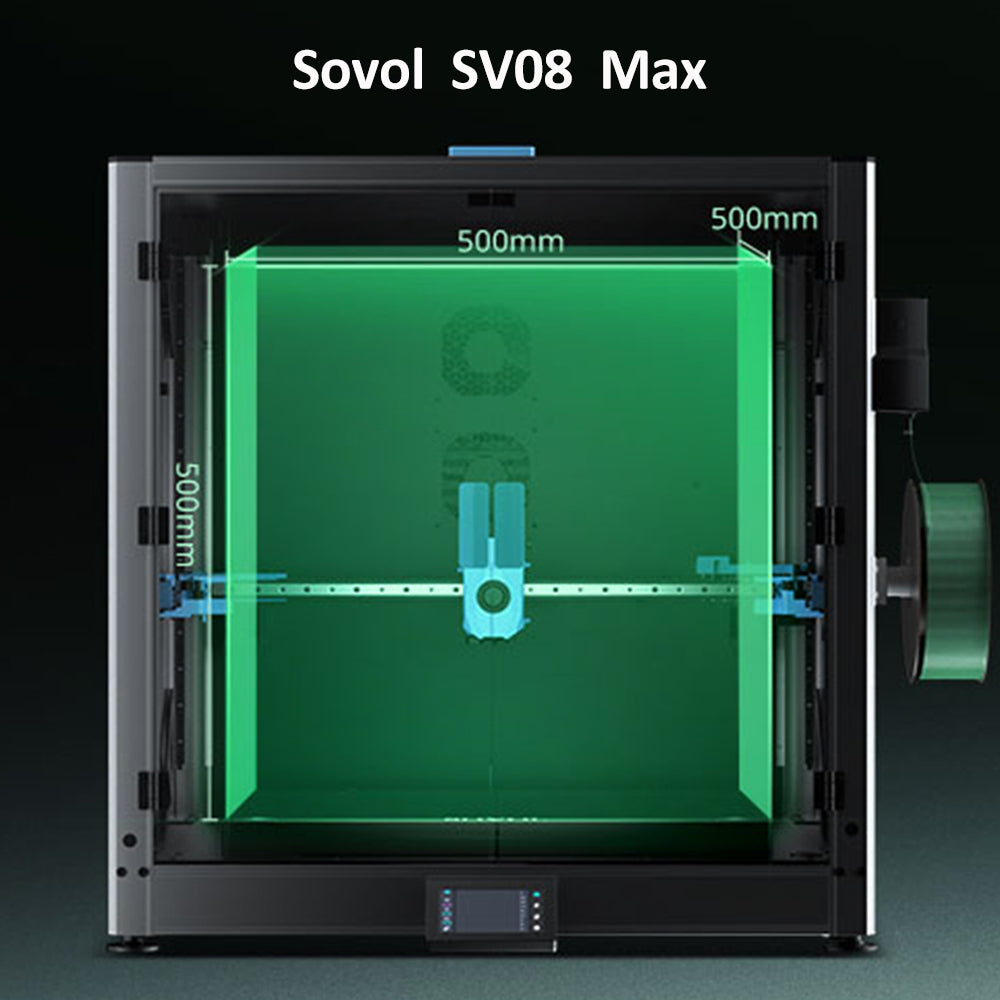
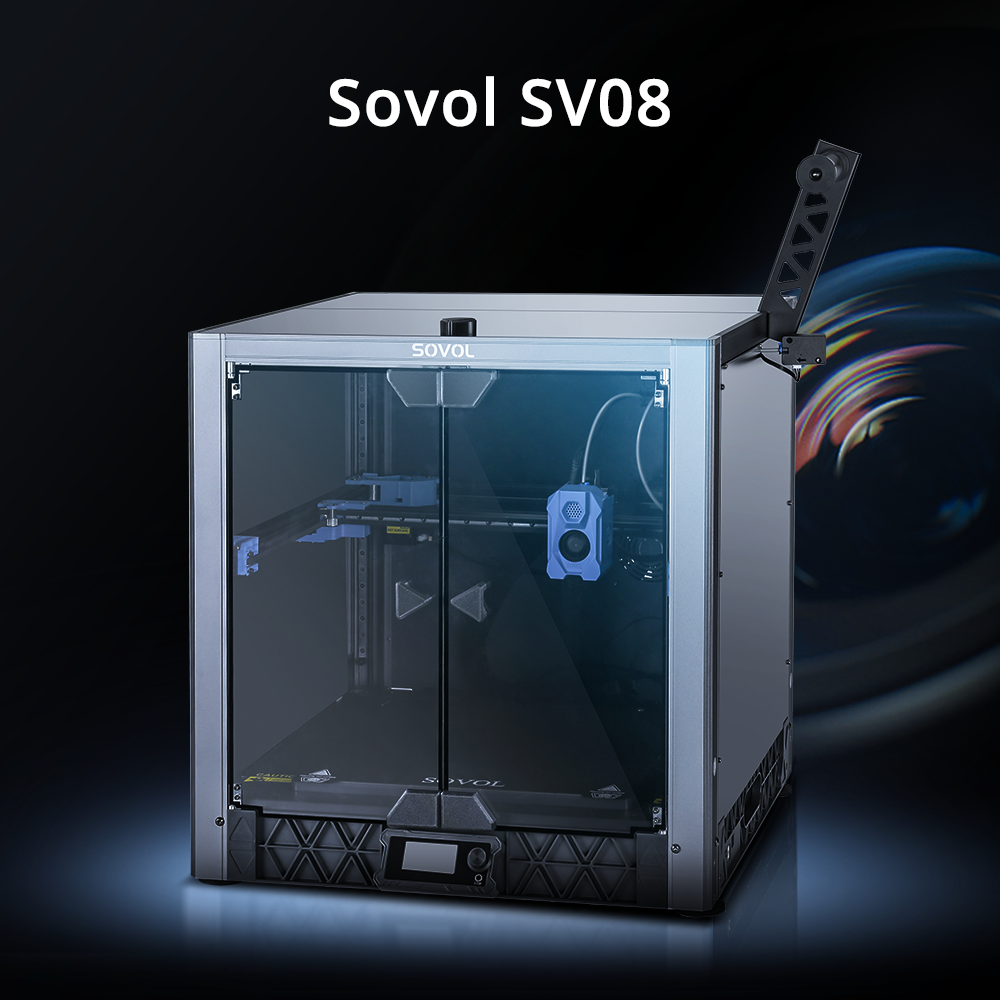
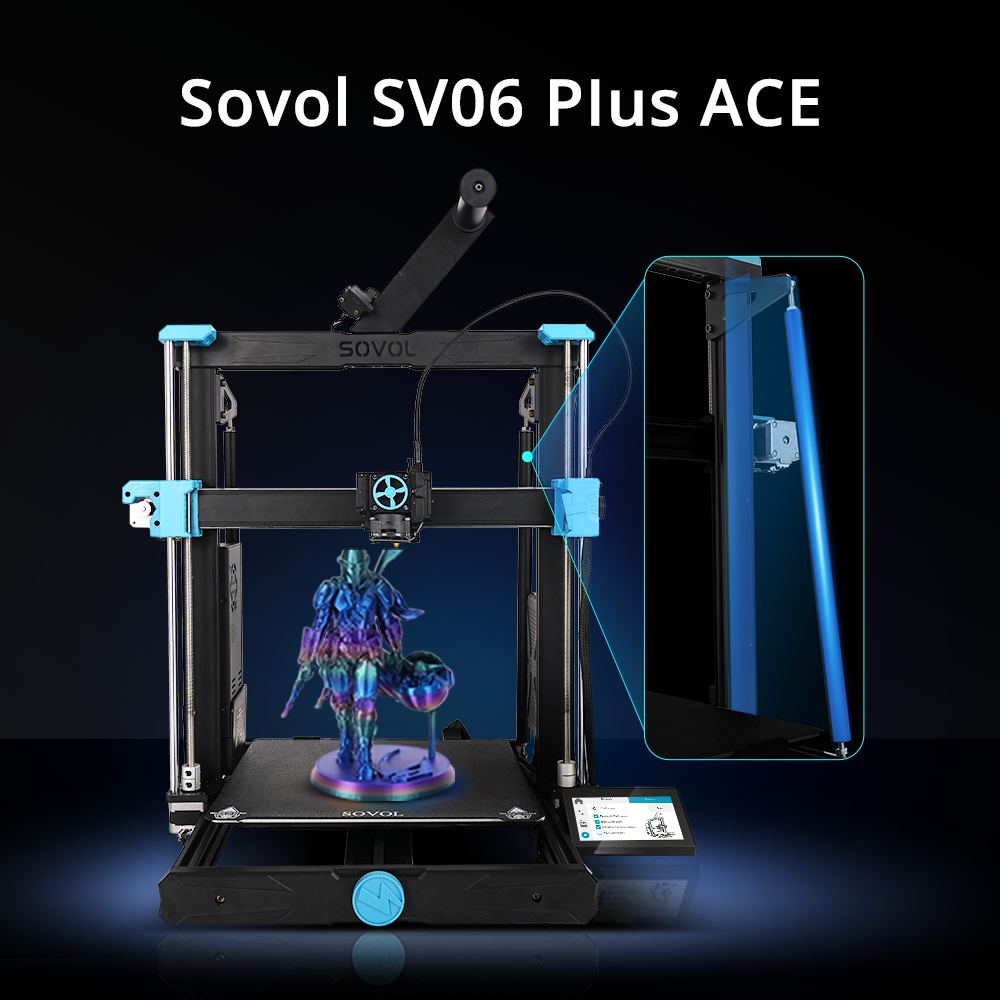
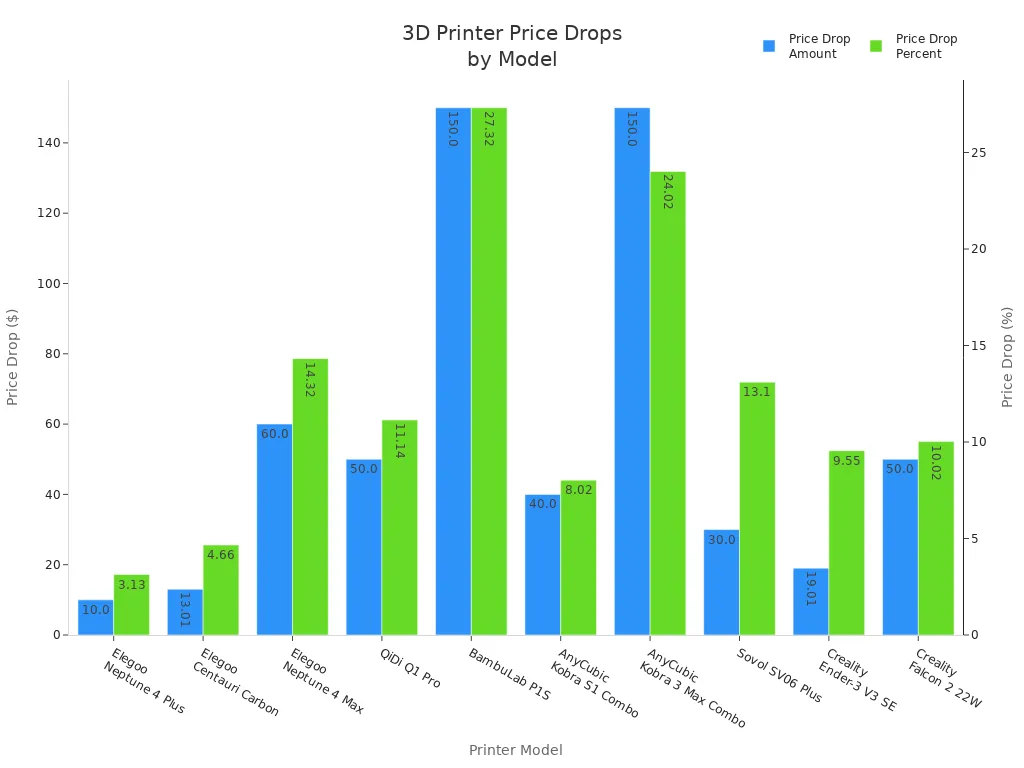
Entry-level printers are a top pick for new users. They usually cost from $200 to $500. Many people buy these because they are cheap and simple. These printers are good for small projects and learning. Some popular models are Creality Ender-3 V3 SE, Sovol SV06 Plus, and Elegoo Neptune 4 Plus. You can find these for under $350 online. AnyCubic Kobra S1 Combo and BambuLab P1S are also good for beginners.
- Entry-level 3d printers cost $200 to $500.
- These are made for beginners and hobbyists.
- Most are easy to set up and work well.
|
Printer Model |
Original Price |
Discounted Price |
Price Drop |
|---|---|---|---|
|
Elegoo Neptune 4 Plus |
$319.00 |
$309.00 |
$10.00 (3.13%) |
|
Sovol SV06 Plus |
$229.00 |
$199.00 |
$30.00 (13.10%) |
|
Creality Ender-3 V3 SE |
$199.00 |
$179.99 |
$19.01 (9.55%) |
|
BambuLab P1S |
$549.00 |
$399.00 |
$150.00 (27.32%) |
|
AnyCubic Kobra S1 Combo |
$499.00 |
$459.00 |
$40.00 (8.02%) |
Hobbyist and Mid-Range Pricing
Hobbyists and advanced users like mid-range printers. These cost between $500 and $2,000. They have bigger build areas and better print quality. They also have more features. AnyCubic Kobra 3 Max Combo and QiDi Q1 Pro are mid-range printers. These cost more but can do bigger and harder projects.
Professional and metal 3d printers are much more expensive. These are not for beginners. Professional FDM and resin printers cost $3,000 to $10,000. They have special features like closed build spaces and can use special materials.
|
Printer Type |
Price Range |
Features |
|---|---|---|
|
Entry-Level FDM |
$200 - $1,000 |
Basic models, easy to use, small or medium build size |
|
Entry-Level Resin |
$200 - $1,000 |
High detail, smooth prints, good for tiny projects |
|
Professional FDM |
$3,000 - $10,000 |
Closed build area, two-color printing, uses strong filaments |
|
Professional Resin |
$3,000 - $10,000 |
Automatic resin handling, works with special resins |
What Affects 3D Printer Pricing
Many things change the price of a 3d printer. The material type, print time, and printer technology all matter. Harder designs and extra steps after printing also add to the cost. Some printers cost more because they use special materials or have cool features.
|
Factor |
Description |
|---|---|
|
Material type |
Some materials cost more than others. |
|
Print time |
Longer prints cost more to run. |
|
Post-processing |
Finishing prints takes time and adds to cost. |
|
Printer technology |
Different types of printers have different prices. |
|
Design complexity |
Harder designs need more supports and time, so they cost more. |
Where you buy your printer also changes the price. Stores like Amazon, MatterHackers, and brand shops often have sales. You can use payment plans like Affirm, QuickSpark, or buy now, pay later. Many people can fill out a simple form and get approved fast.
3d printing cost is more than just the printer price. You should also think about materials, upgrades, and fixing your printer.
Factors That Influence 3D Printing Cost
Technology and Features
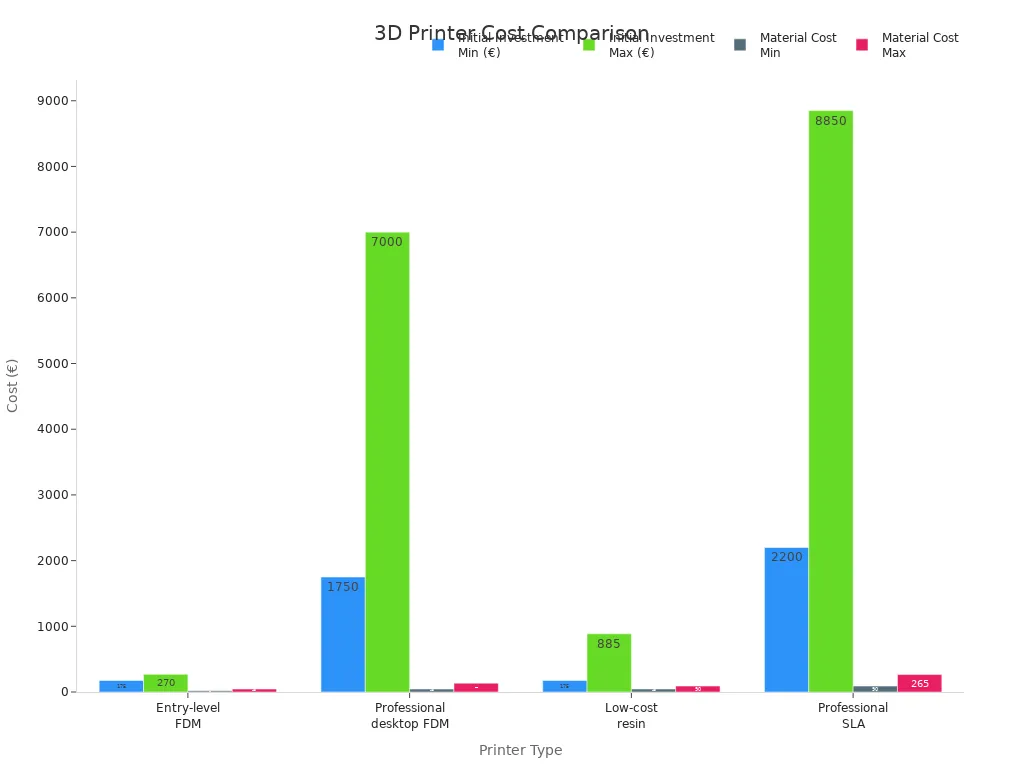
The kind of 3D printer you pick changes the price. FDM printers use plastic filaments. Resin printers use liquid resin. FDM printers are good for beginners. They are easy to use and the materials cost less. Resin printers make smoother and more detailed things. But they need special cleaning and curing steps. The table below shows how the printer type changes the first cost and material costs:
|
Printer Type |
Initial Investment Range (€) |
Material Cost Range (€) |
|---|---|---|
|
Entry-level FDM printers |
175–270 |
18–45 per kg (PLA, ABS) |
|
Low-cost resin printers |
175–885 |
45–90 per liter (standard) |
|
Professional desktop FDM |
1750–7000 |
45–135 per kg (specialized) |
|
Professional SLA printers |
2200–8850 |
90–265 per liter (specialized) |
Extra features can make a 3D printer cost more. Some examples are automatic bed leveling, Wi-Fi, and bigger build areas. Resin printers also take more time to clean and cure. This makes the total 3D printing cost go up.
Brand and Support
The brand of your printer matters for the price. Famous brands usually cost more. They give better quality and good customer service. Some brands have longer warranties and helpful support. For example, Prusa has 24/7 live chat and email help in many languages. Fusion3 gives free technical support for life. The table below shows how long the warranties last:
|
Manufacturer |
Warranty Duration |
Place of Manufacture |
|---|---|---|
|
Fusion3 |
2 Years |
USA |
|
Stratasys |
1 Year |
USA |
|
Ultimaker |
1 Year |
Netherlands |
|
Zortrax |
1 Year |
Poland |
|
Raise3D |
90 Days / 1 Year |
China |
|
Markforged |
90 Days / 1 Year |
USA |
|
Makerbot |
1 Year |
China |
Materials and Upkeep
You need to think about costs that keep coming. FDM filament usually costs €20–€40 for each kilogram. Resin for SLA printers costs €50 to over €200 for each liter. You also need to pay for new nozzles, glue for the build plate, and cleaning supplies. Resin printers need wash and cure stations, isopropyl alcohol, gloves, and new FEP films. These costs add up as you keep printing.
|
Cost Component |
Description |
|---|---|
|
Materials |
Standard FDM filament costs €20–€40/kg; resin for SLA ranges from €50 to €200/liter. |
|
Operational Costs |
Includes electricity, consumables, maintenance, and software licenses. |
Additional Expenses Beyond 3D Printers Cost
Materials and Supplies
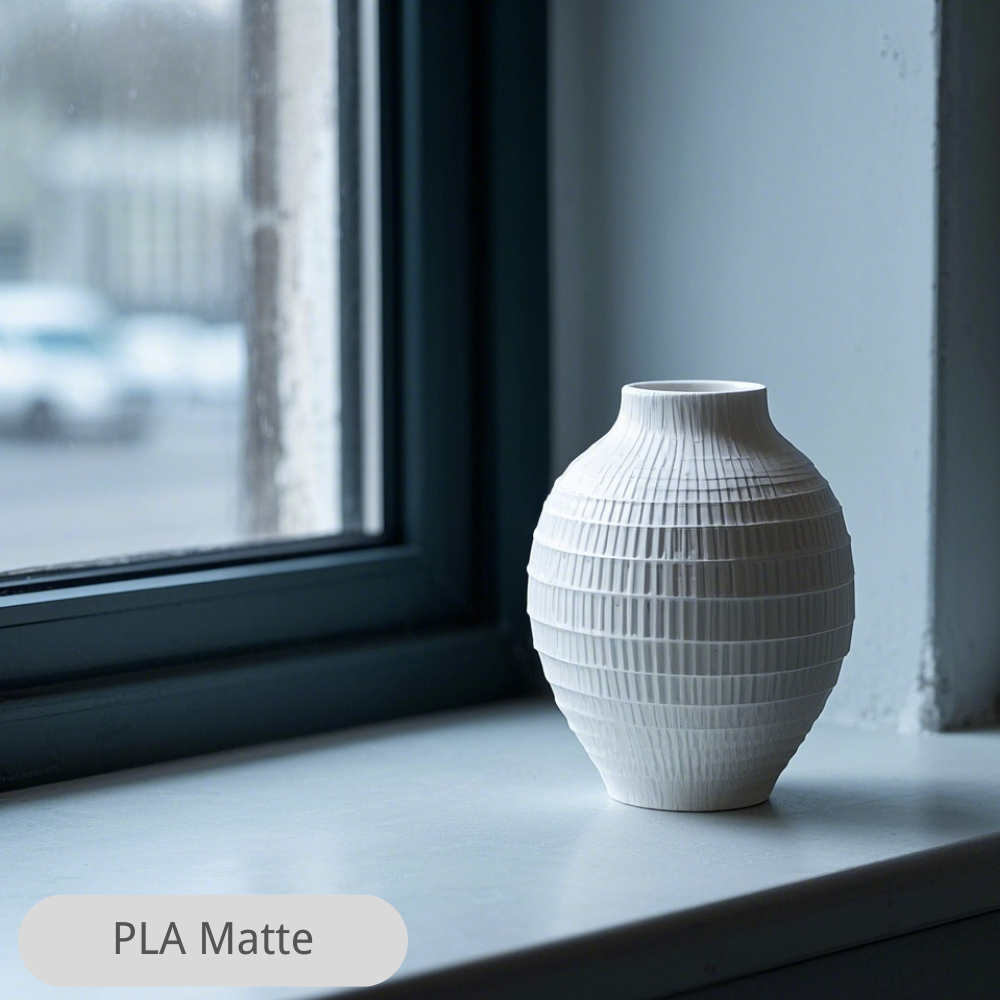
Materials are a big part of the cost for 3D printing. Most new users pick PLA, ABS, or PETG filaments. Resin printers use liquid resin instead of filament. The table below shows how much these materials usually cost:
|
Material Type |
Price Range (per kg) |
|---|---|
|
PLA (Polylactic Acid) |
$20 - $30 |
|
ABS (Acrylonitrile Butadiene Styrene) |
$25 - $40 |
|
PETG (Polyethylene Terephthalate Glycol) |
$22 - $35 |
|
Standard Resins |
$50 - $70 |
|
Specialized Resins |
$80 - $200 |
Electricity also adds to the total price. Most home printers use $0.05 to $0.15 each hour. The final cost depends on how much you print and your settings.
Maintenance and Replacement Parts
You need to spend money to keep your printer working well. You may need to buy new nozzles, which cost $15 to $20. Sometimes you have to fix clogged nozzles or change old belts. You might also need to replace a bent build plate. Cleaning your printer and checking for problems helps stop bigger issues.
- Spare nozzles: $15–$20
- Belts and build plates: prices change by model
- Cleaning supplies: isopropyl alcohol, brushes, and cloths
Shipping and import fees can make things cost more, especially if you order from other countries. Customs fees can be 5% to 20% of what you pay for the part.
Accessories and Upgrades
Many new users buy extra items to make printing better. Some popular upgrades are hotends, build surfaces, bed adhesives, and more nozzles. Some people add new controller boards, extruders, or software for better prints. These things make printing easier and can help your prints look nicer.
- Hotends
- Build surfaces
- Bed adhesives
- Nozzles
- Software
- Controller boards
- Extruders
Choosing a Low-Cost 3D Printer
Matching Features to Your Needs
When you pick a cheap 3d printer, think about what you need. Beginners should get printers that are simple to use and set up. Many beginner printers are easy to put together and have touchscreens. Good print quality helps you make strong and detailed things. A bigger build area lets you print large or many items at once. It is important to use different filaments like PLA or PETG. Having a helpful community makes fixing problems easier and helps you learn.
Key features to think about:
- Price and how well it works
- Easy to use and set up
- Build size for your projects
- Works with common materials
- Tutorials and active forums
A hobbyist 3d printer might have auto bed leveling and be quiet. These features are nice if you share your space. Enthusiast 3d printers have more advanced features, but beginners should focus on what they need most.
Avoiding Unnecessary Extras
Many new users buy things they do not need. To keep costs low, only get what is important. You need filament for FDM printers or resin for resin printers. Store your materials in airtight boxes to keep them fresh. Basic tools for setup and fixing problems are helpful. These include calibration tools and spare parts. Tools for finishing prints help you save money and make your prints look better.
Tip: Start with the basics. Add upgrades when you know what helps you.
A hobbyist 3d printer does not need every extra part. Wait to buy professional upgrades until you have more experience.
Getting the Best Value
To get the best value, match your budget to your needs. Pick a print bed size that fits your projects. Pre-assembled printers save time. DIY kits help you learn more. Look for easy features like auto bed leveling. Think about long-term costs like filament and fixing your printer when you compare prices.
|
Printer Type |
Best For |
Value Tip |
|---|---|---|
|
Hobbyist 3d printer |
Beginners, hobbyists |
Focus on ease of use |
|
Enthusiast 3d printer |
Advanced users |
Look for advanced features |
|
Professional 3d printer |
Businesses |
Invest for high performance |
|
Industrial 3d printer |
Factories |
Choose for large-scale jobs |
Beginner 3d printers can be cheap and work well. You can save money by making smart choices and planning ahead.
Beginner 3D printers cost from $200 to $800. Many things change the total price. These include features, brand, and other costs. You also need to save money for materials and fixing your printer. These things can make the cost go up over time.
- The first price looks cheap, but you will spend more later. You might waste material or need repairs, and these cost extra.
- Some printers cost less than $300. This means more people can try 3D printing.
- Easy-to-use printers help new users start fast and learn easily.
Think about what you need and what is important to you. A cheap 3D printer can be a good and smart buy.
FAQ
How much does a beginner 3D printer cost?
Most beginner 3D printers cost between $200 and $800. Entry-level models are often found for less than $500. Prices depend on features and brand.
What is the cheapest material for 3D printing?
PLA filament is the cheapest and easiest material for beginners. It usually costs $20 to $30 per kilogram. PLA works well for most simple projects.
Tip: Buy filament in bulk to save money over time.
Do I need special software for my 3D printer?
Most 3D printers come with free slicing software. Popular options include Cura and PrusaSlicer. These programs help you prepare your designs for printing.
|
Software |
Cost |
Works With |
|---|---|---|
|
Cura |
Free |
Many FDM printers |
|
PrusaSlicer |
Free |
Prusa, others |
How often should I maintain my 3D printer?
Check your printer after every few prints. Clean the nozzle and build plate. Replace worn parts when needed. Regular care helps your printer last longer.
