
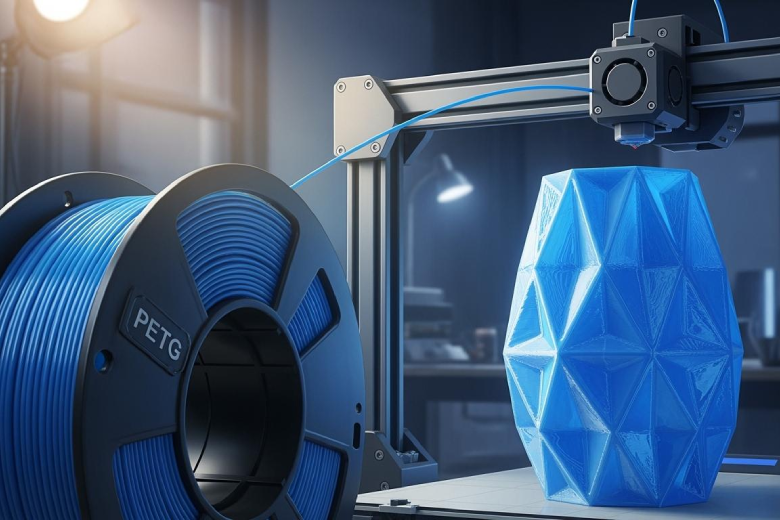
What is petg? PETG filament is a popular material used in 3d printing that combines qualities from both PLA and ABS. Many users choose PETG because it is easy to print, impact-resistant, and food-safe. It offers strong mechanical properties and good thermal stability. PETG provides excellent layer adhesion and minimal warping. The filament is durable and clear, allowing for transparent prints.
|
Property |
Description |
|---|---|
|
Impact Resistance |
PETG is known for its excellent impact resistance and durability. |
|
Layer Adhesion |
It has excellent layer adhesion for high-quality prints. |
|
Clarity |
PETG allows for transparent and clear results. |
Key Takeaways
- PETG filament combines the best features of PLA and ABS, offering strength, flexibility, and ease of use for 3D printing.
- Choose PETG for projects requiring durability and chemical resistance, such as functional parts, containers, and outdoor items.
- Adjust print settings carefully, including nozzle temperature and bed temperature, to achieve high-quality prints with PETG.
- Store PETG filament in a dry place with silica gel to prevent moisture absorption, which can affect print quality.
- Always check for food-safe certifications when using PETG for food-related projects to ensure safety.
What Is PETG?
PETG Definition
What is petg? PETG stands for polyethylene terephthalate glycol. This material is a modified version of PET, which is the same plastic used to make water bottles. The addition of glycol during production changes the properties of the plastic. Glycol makes the material clearer, less brittle, and easier to use in 3d printing. Many people ask, "what is petg?" because it combines the best features of other common plastics. PETG filament is strong, flexible, and has excellent layer adhesion. These qualities make it a popular choice for both beginners and experienced users.
Some important points about what is petg? include:
- Polyethylene terephthalate glycol is the full name for PETG.
- PETG is a blend of PET and glycol, which improves clarity and reduces brittleness.
- The material is designed for high performance in 3d printing.
How PETG Is Made
Manufacturers create petg by combining two main raw materials:
The process starts with PET, which is melted and mixed with glycol. This mixture changes the structure of the plastic. The result is a filament that is less likely to warp and has better layer adhesion than other materials. PETG filament is then cooled and shaped into spools for use in printers.
Note: The addition of glycol is what sets PETG apart from regular PET. This small change makes a big difference in how the material behaves during printing.
The manufacturing process for petg is different from PLA and ABS. The table below shows some key differences:
|
Material |
Melting Point (°C) |
Flexibility |
Layer Adhesion |
Odor during Printing |
|---|---|---|---|---|
|
PETG |
220 - 235 |
High |
Better |
Minimal |
|
PLA |
~180 |
Low |
Good |
Present |
|
ABS |
~220 |
Moderate |
Good |
Present |
PETG is a blend of PET and glycol, which gives it higher flexibility and durability compared to PLA and ABS. The material is less prone to warping and offers better layer adhesion. These features make petg a reliable choice for many printing projects.
PETG Filament Properties
Strength and Flexibility
PETG filament stands out for its impressive combination of strength and flexibility. Many users choose this material because it is more robust than PLA and less brittle. PETG can absorb impacts without cracking, which makes it a reliable choice for parts that need to handle stress or sudden force. This filament is slightly elastic, so it bends before breaking. That flexibility helps prevent damage during use or assembly.
- PETG offers a strong mix of stability and flexibility.
- It is significantly more impact-resistant than PLA and is not brittle, but rather slightly elastic.
- PETG has better temperature resistance than PLA and shows minimal warping during printing.
PETG filament is ideal for functional parts, outdoor applications, and objects that must withstand mechanical stress. Compared to PLA, PETG is more impact-resistant and flexible, while PLA is more prone to breakage and has lower temperature resistance. These qualities make petg a top choice for both beginners and advanced users who want durable prints.
Chemical and Heat Resistance
PETG filament is known for its excellent resistance to chemicals and heat. Many chemicals, such as diluted acids, oils, fats, and alcohols, do not damage petg. This property allows users to print containers, machine parts, or tools that may come into contact with various substances.
|
Chemical Resistance Source |
Description |
|---|---|
|
3D Druck Archiv |
PETG is resistant to many chemicals, including diluted acids, oils, fats, and alcohols. |
|
3D Grenzenlos |
PETG-printed objects are chemically resistant. |
|
Einfach 3D Druck |
PETG filament is resistant to diluted acids, oils, fats, and alcohols. |
Heat resistance is another important feature. PETG filament can withstand temperatures up to 80°C without significant deformation or damage. Some sources even list the optimal temperature resistance as high as 85°C. This makes petg suitable for parts exposed to moderate heat, such as automotive components or kitchen tools. PLA, by comparison, begins to soften at 60°C, while petg maintains its shape and strength at higher temperatures.
Tip: If you need a filament for parts that will face heat or chemicals, petg filament is a reliable option.
Printability
PETG filament is popular in 3d printing because it is easy to use and produces high-quality results. The recommended printing temperature for petg ranges from 220°C to 255°C. Higher temperatures improve layer adhesion, which is important for technical parts. Lower temperatures can help with overhangs and bridges, making the print look cleaner.
- Recommended printing temperatures for PETG filament are between 220°C and 255°C.
- Higher temperatures enhance layer adhesion, which is crucial for technical components.
- Lower temperatures improve the quality of overhangs and bridges.
Compared to other materials, petg offers a good balance of strength, toughness, and printability. The table below shows how petg compares to PLA and ABS:
|
Property |
PETG |
PLA |
ABS |
|---|---|---|---|
|
Strength |
Lower than PETG |
Moderate |
|
|
Toughness |
Excellent |
Moderate |
Good |
|
Heat Resistance |
70-80°C |
60-70°C |
100-110°C |
|
Chemical Resistance |
Good |
Moderate |
Moderate |
|
Shrinkage |
Low |
Moderate |
High |
|
Printing Temp |
220-250°C |
180-220°C |
210-250°C |
PETG filament shows minimal warping and shrinkage during printing. This makes it easier to achieve accurate, stable prints. Many users find that petg is less challenging to print than ABS and more durable than PLA. For anyone looking for a versatile and dependable filament, petg is an excellent choice.
PETG vs PLA and ABS
PETG vs PLA
PETG and PLA are two of the most popular materials in 3d printing. Both offer easy processing, but their properties differ in important ways. PETG filament provides higher strength and toughness than PLA. It resists impacts and can handle more mechanical stress. PLA is easier to print and works well for decorative objects, but it is more brittle and less heat-resistant.
The following table compares their mechanical and environmental properties:
|
Property |
PETG |
PLA |
|---|---|---|
|
Strength |
High strength and toughness |
Lower strength |
|
Processability |
Easy to process |
Easy, but more prone to breakage |
|
Temperature resistance |
High temperature resistance |
Lower temperature resistance |
|
Warping |
Low warping tendency |
Higher warping tendency |
|
Environmental friendliness |
Recyclable |
Biodegradable |
PETG can withstand temperatures up to 70°C, while PLA starts to soften at around 60°C. This makes PETG a better choice for functional parts that need to last. PLA, however, is biodegradable and made from renewable resources like corn, while PETG is oil-based but fully recyclable.
|
Material |
Biodegradability |
Recycling |
Source of Raw Materials |
|---|---|---|---|
|
PLA |
Biodegradable |
Not 100% recyclable |
Renewable (corn) |
|
PETG |
Not biodegradable |
100% recyclable |
Oil-based polymer |
PETG vs ABS
PETG and ABS both offer strength and durability, but they behave differently during printing. PETG is easier to print and produces almost no odor. It has a lower tendency to warp and does not always require a heated bed. ABS can handle higher temperatures, up to 100°C, but it often needs more complex printing conditions.
- PETG is easier to print than ABS.
- It is nearly odorless during processing.
- PETG has a lower tendency to warp compared to ABS.
- It does not require a heated print bed, making it less demanding in terms of printing conditions.
The table below highlights their differences:
|
Property |
PETG |
ABS |
|---|---|---|
|
Temperature Resistance |
Very high (up to 100°C) |
|
|
Impact Toughness |
High toughness |
High impact strength, but requires more complex printing conditions |
When to Use PETG
Choose PETG when you need a balance of strength, flexibility, and ease of use. PETG filament works well for mechanical parts, containers, and outdoor objects. It is also a good option for users who want a material that is easy to print but more durable than PLA. For projects that require high temperature resistance or impact strength, PETG is a reliable choice in the world of 3d printing.
PETG Filament Guide: Pros and Cons
Advantages
PETG filament guide highlights several benefits that make this material a favorite in 3d printing. PETG offers high layer adhesion, which leads to smooth and visually appealing prints. The filament shows minimal warping during cooling, so removing finished parts from the print bed is easier. PETG combines the strengths of both PLA and ABS, making it easy to print and highly durable. It only shrinks about 0.5% after cooling, which helps with post-processing and keeps dimensions accurate. PETG is also flame-retardant and resistant to many chemicals, so it works well for technical and everyday applications. Some users appreciate that PETG can be printed without a heated bed at certain temperatures. This material is recyclable, which makes it a more environmentally friendly choice.
Tip: PETG filament guide recommends PETG for users who want a balance of strength, flexibility, and ease of use.
Disadvantages
Despite its many strengths, PETG filament guide also points out some drawbacks. PETG is more prone to stringing than PLA or ABS, which can affect the surface finish of prints. Printing with PETG can be more difficult, especially for beginners, because it sometimes requires fine-tuning of settings. The cost of PETG is usually higher than that of PLA. PETG is not resistant to UV light, so printed objects may weaken if left outdoors for long periods. The surface of PETG is more susceptible to scratches, which means extra finishing may be needed for parts that need a perfect look.
|
Disadvantage |
Description |
|---|---|
|
Stringing |
More likely to produce fine threads between parts |
|
Printing Difficulty |
Needs careful adjustment of print settings |
|
Cost |
Higher price compared to PLA |
|
UV Resistance |
Not suitable for long-term outdoor use |
|
Scratch Sensitivity |
Surface scratches more easily |
PETG Applications
Industrial Uses
PETG filament plays a key role in many industrial settings. Its durability and chemical resistance make it a top choice for producing strong, functional parts. Many companies use PETG for technical components that must handle stress and impact. The electrical industry uses PETG for enclosures that protect sensitive electronics. The automotive industry relies on PETG for spare parts that need to last. In the food industry, PETG is used for packaging because it is clear and safe for contact with food. The table below shows common 3d printing applications for PETG in different industries:
|
Application Examples |
Industries |
|---|---|
|
Technical components |
Mechanical engineering |
|
Enclosures for electronics |
Electrical industry |
|
Food packaging |
Food industry |
|
Spare parts |
Automotive industry |
PETG is also popular for functional prototypes. Companies like Ultimaker use PETG to create high-strength prototypes quickly. Its flexibility and transparency help engineers test new ideas before full production. PETG filament is suitable for laboratory equipment because it resists many chemicals.
Home and Hobby Projects
PETG is a favorite among hobbyists and makers. It is easy to print and gives reliable results. Many people use PETG for 3d printing projects like phone holders, tool organizers, and custom parts for home repairs. The filament’s strength and flexibility allow users to create items that last longer than those made from other materials. PETG is also a good choice for outdoor decorations because it handles sunlight and rain better than PLA. Makers often choose PETG when they need suitable applications that require both toughness and a clean finish.
Tip: PETG works well for projects that need both durability and a smooth surface.
Food-Safe and Medical Uses
PETG stands out in food-safe and medical fields. Its chemical resistance and clarity make it ideal for food containers and dispensers. Many kitchens use PETG for custom storage solutions. In the medical sector, PETG is valued for its safety and ability to be sterilized. Hospitals use PETG for medical device housings, face shields, and other protective equipment. PETG’s transparency helps medical staff see contents clearly, which is important for safety. The material’s strength and flexibility also support the production of high-strength prototypes for medical devices.
Note: Always check if the specific PETG filament is certified as food-safe or medical grade before using it in these areas.
PETG Printing Tips
Print Settings
Choosing the right print settings helps achieve the best results with PETG. The following table shows recommended values for important parameters:
|
Setting |
Recommended Value |
|---|---|
|
First Layer Nozzle Temperature |
210 – 220 °C |
|
Nozzle Temperature |
220 – 230 °C |
|
Bed Temperature |
70 – 80 °C |
|
First Layer Print Speed |
20 mm/s |
|
Print Speed |
40 – 50 mm/s |
Start with a lower speed for the first layer. This helps the material stick to the bed. Use a slightly higher nozzle temperature for better layer bonding. Adjust these values based on your printer and the specific filament brand.
Bed Adhesion
Good bed adhesion is important for successful 3d printing. PETG can sometimes lift or warp if the first layer does not stick well. Try these methods to improve adhesion:
- Use a heated build plate.
- Keep the print chamber warm and free from drafts.
- Reduce the cooling fan speed for the first few layers.
- Apply glue stick or hairspray to the build surface.
- Add a brim or raft in your slicer settings.
- Print the first layer slowly.
Tip: Clean the print bed before each print to remove dust and oils.
Troubleshooting
Common problems with PETG include stringing, poor adhesion, and surface imperfections. Here are some solutions:
- Store filament in a dry place to prevent moisture problems.
- Lower print speed if you see stringing or weak layers.
- Adjust retraction settings to reduce fine threads between parts.
- Use high-quality filament for consistent results.
- Check fan settings if prints look rough or do not stick well.
Stringing happens when the nozzle leaves thin threads between printed areas. Lowering the temperature, increasing retraction, and adjusting travel moves can help reduce this issue.
PETG Safety and Storage
Is PETG Safe?
PETG is considered a safe material for 3d printing. It does not release toxic fumes during printing, unlike ABS. The smell is mild and sweet, which makes it more comfortable to use in home environments. PETG is skin-friendly and does not cause irritation when handled. Good ventilation is recommended in the workspace, even though it is less critical than with other filaments. Freshly printed parts can reach temperatures over 200°C. Always use protective gloves when removing prints from the bed. Cleaning the nozzle can also pose a burn risk, so use proper tools and caution. If you use solvents for post-processing, wear gloves and respiratory protection.
Tip: PETG is safer for indoor printing, but basic safety steps help prevent accidents.
Food Contact
PETG is fda-approved for food contact in its pure form. Some variants are certified as food-safe. Only PETG filaments with official EU 10/2011 or FDA certification are considered safe for food containers. Many commercial filaments contain dyes or additives that are not approved for food contact. Always check the packaging or manufacturer’s information before using PETG for food-related projects.
|
Certification |
Food-Safe Status |
|---|---|
|
FDA/EU 10/2011 |
Approved |
|
No Certification |
Not guaranteed |
Storage Tips
PETG filament absorbs water from the air. Moisture can affect print quality and cause problems like bubbling or poor layer adhesion. Store filament in resealable bags with silica gel packets to keep it dry. This method helps maintain the quality and performance of PETG. If you wonder how to store petg filament, keep it in a cool, dry place away from sunlight. Proper storage extends the life of your filament and ensures reliable results.
- Use airtight containers or bags.
- Add silica gel to absorb moisture.
- Keep filament away from heat and UV light.
Keeping PETG dry is essential for consistent prints.
PETG filament combines strength, flexibility, and chemical resistance. It prints easily and works well for many projects. PETG suits a wide range of users:
|
Description |
|
|---|---|
|
Professionals |
Engineers and designers making prototypes and creative models |
|
Hobbyists |
Makers building durable parts for personal use |
|
Educational Institutions |
Schools and families teaching 3D printing skills |
PETG offers reliable results for both simple and advanced prints. Try PETG for your next project and discover its impressive performance!
FAQ
What does PETG stand for?
PETG stands for Polyethylene Terephthalate Glycol. The glycol makes the plastic less brittle and easier to print.
Is PETG filament waterproof?
Yes, PETG is water-resistant. It does not absorb much moisture and works well for outdoor or wet environments.
Can PETG be recycled?
|
Material |
Recyclable? |
|---|---|
|
PETG |
Yes |
PETG can be recycled. Many recycling centers accept PETG, but always check local guidelines.
Does PETG need a heated bed?
A heated bed is recommended for PETG. Set the bed temperature between 70°C and 80°C for best results.
