
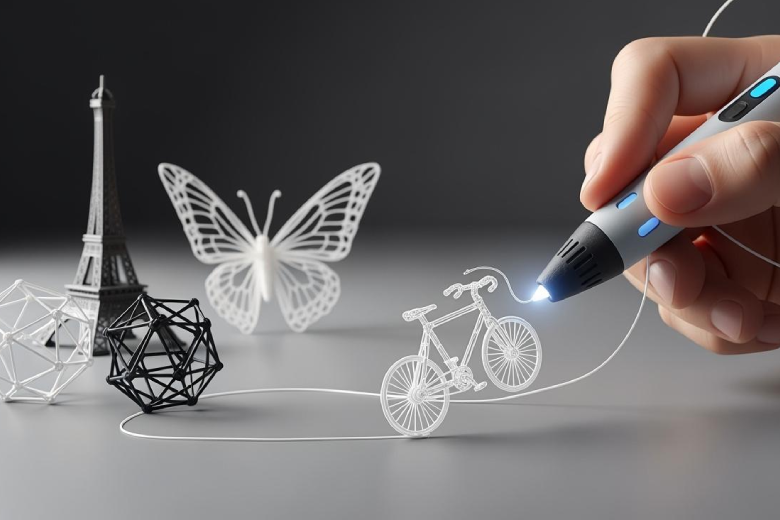
Un stylo 3D permet de dessiner des objets en trois dimensions en chauffant et en extrudant du plastique, un peu comme un pistolet à colle. Aucun logiciel ni installation technique n'est nécessaire. Cet appareil séduit les personnes qui apprécient la créativité, l'apprentissage par la pratique ou les activités ludiques.
- Le marché mondial des stylos 3D a atteint 215,6 millions de dollars américains en 2024.
- Les experts prévoient que le marché connaîtra une croissance annuelle de 17,4 %, pour atteindre 712,3 millions de dollars américains d'ici 2033.
Points clés à retenir
- Un stylo 3D permet aux utilisateurs de créer des objets tridimensionnels en extrudant du plastique chauffé, ce qui le rend accessible aux débutants et aux projets créatifs.
- L'utilisation d'un stylo 3D peut améliorer le raisonnement spatial et la créativité, ce qui profite aux étudiants et aux artistes en transformant des croquis plats en sculptures.
- Les stylos 3D ont également des applications pratiques, comme la réparation d'objets cassés et le comblement des interstices dans les modèles imprimés en 3D, offrant une alternative intéressante aux adhésifs traditionnels.
Principes de base du stylo 3D
Qu'est-ce qu'un stylo 3D ?
Un stylo 3D est un appareil portatif permettant de dessiner des objets en trois dimensions en extrudant du plastique chauffé. Son fonctionnement est similaire à celui d'un pistolet à colle, mais il utilise des filaments de plastique au lieu de colle. Lorsqu'on appuie sur un bouton, le stylo chauffe le filament et le propulse par une buse. Le plastique refroidit rapidement, permettant ainsi de créer des formes et des structures en suspension ou sur une surface. Contrairement aux imprimantes 3D, un stylo 3D ne nécessite aucun logiciel, fichier numérique ni installation complexe. Cette simplicité le rend accessible aux débutants, aux enfants et à toute personne intéressée par des projets créatifs. Le premier stylo 3D, le 3Doodler, a popularisé cette technologie et a inspiré de nombreux nouveaux modèles.
Le processus d'extrusion dans un stylo 3D Un pistolet à colle fonctionne de manière similaire : les deux appareils chauffent le plastique et l’extrudent pour le dessin ou l’application. Cependant, le mode d’alimentation diffère légèrement, car un pistolet à colle nécessite des modifications pour utiliser du PLA.
Comment ça marche
Un stylo 3D fonctionne grâce à plusieurs composants et mécanismes clés. absorbe les filaments de plastique ou des tiges, généralement en PLA ou en ABS. À l'intérieur du stylo, un mécanisme d'alimentation, souvent une vis sans fin, saisit le filament et le tire vers une buse chauffée. La buse chauffe le plastique jusqu'à son point de fusion, lui permettant de s'écouler facilement pendant le dessin.
| Composant | Description |
|---|---|
| Mécanisme d'alimentation | Le filament est tiré à travers le stylo au moyen d'un entraînement par vis sans fin, qui possède un bord tranchant pour agripper le filament. |
| Chauffage | Le stylo chauffe le filament avant son extrusion par la buse, située sur l'axe central du stylo. |
| Types de filaments | Les filaments courants comprennent le PLA et l'ABS, qui fondent à des températures différentes (PLA à environ 190 °C, ABS à environ 225 °C). |
Le stylo est doté d'un curseur de contrôle de vitesse, permettant à l'utilisateur d'ajuster le débit du plastique. Ce contrôle contribue à la précision et au détail. La pointe du stylo chauffe rapidement, L'impression se fait généralement en une minute environ, permettant ainsi aux utilisateurs de commencer à dessiner peu après la mise en marche. L'entretien est simple car l'appareil comporte moins de pièces mobiles qu'une imprimante 3D. La plupart des problèmes, comme une buse bouchée ou une surchauffe, peuvent être résolus en nettoyant la buse ou en laissant le stylet refroidir.
Matériels
Les matériaux les plus courants pour un stylo 3D sont les filaments plastiques.Chaque type de filament possède des propriétés et des températures de fusion uniques.
- PLA (Acide polylactique): Biodégradable, basse température de fusion (180-220°C), Déformation minimale, mais cassant.
- ABS (Acrylonitrile Butadiène Styrène): Solide, durable, résistant aux hautes températures (210-250°C), mais dégage des fumées et peut se déformer.
- PETG (polyéthylène téréphtalate glycol modifié): Durable, flexible, résistant aux chocs (220-250°C), mais peut être plus cher.
- TPU (polyuréthane thermoplastique): Très flexible et résistant à l'abrasion, mais difficile à travailler.
- Nylon: Extrêmement résistant et flexible, mais nécessite des températures élevées (240-260°C).
- PCL (Polycaprolactone): Point de fusion bas (60-70°C), biodégradable, sans danger pour les enfants, mais résistance limitée.
| Type de filament | Température de fusion (°C) | Température de fusion (°F) |
|---|---|---|
| PLA | 356-374 | |
| ABS/FLEXIBLE | 200-220 | 392-428 |
De nombreux filaments sont disponibles dans une vaste gamme de couleurs. Par exemple, l'ABS et le PLA existent en au moins 10 couleurs chacun, le PLA étant souvent vendu en longueurs plus importantes par couleur. Les filaments spéciaux, comme les filaments phosphorescents ou métallisés, offrent encore plus de possibilités créatives.
- Le PLA est fabriqué à partir de ressources renouvelables comme l'amidon de maïs ou la canne à sucre et est biodégradable dans des conditions de compostage industriel.
- L'ABS est dérivé du pétrole et n'est pas biodégradable, ce qui le rend moins respectueux de l'environnement que le PLA.
Conseil : Utilisez toujours le type de filament et la température appropriés à votre stylo 3D afin d’éviter les obstructions et d’assurer un fonctionnement fluide.
La sécurité demeure importante Lors de l'utilisation d'un stylo 3D, il est important d'éviter de toucher la buse chaude et de travailler dans un endroit bien aéré, notamment avec l'ABS, qui peut dégager des vapeurs. Les enfants doivent utiliser des stylos adaptés à leur âge et être toujours sous la surveillance d'un adulte.
Utilisation du stylo 3D
Créatif Pro objets
Des artistes et des amateurs utilisent un stylo 3D pour créer des œuvres impressionnantes. D'après des enquêtes auprès des utilisateurs, Parmi les projets populaires, on trouve des voitures de taille réelle., Des articles de mode haut de gamme et des œuvres d'art multimédias mêlant dessins 3D et autres matériaux. Certains artistes ont même construit des basiliques complètes, illustrant l'étendue des possibilités. Un stylo 3D permet de dessiner en trois dimensions, ce que les outils artistiques traditionnels ne permettent pas. Cet outil rend possible la création de formes géométriques complexes, comme les cônes, les fractales et les spirales basées sur des suites mathématiques. transformer des croquis plats en sculptures, Le stylo 3D ouvre de nouvelles voies à la créativité et à l'exploration.
outils de dessin 3D activer les zones cérébrales liées au raisonnement spatial et la créativité. Cela signifie que l'utilisation d'un stylo 3D peut aider les gens à penser de manière plus visuelle et à résoudre des problèmes de façon inédite.
Réparations et utilisations pratiques
De nombreuses personnes utilisent un stylo 3D pour des réparations à domicile ou pour des projets de bricolage. réparer les objets en plastique cassés et combler les interstices des modèles imprimés en 3D. Certains utilisateurs affirment que les réparations effectuées avec un stylo 3D sont si solides qu'il est impossible de les arracher. Cet outil constitue ainsi une alternative durable à la colle et aux autres adhésifs.
Qui utilise des stylos 3D ?
Élèves, enseignants, artistes et ingénieurs tirent tous profit de l'utilisation d'un stylo 3D. À l'école, les enseignants utilisent ces stylos pour dynamiser les apprentissages et aider les élèves à construire des maquettes pour les cours de sciences et de mathématiques. Les élèves développent leur perception spatiale et leur motricité fine en manipulant des objets tridimensionnels. Le stylo 3D permet également encourage le travail d'équipe par le biais de projets de groupe et des leçons interactives. Les artistes et les designers l'utilisent pour exprimer des idées sous de nouvelles formes, tandis que les amateurs apprécient d'expérimenter des tâches créatives et pratiques.
Un stylo 3D offre de nombreux avantages aux étudiants et aux créateurs. Les utilisateurs témoignent. engagement accru et la mise au point, comme indiqué ci-dessous :
| Avantage | Description |
|---|---|
| Engagement accru des étudiants | Les élèves ont apprécié l'utilisation du stylo 3D, ce qui leur a permis de consacrer plus de temps aux exercices et à des travaux supplémentaires. |
| S'adapter aux différents apprenants | Ce stylo a permis de combler le fossé entre les penseurs convergents et divergents dans des matières comme la physique. |
| Amélioration de la concentration pour les élèves atteints de TDAH | Des études ont montré une amélioration de la concentration et de l'attention chez les élèves diagnostiqués avec un TDAH. |
Les kits de démarrage restent abordables pour les débutants :
| | Prix |
|---|---|
| Stylo d'impression 3D SCRIB3D P1 | 39,99 $ |
| Kit de stylo d'impression 3D 3Doodler Start+ Essentials | 60,00 $ |
Les nouveaux utilisateurs peuvent trouver guides utiles et des pochoirs en ligne :
Conseil : Commencez par des projets simples pour développer vos compétences et votre confiance en vous.
FAQ
Un stylo 3D est-il sans danger pour les enfants ?
Ce stylo 3D conçu pour les enfants est doté de dispositifs de sécurité. La surveillance d'un adulte est recommandée pour une utilisation en toute sécurité. Les enfants doivent éviter de toucher l'embout chaud.
Un stylo 3D peut-il fonctionner sur n'importe quelle surface ?
Un stylo 3D fonctionne de manière optimale sur des surfaces lisses et résistantes à la chaleur. Le verre, le métal ou les tapis de dessin spéciaux offrent les meilleurs résultats.
Que doivent faire les utilisateurs si le stylo se bouche ?
Conseil : Laissez le stylo refroidir, puis retirez délicatement le filament. Nettoyez la buse avec l’outil fourni. Un nettoyage régulier prévient la plupart des obstructions.
