




Multi-color FDM prints look great. But the cost usually isn’t the extra spools.
It’s the stuff you don’t want to pay for: purge waste, longer print time, and more ways for a long print to fail.
This guide is for people in the “I’m comparing options” stage. You’ll get a simple cost model, a method-by-method breakdown, and a few rules of thumb that keep you from buying the wrong kind of complexity.
A practical decision framework (use this before you compare hardware)
Multi-color printing cost lives in four buckets:
- Upfront hardware cost: extra feeders, extra hotends, extra tools.
- Material waste: purge/flush material, wipe/prime towers, failed prints.
- Time cost: longer prints, more babysitting, slower iteration.
- Failure risk: jams, misfeeds, color contamination, and “it was fine for 12 hours until it wasn’t.”
The trap is optimizing the wrong bucket.
If you print a multi-color part once a month, spending money to save purge waste rarely makes sense. If you do multi-material prints every week (especially with soluble supports), the “waste + time” tax adds up fast.
Pro Tip: Before you judge a multi-color setup, open your slicer preview and compare model grams vs waste grams and total print time vs swap overhead. If waste is close to (or higher than) the model mass, your real cost is dominated by purging, not filament price.
One table to compare the main methods
Below is a high-level view. It’s deliberately qualitative because exact numbers vary by slicer, filament, nozzle, and how many color changes your model forces.
|
Method |
Ongoing waste cost |
Time cost |
Setup/maintenance |
Upfront cost |
Where it shines |
|---|---|---|---|---|---|
|
Manual filament swaps |
Low material waste, high human time |
Medium to high |
Low |
Lowest |
Occasional 2–5 swaps, slow and careful |
|
Single nozzle + purge tower / prime tower |
High on swap-heavy prints |
High |
Medium |
Medium |
Convenient multi-color on a standard printer |
|
MMU/AMS-style single nozzle (auto feeding) |
High to very high depending on swaps |
High |
Medium to high |
Medium |
Many colors with minimal manual work |
|
Dual extruder / IDEX |
Medium |
Medium |
High |
High |
Two colors, two materials, soluble supports |
|
Toolchanger |
Low |
Low to medium |
Highest |
Highest |
Frequent multi-material with minimal waste |
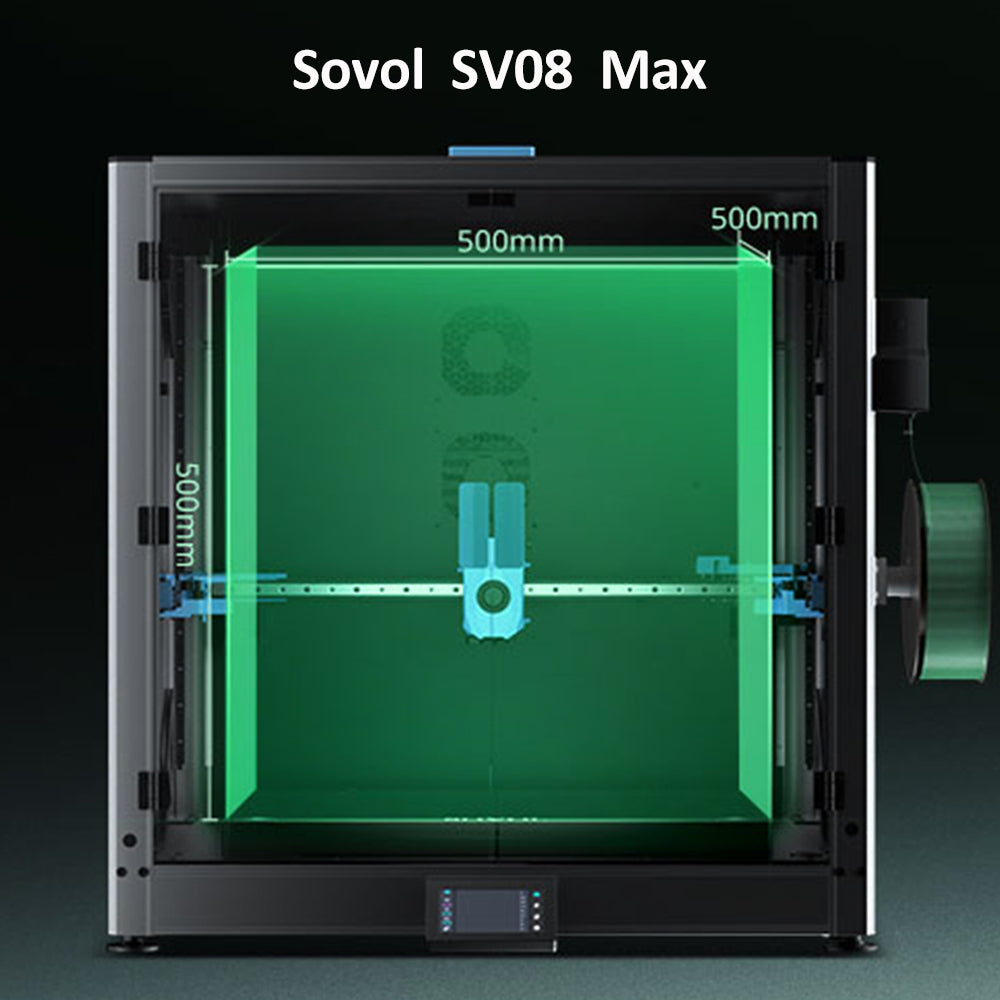
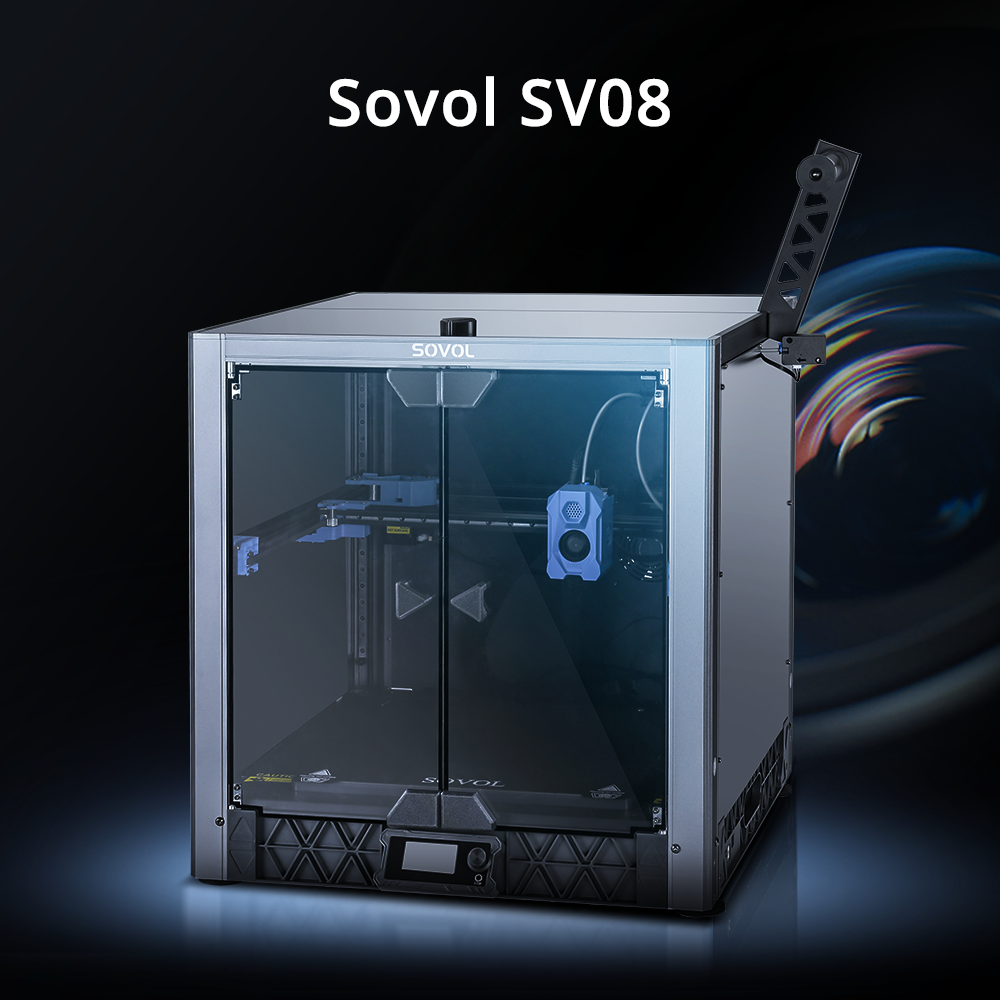
If you want a hardware-focused comparison, Sovol has a solid decision framework in Dual extruder vs AMS.
Multi-color 3D printing cost: a simple model you can actually use
You don’t need a spreadsheet with 20 inputs. You need a model that points at the few variables that dominate.
Step 1: define your per-print cost
For most makers, a useful approximation is:
Total cost per print = material used + machine time + expected failure cost
Where:
- Material used = (model grams + purge grams + support grams you throw away) × $/gram
- Machine time = total print hours × your $/hour estimate
- Expected failure cost = (failure probability) × (material + time you lose when it fails)
This is the part most people skip: if multi-color increases your failure probability, that cost is real, even if you can’t perfectly measure it.
Step 2: pull the numbers from the slicer
For purge-based systems, the slicer already estimates the two inputs that matter most:
- Total purge/flush volume (or grams)
- Total print time, including swap overhead and any towers
This is also where you’ll see the truth about multicolor 3D printing waste.
Bambu Studio, for example, documents how it calculates and lets you tune flushing volumes, and how you can redirect purge into infill/support/other objects in Reduce waste during filament change.
PrusaSlicer’s behavior is similar in spirit: a wipe tower is designed to keep flow stable and transitions clean, and its size scales with color changes. Prusa explains the mechanics (and options like wiping into an object’s infill) in Wipe tower.
Step 3: don’t guess your “$ per hour”
You can keep this simple:
- If you print for fun: you can set machine time cost close to $0 and the model still works.
- If you print for a side business: machine time is often the difference between “multi-color is fine” and “multi-color ruins margin.”
The key is consistency. You’re comparing methods, not trying to produce an invoice.
Cost profiles by method (and the hidden costs people miss)
Manual filament swaps (pause-and-swap)
Manual swaps are the cheapest way to get started.
What you pay for
- Your time. Every swap is a stop, unload, load, purge, and resume.
Hidden costs
- The error rate is human. Wrong spool, wrong temp, or the filament doesn’t re-prime cleanly.
- You’ll start avoiding complex color patterns because you don’t want 20 pauses.
When it’s a good choice
- Two colors, a few swaps, and you’re fine being present during the print.
Single nozzle + purge tower / prime tower (software-driven multi-color)
This is the “convenient but wasteful” category. One nozzle does all colors, so it must purge between them.
What you pay for
- Purge material and extra time. The more swaps you force, the worse the ratio gets.
This is why purge tower filament waste can be larger than the model on swap-heavy prints.
Sovol puts it bluntly in its own cost discussion: purge waste can exceed the model’s weight, and they recommend thinking in terms of an effective filament price based on waste percentage in Is multi-color 3D printing worth it?.
Hidden costs
- Your model design matters more. A tiny logo that forces dozens of swaps can be the most expensive part of the print.
- Towers can be tall if swaps happen late in the print.
When it’s a good choice
- You want automation, you’re okay paying for waste, and you value convenience over absolute cost.
MMU/AMS-style automation on a single nozzle
Same underlying economics as purge-tower printing, but with more automation and (often) more filament-path complexity.
What you pay for
- The same “purge tax,” plus hardware and consumables for the feeder system.
If you’ve ever googled “MMU purge volume,” this is what you were trying to control.
Hidden costs
- Reliability becomes a cost. A multi-color system is only “cheap” if it finishes prints.
- Filament handling becomes part of the workflow: spool drag, brittle filament, wet filament, and messy tips all show up as jams.
When it’s a good choice
- You print multi-color often enough to justify automation.
Dual extruder / IDEX
Two independent nozzles can reduce purge waste because each color/material can stay loaded.
What you pay for
- Higher upfront machine complexity.
Hidden costs
- Calibration and alignment matter more.
- Oozing from the inactive nozzle can become its own “waste + cleanup” tax.
If you’re comparing setups, this is the core of the “AMS vs dual extruder cost” conversation: pay more upfront to avoid paying purge waste every print.
When it’s a good choice
- Two-color prints, dual-material prints, or soluble supports.
- You care about reducing purge waste and you can handle the tuning.
Toolchanger
Toolchangers are often the lowest-waste automated option because each material has its own tool.
What you pay for
- Upfront cost and mechanical complexity.
Hidden costs
- More parts, more things to maintain.
- It’s a commitment. Buying into a toolchanger for occasional multi-color prints is like buying a CNC mill to cut one bracket.
People often frame this as “toolchanger vs MMU”: low waste and fast changes, but you’re paying for the machine.
When it’s a good choice
- You do multi-material work regularly and want clean transitions with minimal waste.
For a broad overview of these categories (single nozzle, dual, IDEX, toolchanging), Snapmaker’s guide is a decent starting point: How to 3D print multiple colors.
How to reduce multi-color cost before you buy new hardware
Most “multi-color is too expensive” complaints come from waste and time. You can usually improve both.
Reduce the number of color changes (design beats slicer)
If your model forces swaps every few layers, no slicer setting will save you.
Options that work:
- Convert small color features into separate parts you glue/snap in.
- Use inlays or embossed text as a single top-layer color change.
- Accept a little bleed in internal areas and keep clean walls on the outside.
Redirect purge into something useful
If your slicer supports it, flushing into supports, infill, or sacrificial objects can change the economics.
Two practical levers to experiment with:
- reduce purge/flush volume carefully (test prints first)
- route purge into infill/support/extra objects where appearance doesn’t matter
Batch prints to amortize towers and swaps
If you’re printing one tiny multi-color token, the tower can dwarf the part.
Print a small batch in one job and the “waste per part” usually drops.
Don’t ignore failure prevention (it’s part of cost)
A failed 20-hour print is the most expensive filament-waste setting you’ll ever use.
If you’re seeing frequent failures, start with the boring stuff: filament condition, first-layer consistency, and pre-flight tests.
Sovol has practical checklists that help reduce failure-driven waste:
When it’s worth paying for lower waste
Use these rules of thumb:
- If you do multi-color once in a while: start with manual swaps or accept purge waste on a single-nozzle system.
- If you do two-color or two-material every week: dual extruder/IDEX can be worth it because it shifts cost from “waste every print” to “hardware once.”
- If you run multi-material jobs constantly: toolchanging can pay off, but only when your print volume makes the upfront cost small compared to ongoing waste and time.
The honest answer is: the more you print multi-color, the more ongoing waste matters. The less you print, the more hardware cost dominates.
FAQ
Is multi-color always more expensive than single-color?
Yes, in almost all cases. Even if your filament cost stays close, you typically pay in time, failure risk, or both.
Why can purge waste be larger than the model?
Because the printer must push old filament out of the nozzle for each change, and a wipe/prime structure often has to exist across many layers.
Is “flush into infill” safe?
It depends on your part. It’s usually fine for functional parts or thicker-walled prints. For light-colored cosmetic parts, the flushed color can sometimes show through.
What’s the fastest way to estimate cost before printing?
Slice the model twice: once single-color, once multi-color. Compare (1) total grams used and (2) total print time. That delta is your real cost.
Next steps
If you’re narrowing down which approach fits your printer and how you actually print, Sovol’s comparison post you saw earlier is a good follow-on. And if you want to reduce general print waste (supports, failures, and purge), Sovol also has a practical guide on What to do with 3D printer waste.
