
Filament Dryer
3 productos

Sobre los secadores de filamento
PLA: 45–55 °C (113–131 °F)
ABS: 70–80 °C (158–176 °F)
PETG: 60–70 °C (140–158 °F)
Nailon (PA6/PA12): 70–90 °C (158–194 °F)
PVA: 40–50 °C (104–122 °F)
TPU / TPE: 50–55 °C (122–131 °F)
ASA: 60–70 °C (140–158 °F)
PP (polipropileno): 55–65 °C (131–149 °F)
HIPS: 60–70 °C (140–158 °F)
PC (policarbonato): 80–100 °C (176–212 °F)
PEEK: 120–150 °C (248–302 °F) (se recomienda equipo de secado industrial)
Reactivación del desecante: siga las instrucciones del fabricante (normalmente 80–120 °C o más)
Los filamentos para impresión 3D son higroscópicos, lo que significa que absorben de forma natural la humedad del aire circundante. Cuando se almacenan incorrectamente o se exponen a una humedad elevada, el filamento puede absorber agua con el tiempo, lo que puede afectar negativamente a la calidad de impresión.
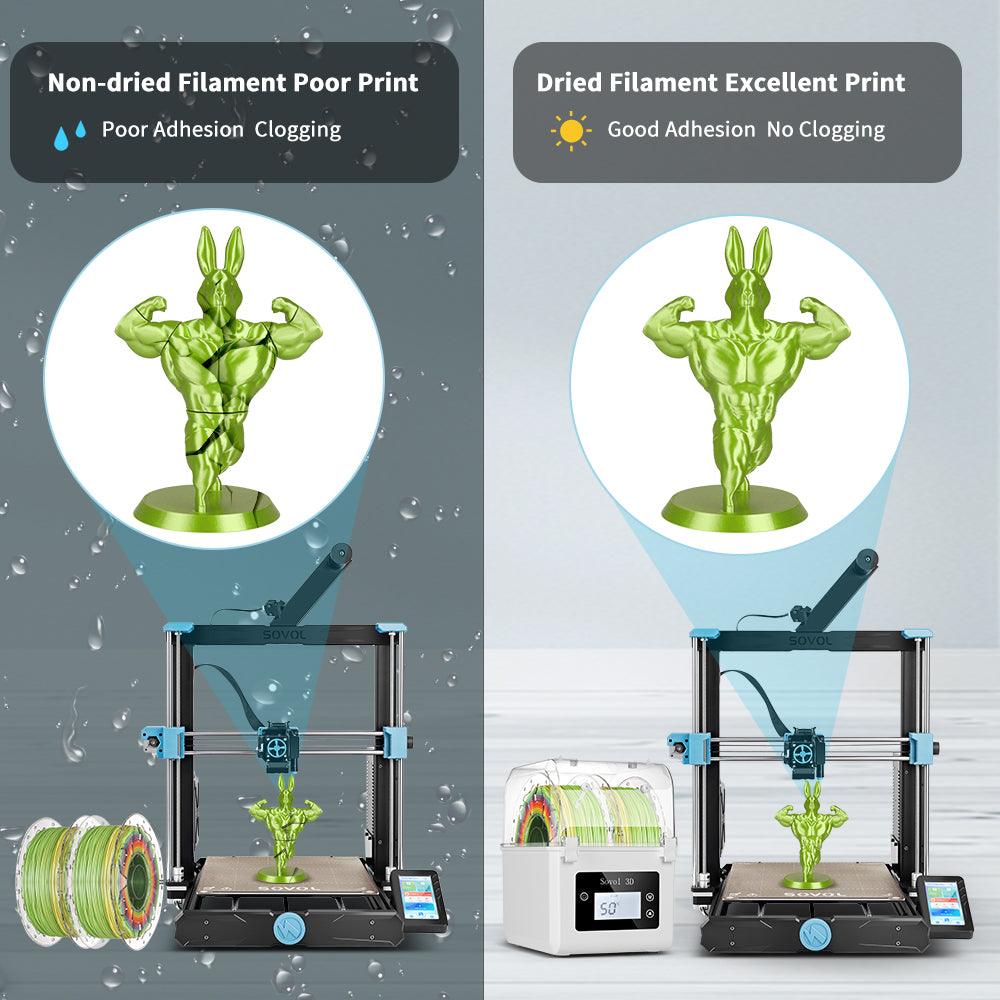
Tomando el PLA como ejemplo, aunque es menos sensible a la humedad que materiales como el nailon o el TPU, una exposición prolongada a ambientes húmedos puede seguir causando problemas de impresión. Durante la extrusión, la humedad atrapada en el filamento puede evaporarse rápidamente y provocar:
- Chasquidos o crepitaciones procedentes de la boquilla
- Mayor formación de hilos
- Burbujas o textura superficial áspera
- Extrusión irregular
- Menor adhesión entre capas
Para materiales muy higroscópicos como nailon, TPU, PVA y PC, el secado adecuado es aún más importante. El filamento húmedo puede reducir significativamente la fiabilidad de impresión y dificultar la obtención de resultados lisos, precisos y uniformes.
Once filament is removed from a sealed bag, it gradually begins absorbing moisture from the environment. In humid conditions, even properly stored filament may eventually require drying before printing.
A filament dryer uses controlled heat and airflow to remove moisture from the filament. Unlike simple storage boxes with desiccants, a dryer actively restores filament condition by reducing absorbed moisture before or during printing.
Dry filament helps improve:
- Print success rate
- Surface quality
- Dimensional accuracy
- Layer bonding
- Overall printing consistency
Different materials require different drying temperatures. A suitable filament dryer should provide accurate temperature control and enough heating capability for the materials you commonly print.
Sovol offers multiple filament drying solutions designed for different printing needs:
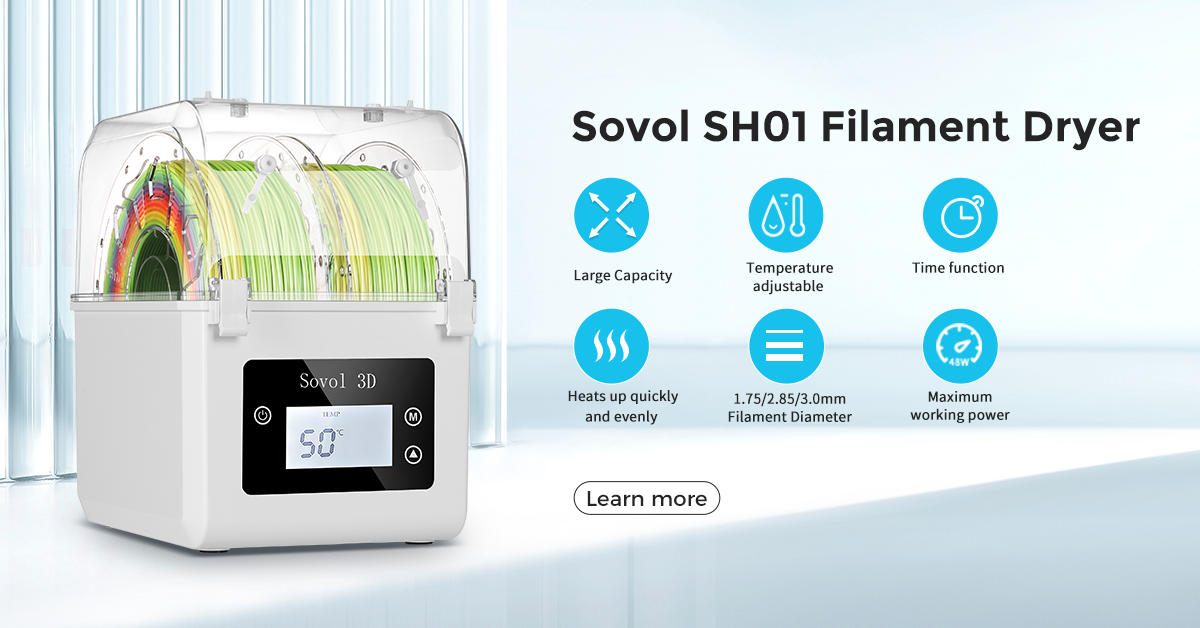
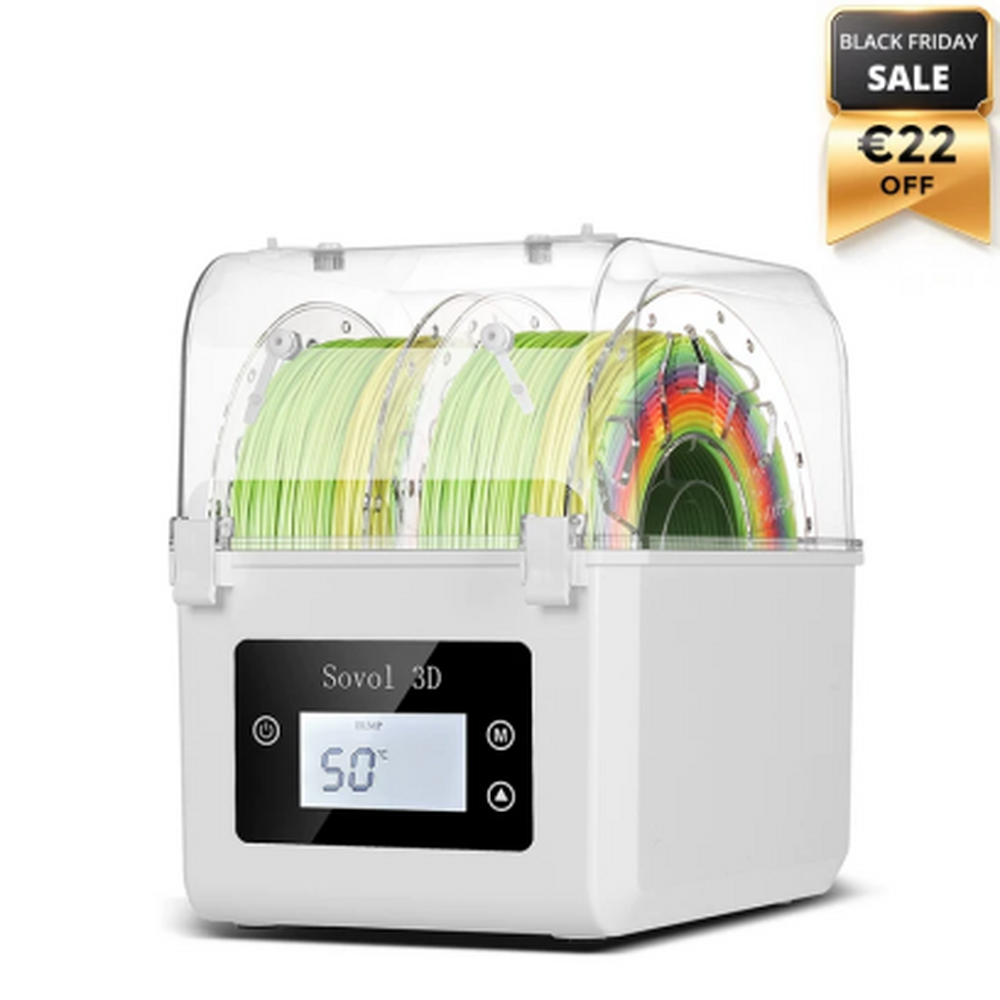
- SH01 Filament Dryer – A compact and affordable option for everyday materials such as PLA, PETG, TPU, and more.
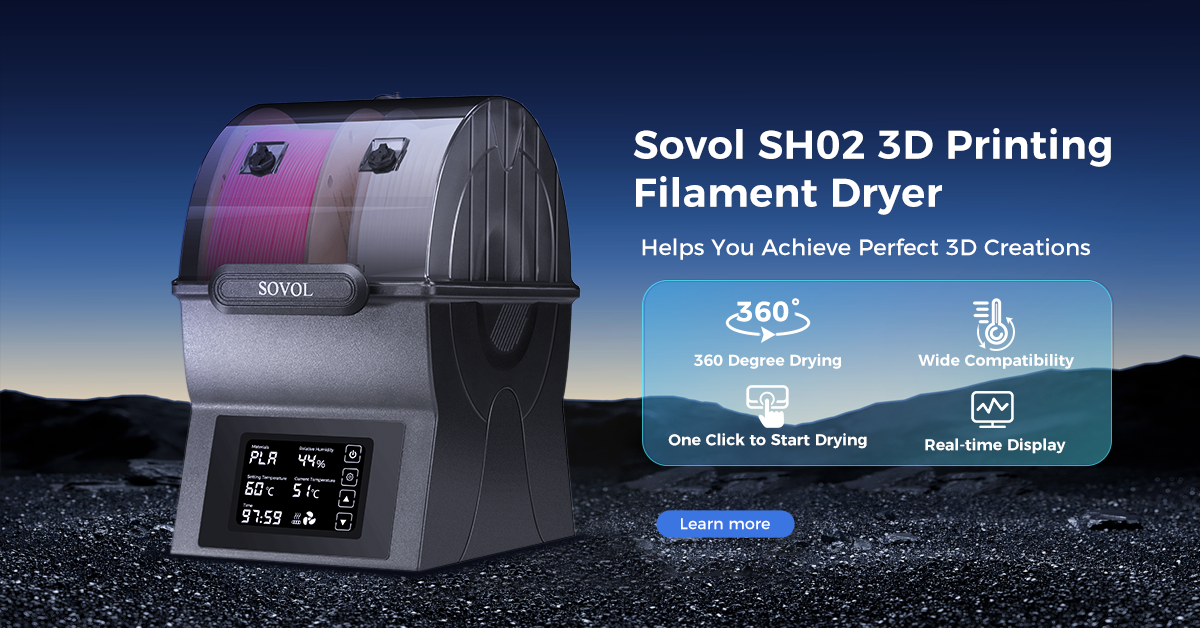
- SH02 Filament Dryer – Provides a wider temperature range for users working with more material types.
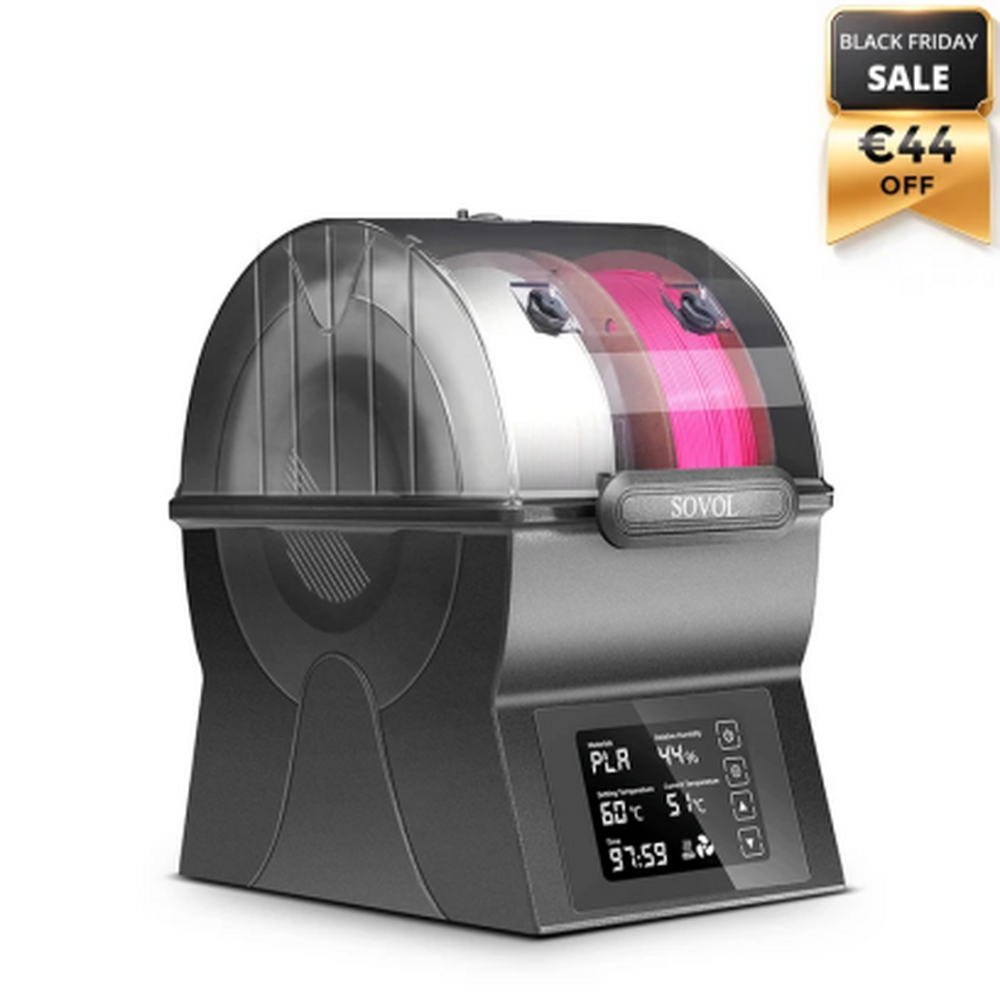
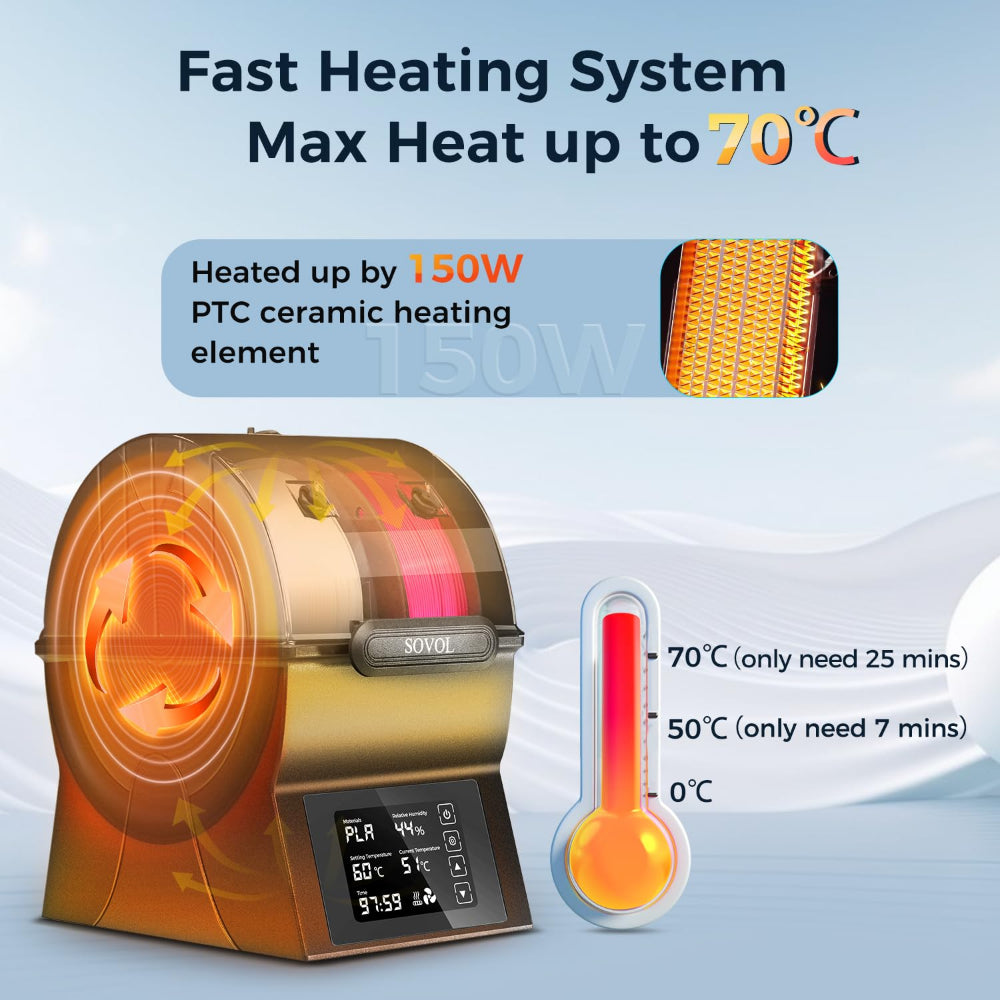
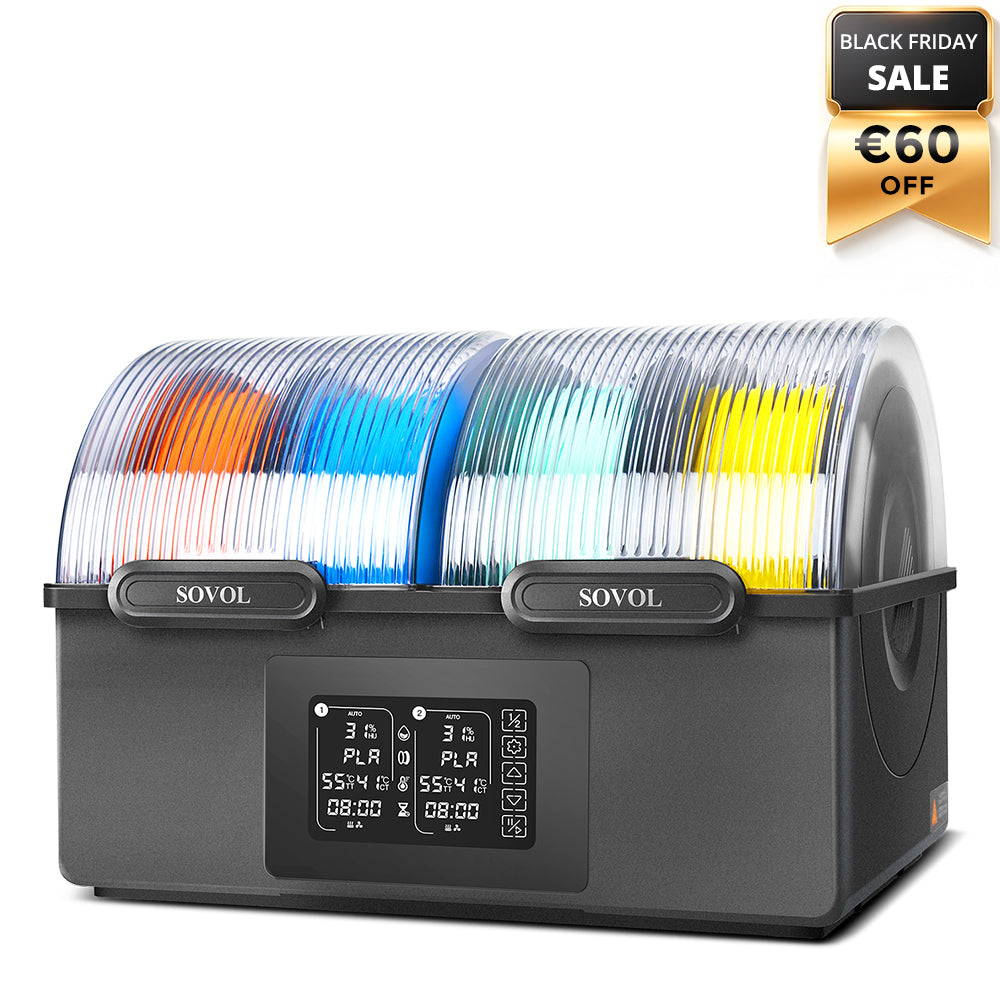
- SH03 Filament Dryer – A high-capacity solution with dual chambers, higher heating power, and advanced temperature control for demanding materials.
Whether you print PLA for everyday projects or moisture-sensitive materials like Nylon and TPU, proper filament storage and drying can help you achieve more reliable and higher-quality prints.