



Keeping 3D printing filaments dry and dust-free protects both print quality and your health. Airtight containers, vacuum bags, or resealable bags with desiccants work best for 3D printing filament storage. Moisture can weaken filament, while dust and heat can cause poor extrusion and surface defects. Studies show that ABS and PLA filaments emit ultrafine particles and volatile organic compounds, especially at higher temperatures. These emissions may lead to respiratory symptoms and other health risks, making proper storage essential for safe and successful printing.
Key Takeaways
- Store 3D printing filaments in airtight containers to protect them from moisture and dust.
- Use desiccants like silica gel to absorb moisture and maintain low humidity levels inside storage containers.
- Regularly check for signs of moisture damage, such as rough surfaces or unusual sounds during printing.
- Keep filament away from direct sunlight and high temperatures to prevent degradation and maintain print quality.
- Consider using vacuum bags for long-term storage, as they effectively reduce humidity and protect filament.
Why Moisture and Dust Harm Filament
Effects of Moisture on Filament
Moisture can quickly damage 3D printing filament. Many common materials, such as PLA, ABS, and PETG, absorb water from the air. When this happens, the filament changes in ways that hurt print quality and strength. For example, moisture can cause swelling, making the filament thicker and wider. This swelling can increase thickness by about 6% and width by about 10%. Prints made with moist filament often weigh less than those made with dry filament, which means some material is lost during printing. This leads to a weaker structure and lower tensile strength.
The table below shows how moisture affects the mechanical properties of popular filaments:
|
Material |
Effect of Moisture Absorption on Mechanical Properties |
|---|---|
|
PLA |
Decreased tensile strength, increased ductility in some cases, but overall poor mechanical properties confirmed by other studies. |
|
ABS |
Decreased tensile strength modulus, increased ductility, but strength limit largely unaffected. |
|
PETG |
Increased tensile strength over time, slight increase in modulus of elasticity, but decreased ductility observed. |
ABS is especially sensitive to moisture. It absorbs water slowly, but even small amounts can reduce print quality, cause inconsistent extrusion, and weaken layer adhesion. Nylon is even more hygroscopic and absorbs moisture quickly, which can change its mechanical properties and make prints fail.
Tip: Always store filament in a dry place to prevent moisture from affecting your prints.
Dust Issues in Filament Storage
Dust is another major problem for 3D printing filament. Dust particles can stick to the surface of the filament while it is stored. When you load the filament into your printer, the dust gets pulled into the nozzle. Even a small amount of dust can cause blockages in the nozzle, which leads to poor extrusion and failed prints.
Dust on filament can:
- Get dragged into the hotend and nozzle
- Cause clogs and blockages
- Lower print quality by creating rough surfaces
- Increase the risk of failed prints
Keeping filament away from dust is important for smooth and reliable printing. Clean storage areas and sealed containers help prevent dust from settling on the filament. Using a filament cleaner before printing can also remove any dust that has built up during storage.
Note: Regularly check your storage area and containers for dust to keep your filament in top condition.
Best Practices for Filament Storage
Airtight Containers and Bins
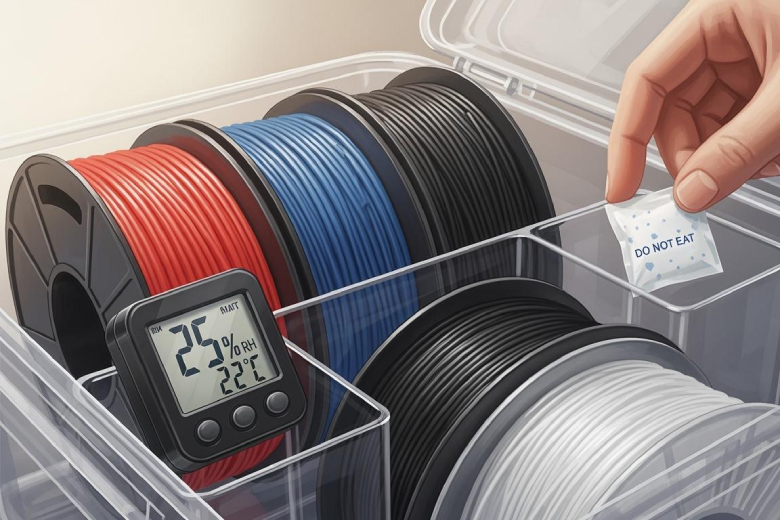
Airtight containers are one of the most reliable ways to protect filament from moisture and dust. These containers create a sealed environment that blocks outside air and humidity. Plastic cereal containers, storage tubs with gaskets, and vacuum-sealed bags are all excellent choices for airtight containers. Each type helps keep moisture-sensitive filament safe. Adding desiccants like silica gel packets inside the containers absorbs any remaining moisture. This step is important for proper filament storage.
Airtight containers should always stay closed when not in use. Monitoring humidity levels with a hygrometer helps ensure the air inside stays below 20%. This low humidity level prevents water from entering the filament. Keeping filament in airtight containers also stops dust from settling on the surface. Clean containers and a tidy storage area reduce the risk of contamination.
Tip: Store filament in a cool, dry, and dark place. High temperatures and sunlight can damage filament and lower print quality.
Vacuum Bags and Resealable Bags
Vacuum bags are a popular choice for filament storage. These bags remove air, which contains moisture, from around the filament. Less air means less humidity, so vacuum bags help keep filament dry. Using desiccants with vacuum bags gives even better moisture control. Vacuum-sealed bags are especially useful for long-term storage or for filament that absorbs water quickly.
Resealable bags are another option, but they do not remove air as well as vacuum bags. Over time, resealable bags can let in more humidity, which may harm the filament. Vacuum-sealed bags, on the other hand, keep humidity levels much lower. Halving the air in a vacuum bag also halves the water content, making it harder for moisture to reach the filament. For best results, always add a desiccant packet to vacuum-sealed bags.
Vacuum bags:
- Remove air and lower humidity
- Work best with desiccants
- Protect filament from moisture and dust
Resealable bags:
- Easier to use but less effective at keeping out moisture
- Should always include desiccants for extra protection
Vacuum bags and vacuum-sealed bags are the top choices for proper filament storage, especially for sensitive materials.
Using Original Packaging
Many filament spools come in vacuum-sealed bags with desiccant packets. Keeping unused filament in its original packaging is a smart way to prevent moisture and dust from causing damage. The original packaging is designed to protect filament during shipping and storage. When filament is not in use, always reseal the packaging tightly.
- Store filament in its original vacuum-sealed bags with desiccant packets.
- Keep materials sealed when not in use to maintain their quality.
- Avoid opening the packaging until you are ready to use the filament.
This method is simple and effective. It follows filament-specific storage recommendations from manufacturers. Proper filament storage starts with using the packaging provided.
Storage Cabinets and Dry Boxes
Storage cabinets and dry boxes offer advanced protection for filament. These solutions control humidity and temperature, creating the best environment for filament storage. Commercial filament storage cabinets, such as the A3DP Filament Drying Cabinet, can maintain less than 1% relative humidity. This low humidity is crucial for preserving filament quality.
The table below shows the humidity levels maintained by different storage cabinets:
|
Model |
Humidity Level |
|---|---|
|
Desiccant and nitrogen dry cabinets |
≤ 5% RH (≤ 1% RH for many models) |
|
Dr. Storage XC Series |
35-45% RH (for cameras and optics) |
|
XC Series dry cabinets |
<5% RH (achieved in under 30 minutes) |
|
F1 Series dry cabinets |
<1% RH (achieved in under an hour) |
|
A3DP Filament Drying Cabinet |
<1% RH (humidity control range: 1-20% RH) |
For components exposed for less than 8 hours, storage at less than 10% RH stops the floor life clock. For longer exposures or very sensitive filament, storage at less than 5% RH is often required. XC Series dry cabinets can reach less than 5% RH in under 30 minutes, while F1 Series dry cabinets can reach less than 1% RH in under an hour.
Note: Keep humidity levels below 45% RH for optimal filament storage. Problems may start at humidity levels above 55-60%. Higher humidity lowers the chances of successful prints.
Storage cabinets and dry boxes are ideal for users who want the best practices for filament storage. These solutions provide peace of mind and help ensure every print is successful.
Moisture Control with Desiccants
Types of Desiccants for Filament
Desiccant packs play a key role in keeping filament dry inside sealed boxes and dry cabinets. These packs absorb moisture and help maintain low humidity control. There are several types of desiccant packs used for filament storage. Silica gel is the most common choice. It absorbs moderate amounts of moisture and can be reused after drying. Molecular sieves offer better moisture absorption than silica gel and also allow for reuse. Calcium chloride dries better than silica gel but is not easily reusable. It costs less than silica gel and works well for short-term storage.
|
Desiccant |
Moisture Absorption Capacity |
Reusability |
Cost Comparison |
|---|---|---|---|
|
Calcium Chloride |
Dries better than silica gel |
Not readily reusable |
Cheaper than silica gel |
|
Silica Gel |
Moderate absorption |
Can be reused |
Moderately expensive |
|
Molecular Sieves |
More effective than silica gel |
Can be reused |
More expensive |
Silica gel packs are easy to find and simple to use. Molecular sieves are best for very sensitive filament. Calcium chloride works well for bulk storage but needs regular replacement.
How to Use and Maintain Desiccants
Using desiccant packs with filament helps prevent moisture problems. Place silica gel packs inside dry cabinets or sealed boxes with filament spools. Color-changing silica gel packs show when they are saturated and need to be replaced. Digital hygrometers help monitor humidity control and keep levels below 20%. Replace desiccant packs when they become saturated with moisture. Silica gel packs can be dried in an oven and reused, making them cost-effective.
- Place silica gel packs with filament in storage containers.
- Use color-changing silica gel packs to check saturation.
- Replace desiccant packs when saturated.
- Monitor humidity control with a digital hygrometer.
- Use desiccant packs as an affordable alternative to drying boxes.
Silica gel packs work well for most filament types. Molecular sieves offer stronger moisture absorption for nylon and other sensitive materials. Calcium chloride is best for short-term use. Using desiccant packs keeps filament dry and ready for printing.
Tip: Always check your desiccant packs and humidity levels to protect filament from moisture.
Preventing Dust and Heat Exposure
Sealing and Cleaning Storage
Keeping filament safe from dust starts with proper storage habits. Always seal containers tightly after removing or returning filament. This simple step blocks airborne dust from settling on the filament surface. Regular cleaning of storage areas also helps prevent dust buildup.
- Wipe down storage containers with a damp cloth to remove dust and debris.
- For deeper cleaning, use a mild soap and water mixture. Avoid harsh chemicals that could harm filament.
- Make sure containers are completely dry before placing filament inside. Moisture left behind can damage filament during storage.
Natural cleaning agents work well for maintaining storage surfaces:
- Vinegar mixed with water cuts through grime.
- Baking soda absorbs odors and removes light stains when made into a paste.
- Cornstarch acts as a gentle abrasive when combined with a liquid cleaner.
A clean and sealed storage area reduces the risk of dust-related print failures and keeps filament in top condition.
Filament Cleaners
Filament cleaners provide an extra layer of protection against dust. These small devices attach to the filament before it enters the printer. They remove dust and debris, helping prevent clogs and jams in the extruder. The table below highlights key features of filament cleaners:
|
Feature |
Description |
|---|---|
|
Dust-Removing Sponge |
Cleans filament before it enters the extruder, preventing clogs and jams. |
|
Lightweight and Reusable |
Easy to handle and can be used multiple times. |
|
Captures Dust and Debris |
Ensures smooth filament feeding and extends the life of the extruder and nozzle. |
Using a filament cleaner helps maintain smooth feeding and extends the life of both the extruder and nozzle.
Avoiding Sunlight and Heat
Direct sunlight and high temperatures can damage filament during storage. Sunlight weakens the molecular bonds in many 3D printing materials, making them brittle. PLA and standard ABS are especially sensitive to heat and sunlight, which can cause breakage. Prolonged exposure may also lead to discoloration and structural problems.
Store filament in a cool, dark place. The ideal storage temperature ranges from 20°C to 25°C (68°F to 77°F). Extreme temperatures can cause deformation or degradation. PLA is particularly at risk, as high temperatures may cause bending or warping. For outdoor prints, choose high-quality filament with UV resistance.
Tip: Always keep filament away from windows, heaters, and direct sunlight to preserve its quality.
Filament Storage Maintenance Checklist
Checking for Moisture Signs
Regular inspection helps keep filament storage effective. Signs of moisture damage often appear during printing. Look for these indicators:
- Rough or bumpy surfaces on finished prints
- Thin strings of plastic stretching between printed parts
- Bubbles or holes in the print layers
- Popping or crackling sounds from the nozzle
- Prints peeling or lifting off the bed easily
Weigh the filament spool before and after drying to check for weight loss. Use a basic humidity sensor inside the storage box for a rough idea of air moisture. Visual defects and unusual sounds during printing also signal problems with filament storage.
Tip: Early detection of moisture issues prevents wasted filament and failed prints.
Re-drying Filament
If filament absorbs moisture, re-drying restores its quality. Several methods work well for filament storage maintenance:
- Use a food dehydrator for common materials like PLA, PETG, and ABS.
- Try vacuum drying, though heat drying is usually more efficient.
- Place filament in an oven if a dehydrator is unavailable. Monitor the temperature to avoid damage.
- Filament dryers are designed for this purpose and work effectively for many types.
- Store filament in a vacuum chamber with desiccants for high-demand materials.
- Weigh the rolls periodically until there is minimal change to determine when drying is complete.
|
Drying Method |
Typical Drying Time |
|---|---|
|
Filament Dryer/Oven |
|
|
PETG Drying |
At least 3 hours |
Airtight containers with desiccants help keep filament dry after re-drying. Proper filament storage ensures consistent print quality.
Quick-Reference Storage Checklist
Follow these steps to maintain filament storage and extend filament lifespan:
- Use zip bags with desiccant packs to keep spools dry.
- Store multiple spools in a plastic storage box with a tight lid and desiccant.
- Consider a dry box for sensitive materials to maintain stability.
Regular maintenance prevents moisture absorption, which can cause brittleness in filaments. Proper storage reduces issues like stringing, poor layer adhesion, and nozzle blockages. Keeping a clean and dry storage environment improves print quality and extends filament lifespan.
🛠️ Maintaining filament storage protects your investment and supports successful 3D printing.
Following best practices to keep filament dry protects your prints from moisture, dust, and heat. Storing spools in airtight containers with desiccants helps keep filament dry and prevents print failures.
- Wet filament can cause print deformations and printer damage.
- Airtight bins and regular desiccant checks help keep filament dry for longer.
- Clear storage boxes with tight lids and silica gel packs keep filament dry and organized.
Regularly maintaining your storage setup will help you keep filament dry and achieve better print quality.
FAQ
What is the best way to control humidity for filament storage?
Humidity control is essential for filament storage. Use airtight containers with desiccants to keep humidity below 20%. A filament storage box with a hygrometer helps monitor humidity levels. This setup protects filament from moisture and ensures reliable prints.
How do filament storage bags help prevent dust problems?
Filament storage bags seal out dust and moisture. These bags, when combined with desiccants, keep humidity low. Using filament storage bags inside containers adds extra protection. This method reduces dust problems and keeps filament ready for use.
Why is a steady temperature important for filament storage?
A steady temperature prevents sudden changes in humidity. Fluctuations can cause condensation inside containers. Store filament in a cool area with steady temperature. Filament storage boxes with temperature regulation features help maintain ideal conditions.
How often should I check humidity levels in my filament storage box?
Check humidity levels weekly. Use a digital hygrometer inside your filament storage box or containers. Regular checks help you spot rising humidity early. Replace desiccants as needed to keep humidity under control.
What are the risks of bad filament storage?
Bad filament storage exposes filament to high humidity, dust, and temperature swings. This can cause print failures, clogs, and weak prints. Always use proper containers, filament storage bags, and a steady temperature to avoid these issues.
