


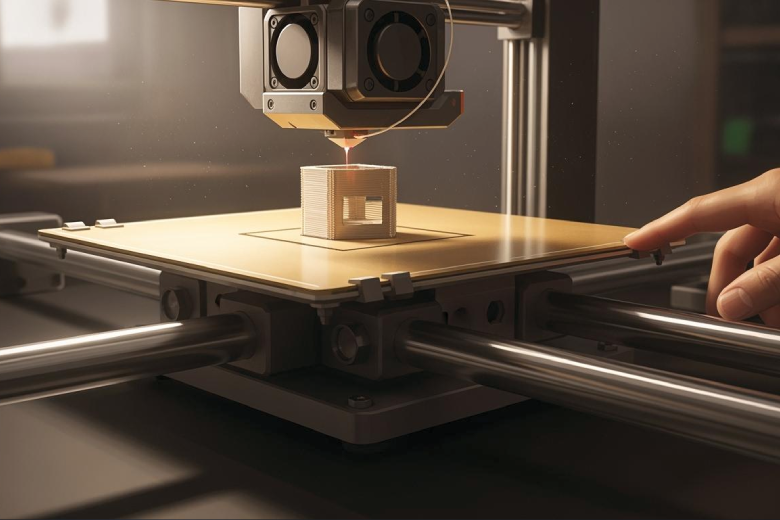
A bed slinger 3D printer is a machine that makes things by building them one layer at a time. It uses a print bed that moves and a print head. The bed moves forward and backward. The print head goes side to side and up or down.
Most bed slinger printers are liked by people who do 3D printing for fun and by schools. They usually cost less money. Some starter models cost about $175.
|
Printer Type |
Mechanism Description |
Popularity and Use Cases |
|---|---|---|
|
Bed Slinger |
Print bed moves in Y direction; print head moves in X and Z. |
Popular with people who do 3D printing for fun and in schools. |
|
Cantilever |
Print bed moves in Y; extruder on a single arm for X and Z. |
Not used as much because it is not as steady. |
|
Core XY |
Belt system for X and Y; bed moves only in Z direction. |
Used for harder prints; costs more money. |
Key Takeaways
- Bed slinger 3D printers do not cost a lot. They are easy to use. This makes them great for people new to 3D printing and for schools.
- The printing process has a few steps. First, you get the materials ready. Then, the printer makes layers to build the object. After printing, you finish the object with some extra steps.
- You should clean and take care of the printer often. This helps stop problems and makes your prints look better.
How Bed Slinger Printers Work
Cartesian Motion System
A bed slinger printer uses something called a Cartesian motion system. This means the printer moves parts in three straight lines. These lines are called axes. The print head goes left and right on the X-axis. The print bed slides forward and backward on the Y-axis. The print head also moves up and down on the Z-axis. This helps build the object layer by layer.
The Cartesian system means each axis has its own motor. The X-axis motor moves first. Then the Y-axis motor moves next. Each axis moves by itself. In a bed slinger, the build plate moves on the Y-axis. The tool head moves on the X and Z axes. This design is used in printers like the Prusa i3 MK3. That is why people also call it 'i3-style'.
This setup makes the printer simple to use. Many popular printers use this system. It is easy to understand and works well.
|
Advantage |
Description |
|---|---|
|
User-friendliness |
Simple to use, so beginners and hobbyists like it. |
|
Affordability |
Costs less than other systems, good for people on a budget. |
|
Modularity |
Easy to change and fix, which is great for schools. |
Printing Process
The printing process in a bed slinger printer has a few steps:
- Material Preparation and Storage: The filament must be dry and ready before printing.
- Extrusion and Layer Formation: The printer heats the filament. It pushes the hot plastic through a small nozzle. The nozzle puts down thin lines of melted plastic.
- Layer Growth and Structural Build-Up: The printer makes the object one layer at a time. It adds supports and fills empty spots if needed.
- Cooling Process and Removal: After printing, the object cools down. The user takes the finished part off the print bed.
- Post-Processing: The user might clean the object. They can remove supports or smooth the surface.
Most bed slinger printers use FDM technology. FDM is popular because it is fast and cheap. Many beginner printers use FDM, so it is good for people just starting out.
|
Technology Type |
Affordability |
Speed |
|---|---|---|
|
FDM |
High |
High |
|
SLS |
Medium |
Medium |
|
Binder-Jetting |
Medium |
Medium |
Main Components
A bed slinger printer has many important parts. Each part does a special job:
|
Component |
Function |
|---|---|
|
Frame |
Holds the printer together and keeps it steady. |
|
Print Bed |
Moves forward and backward to help make the object. |
|
Print Head |
Moves side to side and up and down to lay down filament. |
|
Motors |
Move the bed and print head along the X, Y, and Z axes. |
|
Extruder |
Pushes the filament into the hot end to melt it. |
|
Hot End/Nozzle |
Heats and melts the filament so it can be shaped into layers. |
|
Control Board |
Acts as the brain of the printer and tells each part what to do. |
Bed slinger printers are usually the cheapest kind you can buy. Some starter models cost only $175. These printers are easy to use and fix. You can also upgrade them. The open design lets you reach all the parts for cleaning or repairs. They work well for most projects. But the moving bed can cause small problems if you print very fast or make tall objects.
Tip: Clean your printer often and check it before printing. This helps stop problems like bad first layers or shifting during printing.
Bed Slinger Pros and Cons
Advantages
Bed slinger printers are good for new users and hobbyists.
- They cost less than most other 3D printers. Starter models start at $175. Advanced models usually cost under $1,000.
- You can set them up fast. Most come almost ready to use.
- The touchscreen is easy to use for changing settings.
- It is easy to clean and fix these printers. The open design lets you reach all parts.
- AI monitoring and auto print resume help stop common problems.
- These printers are quiet, so they work well at home.
- They are simple to use and have lots of help from other users.
|
Printer Type |
Price Range (USD) |
|---|---|
|
Bedslinger |
175 - 1,000 |
|
Box-Style (Prosumer) |
600 - 1,500 |
|
Professional |
2,500 - 6,000 or more |
Disadvantages
Bed slinger printers have some downsides.
- The moving bed can make prints look strange, especially tall or thin ones.
- Print quality is not as good as CoreXY or Delta printers.
- Printing fast can cause problems like shifted layers.
- Setup is easier than other printers, but prints are less exact.
Who Should Use a Bed Slinger
Bed slinger printers are best for beginners, students, and hobbyists.
- They are great for personal and school projects.
- People who want cheap and easy-to-fix printers will like them.
- If you want simple use and lots of help, this printer is a good choice.
- They work well for printing small or medium objects.
Tip: Think about how big your projects are and if you can do basic fixes before picking a bed slinger printer.
A bed slinger printer makes things by adding one layer at a time. The bed moves back and forth while the controls are easy to use.
- These printers do not cost much money and are simple for new users.
- Many people like that they can set up the printer fast and keep it working with little work.
- Experts think these printers will get even better because they are cheap and print fast.
|
Factor |
What to Consider |
|---|---|
|
Material Choice |
Choose the best material for what you want to make. |
|
Total Investment |
Remember to plan for extra costs like learning and fixing. |
FAQ
What materials can a bed slinger 3D printer use?
Most bed slinger printers use PLA, ABS, and PETG filaments. These materials are easy to print and safe for beginners.
Tip: PLA is the best choice for first projects.
How long does it take to print something?
Print time depends on object size and settings. Small items may take one hour. Large objects can take several hours or more.
|
Object Size |
Estimated Print Time |
|---|---|
|
Small |
1–2 hours |
|
Medium |
3–5 hours |
|
Large |
6+ hours |
Can I upgrade a bed slinger printer?
Yes, you can add new parts like better motors or a stronger frame. Upgrades help improve print quality and reliability.
