
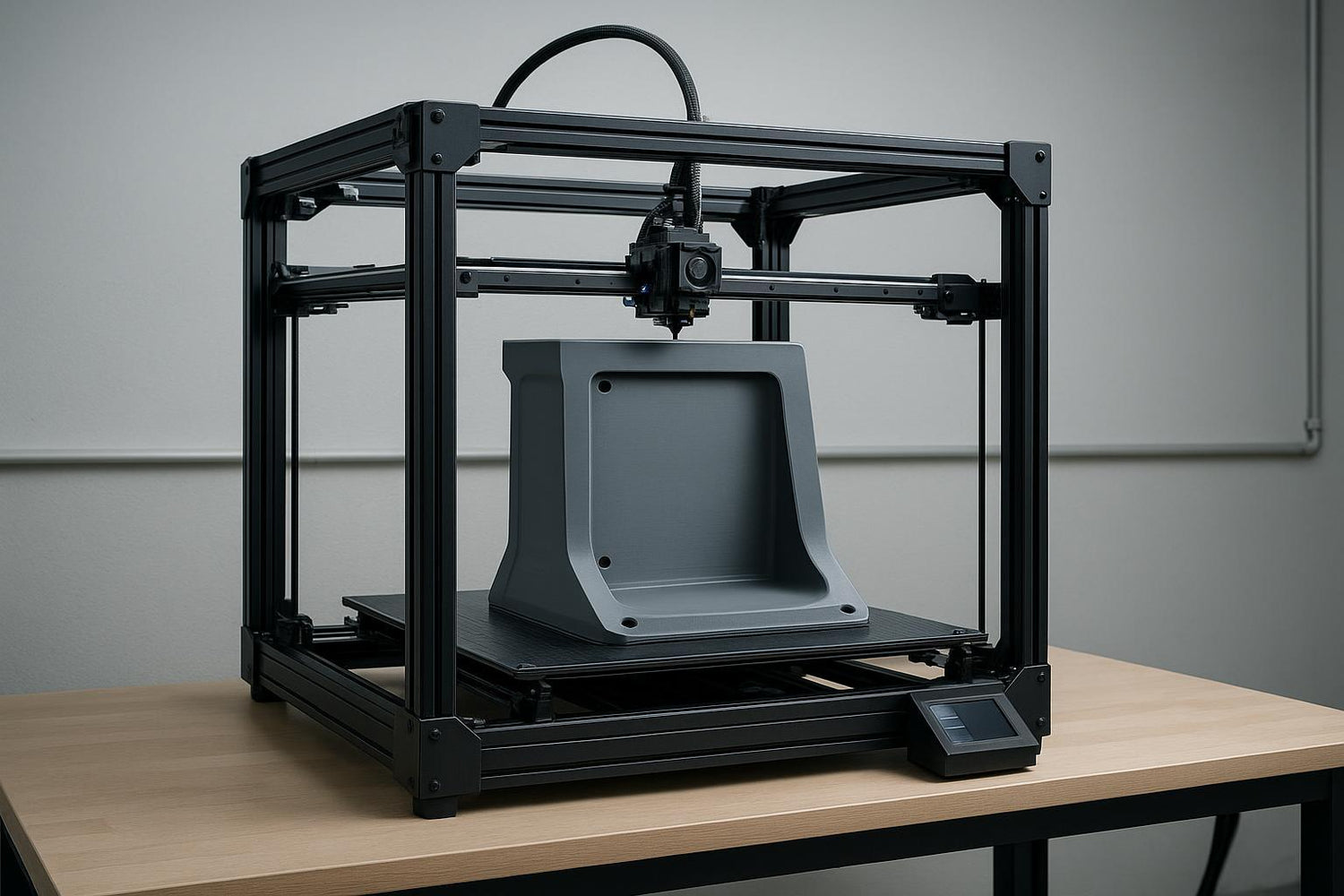
Wer nach einem 500×500×500-mm-3D-Drucker unter 1.000 € sucht, will meistens nicht einfach „den größten Drucker“. Es geht um konkrete Projekte: große Prototypen, Cosplay-Teile, Vorrichtungen, Gehäuse, Architekturmodelle oder mehrere Bauteile in einem Druckjob.
Die Herausforderung: Ein echter 500-mm-FDM-Drucker ist technisch deutlich anspruchsvoller als ein normaler Desktop-Drucker. Unter 1.000 € findest du gute Optionen – aber nur, wenn du nicht blind nach Maximalgeschwindigkeit kaufst, sondern nach Zuverlässigkeit, Bettstabilität, Kalibrierung und Wartbarkeit.
Dieser Guide zeigt dir, worauf du bei einem großen 3D-Drucker achten solltest, welche Fehler Käufer häufig machen und warum der Sovol SV08 Max in dieser Preisklasse besonders spannend ist.
Kurzfazit: Wann lohnt sich ein 500×500×500-mm-3D-Drucker?
- Er lohnt sich, wenn du regelmäßig große Teile druckst, die auf 250–350-mm-Druckern geteilt werden müssten.
- Er lohnt sich, wenn Kleben, Schleifen und Ausrichten deiner Prototypen zu viel Zeit kosten.
- Er lohnt sich, wenn du mehrere Teile oder Varianten gleichzeitig drucken möchtest.
- Er lohnt sich weniger, wenn du fast nur kleine PLA-Modelle oder Deko-Teile druckst.
Der wichtigste Punkt: Bei 500 mm Bauvolumen zählt nicht nur Größe. Je größer der Druck, desto wichtiger werden erste Schicht, Bettwärme, Rahmensteifigkeit und Prozesskontrolle.
500-mm-Klasse unter 1.000 €: Was ist realistisch?
Ein Großformatdrucker unter 1.000 € ist immer ein Kompromiss aus Preis, Bauvolumen, Geschwindigkeit, Ausstattung und Wartungsaufwand. Du solltest deshalb nicht nach dem „perfekten“ Datenblatt suchen, sondern nach einem Drucker, der große Drucke zuverlässig kontrollierbar macht.
Typische Optionen in dieser Klasse sind:
- große kartesische Drucker: günstiger, oft einfacher aufgebaut, aber das bewegte Druckbett kann bei großen Teilen limitieren
- große CoreXY-Drucker: stabilere Bewegungsarchitektur für große und schnelle Drucke, aber technisch komplexer
- Kits oder Semi-Kits: viel Hardware fürs Geld, dafür mehr Aufbau- und Tuning-Aufwand
Wenn du möglichst wenig Bastelrisiko möchtest, ist ein fertig verfügbarer CoreXY-Drucker mit großem Bauraum meist der bessere Weg als ein reines DIY-Projekt.
Die wichtigsten Kaufkriterien für große 3D-Drucker
1. Nutzbares Bauvolumen statt nur Werbezahl
500 × 500 × 500 mm klingt eindeutig. In der Praxis zählt aber, wie viel davon wirklich nutzbar ist. Kabelwege, Clips, Purge-Linien, Bauteilkühlung oder Sicherheitsabstände können den effektiven Druckraum verkleinern.
Frage dich daher:
- Kann ich große Teile wirklich bis an die Ränder drucken?
- Ist die erste Schicht auch außerhalb der Mitte zuverlässig?
- Bleibt genug Platz für Filamentführung, Kamera und Wartung?
2. Heizbett: gleichmäßig warm ist wichtiger als schnell warm
Bei großen Druckflächen ist das Heizbett ein kritischer Erfolgsfaktor. Wenn die Mitte warm ist, die Ecken aber deutlich kühler bleiben, entstehen Haftungsprobleme und Warping.
Achte auf:
- gleichmäßige Wärmeverteilung
- stabile Temperatur über lange Druckzeiten
- passende Druckoberfläche für PLA, PETG, TPU oder technische Materialien
- sichere Verarbeitung von Heizbett, Kabeln und Anschlüssen
3. Bett-Leveling über die ganze Fläche
Eine große Druckplatte kann in der Mitte gut aussehen und an den Rändern trotzdem problematisch sein. Deshalb ist automatisches oder assistiertes Leveling bei 500 mm Bauvolumen besonders wertvoll.
Ein gutes System sollte nicht nur grob messen, sondern zuverlässig über die gesamte Fläche arbeiten. Gerade bei langen Druckjobs spart dir das viele Fehldrucke.
4. Rahmensteifigkeit und Bewegungssystem
Große Bauteile bedeuten lange Bewegungen und mehr Masse. Ein instabiler Rahmen oder schlecht gespannte Riemen führen schnell zu Ringing, Ghosting oder ungleichmäßigen Oberflächen.
Deshalb sind bei großen Druckern wichtig:
- stabiler Rahmen
- saubere Riemenführung
- präzise Linearführungen oder stabile Achsen
- gute Zugänglichkeit für Wartung
- realistische Beschleunigungswerte statt nur hohe Maximalgeschwindigkeit
5. Hotend-Durchsatz statt nur „700 mm/s“
Viele große 3D-Drucker werben mit sehr hohen Geschwindigkeiten. Entscheidend ist aber, wie viel Kunststoff das Hotend tatsächlich schmelzen und fördern kann.
Wenn du große Teile schneller drucken willst, nutzt du oft breitere Linien, größere Düsen oder höhere Schichthöhen. Dann wird der Volumenstrom wichtiger als die reine Fahrgeschwindigkeit.
Merke:
- Hohe Bewegungsgeschwindigkeit bringt wenig, wenn das Hotend nicht genug Material liefert.
- Ein größerer Drucker sollte auch bei langen Jobs konstant extrudieren.
- Für große Prototypen ist zuverlässiger Durchsatz oft wichtiger als maximale Detailauflösung.
Warum der Sovol SV08 Max in diese Kategorie passt
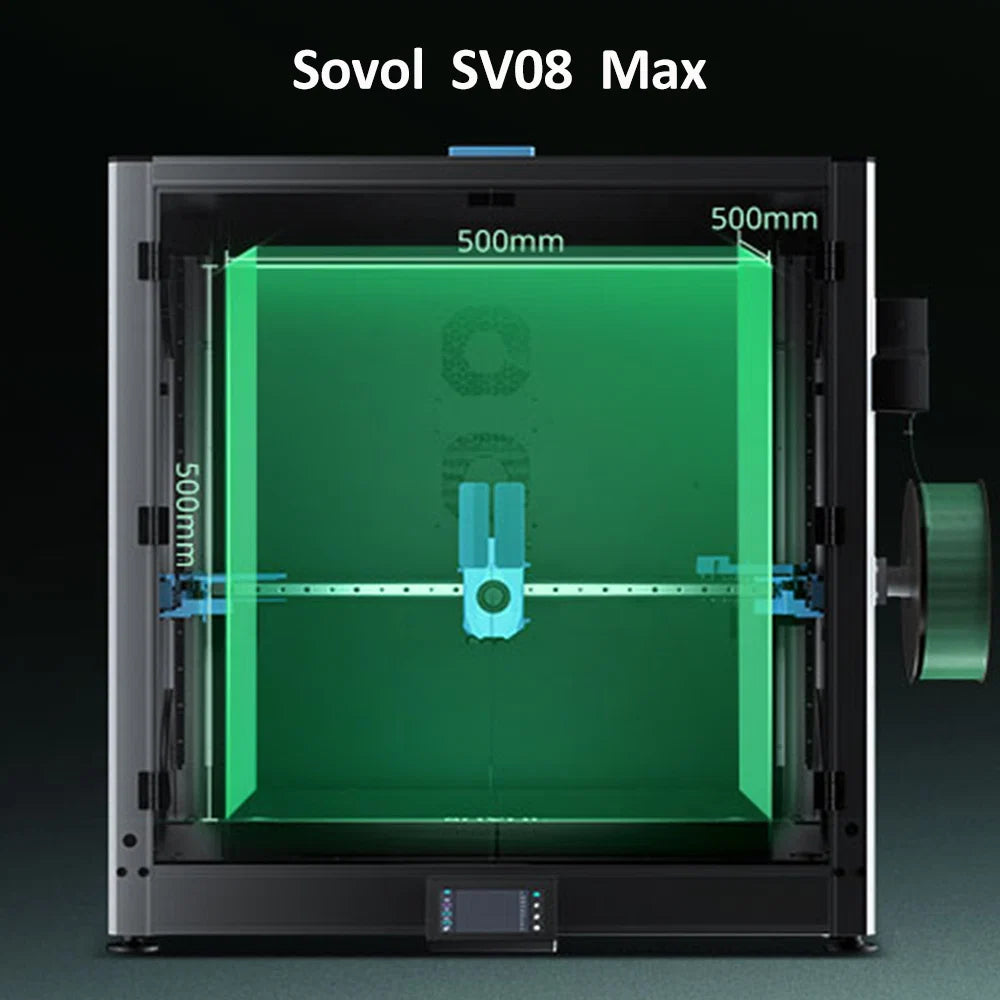
Der Sovol SV08 Max ist besonders interessant, weil er die 500-mm-Klasse mit einem Preis ab €939 in den Bereich unter 1.000 € bringt.
Er bietet laut Produktdaten:
- 500 × 500 × 500 mm³ Bauvolumen
- CoreXY-Kinematik
- Klipper-Steuerung
- Linearschienen
- Eddy-Current-Scanning für das Leveling
- Düsentemperatur bis 300 °C
- Kamera und Funktionen zur Überwachung langer Druckjobs
Für Käufer heißt das: Der SV08 Max ist nicht nur „ein großer Drucker“. Er kombiniert großes Bauvolumen mit Funktionen, die bei großen Druckjobs wirklich relevant sind – Leveling, Bewegungskontrolle und Überwachung.
500-mm-Großformat unter 1.000 €: Sovol SV08 Max
Wenn du einen großen CoreXY-3D-Drucker suchst, der echte 500 × 500 × 500 mm³ Bauvolumen bietet und unter der 1.000-€-Marke startet, ist der Sovol SV08 Max eine der naheliegendsten Optionen im EU-Shop.
- 500 × 500 × 500 mm³ Bauvolumen
- ab €939 im EU-Shop
- CoreXY-System mit Klipper
- geeignet für große Prototypen, Cosplay, Vorrichtungen und Batch-Drucke
Vergleich: großer Bedslinger, CoreXY oder Kit?
Option |
Vorteile |
Nachteile |
Geeignet für |
|---|---|---|---|
Großer Bedslinger |
oft günstig, einfacher Aufbau |
bewegtes Bett, mehr Vibration bei großen Teilen |
preisbewusste Nutzer mit moderatem Tempo |
Großer CoreXY |
bessere Bewegungsarchitektur, stabiler bei Speed |
komplexer, Wartung und Riemenführung wichtiger |
Maker, Prototyping, große regelmäßige Drucke |
Kit / Semi-Kit |
viel Anpassung, gutes Hardware-Potenzial |
mehr Aufbauzeit, mehr Verantwortung |
erfahrene Bastler und DIY-Nutzer |
Red Flags beim Kauf eines 500-mm-Druckers
Bei großen Druckern werden kleine Schwächen schnell teuer. Achte besonders auf diese Warnsignale:
- hohe Maximalgeschwindigkeit, aber keine Angaben zu Stabilität oder Materialfluss
- großes Bauvolumen, aber schwache Informationen zu Heizbett und Leveling
- schlechte Zugänglichkeit zu Riemen, Hotend oder Elektronik
- keine Ersatzteilverfügbarkeit oder kaum Community-Support
- unrealistische Versprechen wie „perfekt für alle Materialien“ ohne Einhausung oder Temperaturkontrolle
Wenn du ABS, ASA oder Nylon in großen Abmessungen drucken möchtest, solltest du zusätzlich eine passende Einhausung oder kontrollierte Umgebung einplanen.
Wann reicht ein kleinerer Drucker?
Nicht jeder braucht 500 mm Bauvolumen. Ein kleinerer Drucker kann sinnvoller sein, wenn:
- deine Teile meist unter 250–300 mm bleiben
- du nur gelegentlich große Modelle druckst
- du wenig Platz hast
- du vor allem Figuren, kleine Ersatzteile oder Deko druckst
- du möglichst wenig Wartung und Kalibrierung möchtest
Wenn du nur wenige große Projekte pro Jahr hast, kann es manchmal besser sein, Modelle zu teilen und sauber zu verkleben. Wenn du aber regelmäßig große Teile druckst, wird das Teilen schnell zur Zeitfalle.
Praxisbeispiele: Wofür lohnt sich 500×500×500 mm?
- Cosplay: Helme, Rüstungsteile und große Props mit weniger Segmenten
- Prototyping: Gehäuse, Vorrichtungen und Bauteile in Originalgröße
- Werkstatt: große Halter, Schablonen, Jigs und Montagehilfen
- Architektur und Design: große Modelle ohne starke Skalierung
- Batch-Druck: mehrere kleinere Teile oder Varianten gleichzeitig
Fazit: Bester Kaufansatz unter 1.000 €
Ein 500×500×500-mm-3D-Drucker unter 1.000 € ist kein Spielzeugkauf. Du kaufst nicht nur mehr Bauvolumen, sondern auch mehr Verantwortung für Prozessstabilität, Materialmanagement und Wartung.
Wenn du möglichst viel Projektfreiheit suchst und große Teile regelmäßig druckst, ist ein großer CoreXY-Drucker wie der Sovol SV08 Max eine sehr starke Option. Er trifft genau den Sweet Spot: echtes 500-mm-Bauvolumen, CoreXY-Architektur, moderne Steuerung und ein Einstiegspreis unter 1.000 €.
Wenn du dagegen nur kleine Modelle druckst, spar dir Platz, Geld und Kalibrierungsaufwand. Dann ist ein kleinerer Drucker wahrscheinlich die bessere Wahl.
Die beste Entscheidung lautet also: Kaufe 500 mm nicht wegen der Zahl. Kaufe es, wenn deine Projekte wirklich davon profitieren.
