

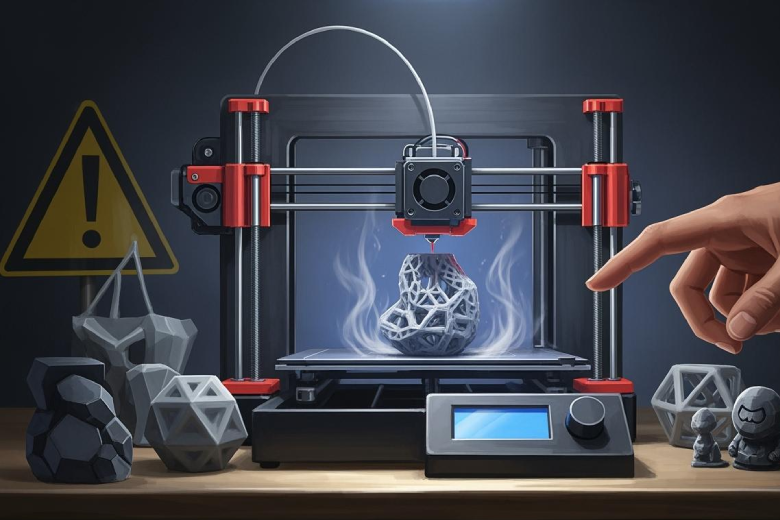
Recent research shows that 3d printing can release toxic substances into the air, raising concerns about health risks. Users often overlook dangers like ultrafine particles and volatile organic compounds, which have links to asthma, cancer, and cardiovascular problems. Studies highlight that even common filaments such as PLA and ABS emit harmful chemicals. The table below lists the most cited health risks:
|
Health Risk |
Description |
|---|---|
|
Ultrafine Particles (UFPs) |
Linked to asthma and cardiovascular issues; can enter the bloodstream and affect organs. |
|
Volatile Organic Compounds (VOCs) |
Classified as toxic air pollutants; exposure linked to cancer. |
|
Bacterial Growth |
Porous prints allow bacteria to thrive. |
|
Chemical Residues |
Filaments can transfer harmful chemicals to food. |
Different materials produce varying levels of emissions. Proper ventilation and safety steps can help reduce exposure for anyone using 3d printing.
Key Takeaways
- 3D printing can release harmful substances like ultrafine particles and volatile organic compounds (VOCs) that may lead to health issues such as asthma and cancer.
- Using safer materials like PLA and PETG can significantly reduce exposure to toxic emissions during 3D printing.
- Proper ventilation is crucial; aim for at least six air changes per hour in rooms with 3D printers to maintain air quality.
- Wearing protective gear, such as masks and gloves, can help shield users from harmful fumes and chemicals released during the printing process.
- Avoid placing 3D printers in sleeping areas and ensure they are used in well-ventilated spaces to minimize health risks.
3D Printing Fumes and Toxicity
Fume Production
3d printing creates fumes during the heating and melting of plastic filaments or resins. Most desktop printers use either FDM (Fused Deposition Modeling) or SLA (Stereolithography) technology. Both types release fumes into the air, but the amount and type depend on the material and printer used.
When a 3d printer heats filament, it breaks down the plastic and releases gases and ultrafine particles. These particles are so small that people cannot see them, but they can enter the lungs and even the bloodstream. Ultrafine particles are a major concern because they can cause respiratory irritation and other health problems. Even PLA, which many consider a safer option, emits ultrafine particles and fumes. Oil-based filaments like ABS and nylon produce more toxic fumes and higher levels of ultrafine particles.
The table below compares the types of fumes and health risks from common 3d printing technologies:
|
Printer Type |
Health Risks |
|
|---|---|---|
|
FDM |
Styrene (from ABS), Lactide (from PLA) |
Potential respiratory issues, irritation |
|
SLA |
Esters, Alcohols, Aldehydes, Ketones, Aromatics, Hydrocarbons |
Carcinogenic risks, irritation, and other health impacts |
People often notice a strong smell during 3d printing. This odor comes from volatile organic compounds (VOCs) and other chemicals released as fumes. The amount of fumes depends on the filament type and the temperature used. For example, ABS releases more fumes and ultrafine particles than PLA. PETG and nylon also emit fumes, but the types and amounts vary.
Chemicals Released
Different 3d printing materials release different chemicals and ultrafine particles. These substances can affect indoor air quality and pose health risks. The table below shows the main chemicals released by popular filaments and their possible health impacts:
|
Material |
Chemicals Released |
Health Impacts |
|---|---|---|
|
PLA |
Ultrafine Particles, Formaldehyde |
Respiratory concerns, potential irritation |
|
ABS |
Styrene |
Long-term health impacts, harmful effects |
|
PETG |
Ultrafine Particles |
Low toxicity, but still a concern |
|
Resin |
Harmful fumes |
Eye and skin irritation, other health problems |
PLA emits lactide and ultrafine particles, which can irritate the lungs. ABS releases styrene, a chemical linked to long-term health problems. PETG gives off ultrafine particles and some VOCs, but it is less toxic than ABS. Resin printers release a mix of harmful fumes, including esters and aldehydes, which can cause eye and skin irritation.
The temperature of the nozzle also affects the amount of fumes. Higher temperatures usually create more fumes and ultrafine particles. The table below lists common filaments, their printing temperatures, and the main VOCs they emit:
|
Filament |
Common nozzle (°C) |
Signature VOCs (examples) |
|---|---|---|
|
PLA |
190–220 |
Lactide, acetaldehyde |
|
PETG |
230–250 |
Acetaldehyde, acetic acid |
|
ABS |
240–260 |
Styrene, ethylbenzene |
|
Nylon/PA |
250–270 |
Caprolactam |
People should remember that 3d printing fumes are not always visible or easy to detect. Even small amounts of ultrafine particles can build up in the air, especially in rooms with poor ventilation. Over time, breathing these fumes can lead to health problems. Choosing safer materials and using proper safety steps can help reduce the risks from 3d printing toxic fumes.
Health Risks of 3D Printing
Short-Term Effects
3d printing can affect health soon after exposure. When printers operate, they release fumes and ultrafine particles into the air. These substances can enter the body through the nose and mouth. Many people notice irritation in their eyes, nose, or throat after spending time near a running printer. Some users report headaches or dizziness, especially in rooms with poor airflow.
Researchers have found that 3d printing fumes contain volatile organic compounds. These gases can be hazardous when inhaled. The process also releases ultrafine particles, which are very small and can travel deep into the lungs. The body has trouble clearing these particles, so they may stay in the respiratory system for a long time. Children face higher risks, especially in small spaces like classrooms, because their lungs are still developing.
The table below shows common short-term health effects linked to 3d printing:
|
Evidence Description |
Health Impact |
|---|---|
|
Acute exposure to VOC can lead to irritations in the eyes, nose, and throat. |
Risk of developing pulmonary diseases, including asthma and lung cancer after chronic exposure. |
|
Working more than 40 hours per week with 3D printers is associated with respiratory symptoms. |
Indicates a potential prevalence of respiratory issues among operators. |
|
Individual cases show risk of developing asthma from working with ABS materials. |
Highlights specific allergic reactions and respiratory conditions linked to 3D printing materials. |
People who spend long hours near printers may notice more symptoms. Some operators develop respiratory irritation or even allergic reactions. The health risks of inhaling 3d printer fumes can be greater for those who work with oil-based filaments like ABS. These materials release more toxic fumes and can trigger asthma in sensitive individuals.
A quick summary of short-term effects includes:
- Eye, nose, and throat irritation
- Headaches or dizziness
- Coughing or shortness of breath
- Allergic reactions, especially with certain filaments
Long-Term Exposure
Long-term exposure to 3d printer fumes can lead to more serious health problems. Studies show that repeated contact with these emissions may cause chronic respiratory diseases. Over time, ultrafine particles and gases can damage airway cells and trigger inflammation. These changes increase the risk of asthma, chronic obstructive pulmonary disease, and even cancer.
Several studies have examined the health risks of 3d printing. For example, Becker et al. (2011) confirmed that some nanomaterials act as carcinogens in animal models. The International Agency for Research on Cancer (IARC) classifies PM2.5, a type of fine particle found in printer emissions, as a Group 1 carcinogen. This means there is strong evidence that these particles can cause cancer in humans. Youn et al. (2019) found that nanoparticles from 3d printing can settle deep in the lungs, leading to chronic health effects. Stefaniak et al. (2017) suggested that inhaling these emissions may also harm the heart and blood vessels.
|
Study |
Findings |
|---|---|
|
Becker et al. (2011) |
Confirms carcinogenicity of certain nanomaterials based on animal models. |
|
IARC (2015) |
Classifies PM2.5 as a Group 1 carcinogen with sufficient evidence of carcinogenicity in humans. |
|
Youn et al. (2019) |
Indicates that nanoparticles from 3D printing can deposit in the lower respiratory tract, leading to chronic health effects. |
|
Stefaniak et al. (2017) |
Suggests inhalation of 3D printer emissions may pose cardiovascular health risks. |
Researchers from the Chemical Insights Research Institute and Purdue University found that 3d printing emissions can cause oxidative stress and inflammation in airway cells. These responses are linked to diseases such as asthma and chronic obstructive pulmonary disease. The health risks of inhaling 3d printer fumes do not stop at the lungs. Some studies suggest that these particles can enter the bloodstream and affect other organs.
Children face even greater risks from long-term exposure to 3d printer fumes. Their developing bodies are more sensitive to toxic substances. In confined spaces, children may breathe higher levels of fumes, which can lead to developmental problems and early onset of asthma.
Note: People should avoid sleeping or spending long periods near active 3d printers. Good ventilation and regular breaks can help reduce the health risks of 3d printing.
The health risks of 3d printing are real for both short-term and long-term exposure. The dangers include respiratory irritation, inflammation, and even cancer. The health risks of inhaling 3d printer fumes are higher for children and people with existing lung conditions. Understanding these risks helps users make safer choices and protect their health.
Material Safety Comparison
PLA vs ABS vs PETG vs Resin
Different 3d printing materials present unique health risks. PLA, ABS, PETG, and resin each release particles and fumes during printing. Researchers found that ABS produces the highest concentration of particles, reaching 2.6 × 10^6 per cubic centimeter. This level of emissions can increase the risk of respiratory problems. PETG and TPU show lower particle concentrations, which means less potential for harmful effects. Cytotoxicity tests revealed that ABS has the highest impact on airway cells, especially after longer exposure.
PLA stands out as a safer choice. It emits mainly lactide and trace amounts of volatile organic compounds. These emissions remain at levels considered safe for most users. PLA comes from plant sources, which makes it better for both health and the environment. Unlike ABS, PLA does not require high temperatures or enclosed spaces, reducing risks linked to heated printing. However, some PLA blends contain additives that may increase risks, especially in rooms with poor airflow.
Resin-based 3d printing uses chemicals that can irritate the eyes and skin. These printers release esters and aldehydes, which pose greater health risks than PLA or PETG. Users should handle resin with care and avoid direct contact.
Oil-based filaments like ABS and nylon release more toxic nanoparticles. These materials increase the risk of material-specific toxicity and long-term health problems.
Safer Filament Choices
Choosing the right filament improves safety during 3d printing. PLA, PETG, and TPU are often considered the safest options for indoor use. They produce little smell and fewer harmful emissions. The table below compares common filaments and their safety profiles:
|
Material |
Smell |
Comments |
|---|---|---|
|
PLA |
little |
often stated as harmless |
|
PET/PETG |
little |
often stated as harmless |
|
TPU |
little |
often stated as harmless |
ABS and resin should be used with caution. They release higher levels of toxic fumes and particles. Users can reduce health risks by selecting safer filaments and ensuring good ventilation. Material-specific toxicity varies, so understanding each filament’s properties helps protect health and improve safety.
Reducing Toxic Exposure
Ventilation and HEPA Filters
Ventilation stands as one of the most effective ways to reduce exposure to smoke, ultrafine particles (ufps), and volatile organic compounds (vocs) during 3d printing. Proper ventilation strategies help maintain air quality and protect health. Experts recommend a minimum of six air changes per hour in rooms with 3d printers. This rate lowers concentrations of ufps and vocs, especially when printers run for long periods. HEPA filters also play a key role in 3d printing safety. These filters capture ufps and smoke, making them essential for maintaining air quality. The effectiveness of ventilation depends on the printer type and filament used. Some setups can reduce airborne particles by up to 30 times compared to poorly ventilated spaces.
- Adequate ventilation rates are crucial for minimizing aerosol concentrations.
- A minimum of 6 air changes per hour is recommended.
- Effectiveness varies by printer and filament, with some setups being much more efficient.
Enclosures and Room Setup
Enclosures help contain smoke, ufps, and vocs, limiting their spread in the room. Placing 3d printers in enclosed spaces with direct exhaust to the outside further reduces exposure. The location of the printer affects the distribution of fumes and particles. Printers should stay away from desks or sleeping areas to prevent direct exposure to emissions. Using fully enclosed printers and choosing safer filaments like PLA or PETG can lower the risk of long-term exposure to 3d printer fumes. Schools and makerspaces benefit from setting up printers in separate, well-ventilated rooms.
|
Regulatory Body |
Guidelines/Recommendations |
|---|---|
|
OSHA |
Control airborne particulates and chemical exposure in workplaces. |
|
Global Organizations |
Use high-efficiency filtration and dust collection systems. |
Personal Safety Tips
Personal protective measures add another layer of 3d printing safety. Operators should wear fit-tested respirators to block ufps and vocs. Neoprene or nitrile gloves protect hands from chemicals, while splashproof eye protection shields against smoke and fumes. Flame-retardant coveralls guard against both chemical and fire hazards. Cleanliness matters: washing hands after handling prints and cleaning objects with safe solutions prevents transfer of harmful particles. Limiting time spent near active printers and choosing safer filaments also reduces the health effects of exposure. Safety training and regular inspections help maintain air quality and reduce the long-term effects of breathing in 3d printing fumes.
Tip: Avoid sleeping in rooms with active 3d printers. Always use proper ventilation and select low-emission materials to reduce the risk of long-term exposure to 3d printer fumes.
|
Strategy |
Description |
Benefits |
|---|---|---|
|
Design optimization |
Use smaller prototypes or lower infill percentages |
Reduces emissions and conserves filament |
|
Cleanliness |
Wash hands and clean prints thoroughly |
Prevents secondary exposure and transfer to surroundings |
|
Spatial separation |
Stay out of rooms with active printers |
Eliminates direct exposure |
|
Material selection |
Choose the right material for each print |
Reduces unnecessary emissions and exposure |
|
Ventilation/filtration |
Use proper ventilation and wear a fitted respirator |
Removes airborne particles and vocs, improves 3d printing safety |
Recent studies show that 3d printing can release plastic nanoparticles and volatile organic compounds into the air. These emissions may cause irritation, allergic reactions, and long-term health problems. Users face higher risks when using materials like ABS and resin. To reduce exposure, experts recommend the following steps:
- Improve ventilation with exhaust systems and air filters.
- Wear protective equipment such as gloves and masks.
- Follow strict safety protocols for handling materials.
People can enjoy 3d printing safely by choosing low-emission materials and setting up proper ventilation.
FAQ
Is it safe to use a 3D printer at home?
Most people can use a 3D printer safely at home with good ventilation. They should keep printers in a separate room, use air filters, and avoid sleeping near active machines. Choosing safer materials like PLA also helps reduce risks.
Can children be around 3D printers?
Children should not stay near active 3D printers. Their lungs are still developing, and they can breathe in harmful particles more easily. Adults should supervise children and keep printers in well-ventilated, separate spaces.
Which 3D printing material is the least toxic?
PLA is the least toxic common filament. It comes from plants and releases fewer harmful fumes. PETG and TPU also have low emissions. ABS and resin release more dangerous chemicals and should be used with extra care.
How can someone tell if their 3D printer is releasing harmful fumes?
People may notice strong smells or irritation in their eyes, nose, or throat. These signs suggest the printer is releasing fumes. Using air quality monitors can help detect invisible particles and gases.
