

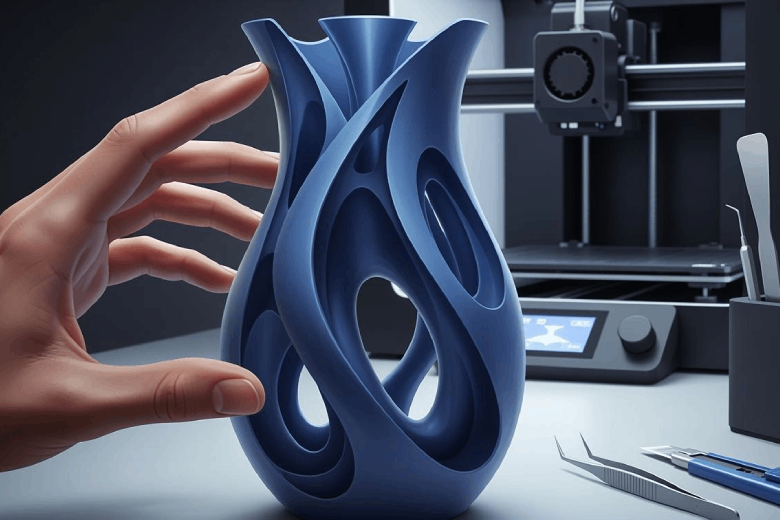
To make layer lines invisible in 3d printing, users can adjust printer settings or apply finishing techniques after printing. Print quality improves when they calibrate the printer, use the right layer height, and select the best materials. Post-processing steps such as sanding and painting also help hide imperfections. These solutions work for most types of prints and materials.
Key Takeaways
- Calibrate your 3D printer settings to improve print quality. Adjust layer height and extrusion settings to reduce visible layer lines.
- Use sanding as a post-processing technique. Start with coarse grit sandpaper and progress to finer grits for a smooth finish.
- Choose the right materials. Matte or carbon fiber-filled filaments help conceal layer lines better than glossy options.
- Experiment with model orientation. Positioning smooth surfaces vertically during printing minimizes the visibility of layer lines.
- Consider advanced techniques like chemical smoothing or resin printing for a flawless finish. These methods can significantly reduce the appearance of layer lines.
Hide Layer Lines: Top Methods
Quick Overview of Techniques
Many makers want to hide layer lines on their 3d printed parts. Several proven methods can help achieve a smooth finish. Each technique works best for certain materials and project goals. The table below compares the most effective ways to hide layer lines:
|
Method |
Effectiveness |
|---|---|
|
Calibration |
Adjusting layer height, line width, and extrusion multiplier can improve surface finish. |
|
Sanding |
Effective for smoothing out lines; start with coarse grit and progress to finer grits. |
|
Priming and Painting |
Filler primer can cover minor imperfections and further mask layer lines after painting. |
|
Chemical Smoothing |
Acetone vapor can blend lines for a smooth finish, but requires careful handling. |
|
Resin Coating |
Epoxy resin creates a hard, smooth layer that covers imperfections, ideal for display models. |
|
Heat Treatment |
Softens outer layers to fill gaps, effective for materials like ABS. |
Sanding remains a popular choice for smoothing out printed surfaces. Makers often use coarse sandpaper first, then switch to finer grits for a polished look. Priming and painting can further mask any remaining lines. Chemical smoothing, such as acetone vapor for ABS, blends the outer layer and creates a glossy finish. Resin coating with epoxy works well for display models, providing a hard shell that conceals imperfections. Heat treatment softens the outer layer, filling small gaps and making the surface smoother.
Choosing the Best Method for Your 3d Printed Parts
Selecting the right technique depends on the material and the purpose of the 3d printed parts. The following table shows how different types of PLA compare when concealing layer lines:
|
Factor |
Basic PLA |
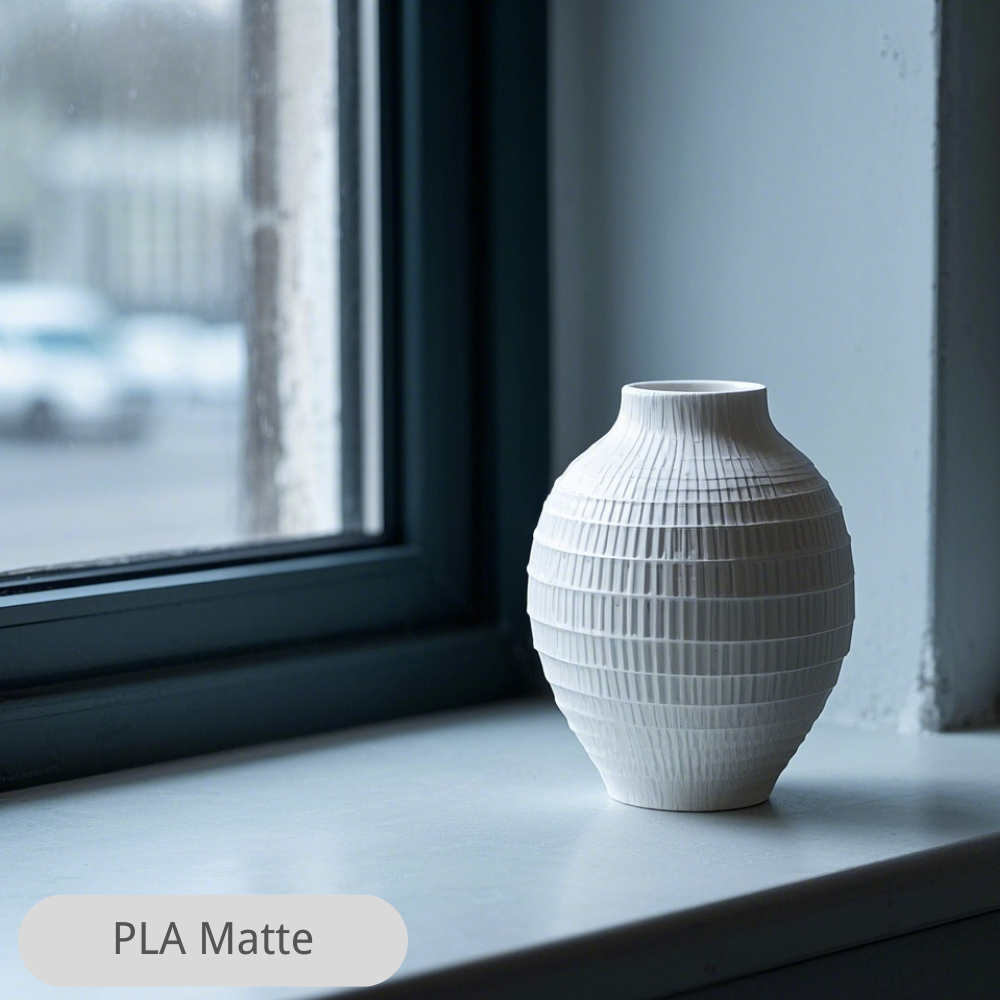
Matte PLA |
|---|---|---|
|
Visual Appeal |
Less effective at hiding layer lines |
Better at concealing layer lines |
|
Mechanical Properties |
Stronger due to pure polymer chains |
Weaker due to mineral fillers |
|
Environmental Impact |
Biodegradable |
Contains non-biodegradable additives |
Project requirements also influence the choice of technique. For example, display models often need a flawless finish, while functional parts may only need a smoother touch. The table below highlights how different approaches affect the visibility of layer lines:
|
Technique |
Effect on Layer Lines |
|---|---|
|
Use matte or light-colored filaments |
Helps hide layer lines better than glossy ones |
|
Sanding |
Enhances surface finish for a smoother look |
|
Chemical smoothing |
Provides a professional finish by reducing visible lines |
- Carbon fiber filled filaments, such as PLA-CF or PETG-CF, can significantly reduce the visibility of layer lines.
- Specialty matte filaments offer the best results for concealing layer lines.
Note: Always consider the end use of the parts. Display pieces benefit from extra finishing steps, while functional parts may only need basic smoothing.
Choosing the right method to hide layer lines in 3d printing depends on the material, the desired look, and the function of the printed parts. Makers who experiment with different techniques often find the best solution for their specific needs.
Understanding Layer Lines in 3D Printing
What Are Layer Lines?
Layer lines appear on the surface of 3d printed objects as small ridges or lines. These marks result from the way a printer builds parts layer by layer. Each layer stacks on top of the previous one, creating a staircase effect that can be seen and felt. Several factors influence the appearance of visible layer lines:
- Inconsistent extrusion during printing can cause uneven lines.
- Temperature changes may lead to defects in the surface finish.
- Issues with the gcode can introduce unwanted patterns.
- Filament quality and wall thickness play important roles in how layer lines form.
Layer lines are a natural part of the additive manufacturing process. Thicker layers print faster but make lines more obvious. Thinner layers produce smoother surfaces, though they require more time. Many users want to hide layer lines to improve the look and feel of their 3d printed parts.
Why Layer Lines Matter for Print Quality
Layer lines affect both the appearance and the strength of 3d printed parts. Smooth surfaces look more professional and feel better to the touch. Rough finishes can make objects less attractive and harder to clean. The table below shows how different factors influence aesthetics and mechanical properties:
|
Factor |
Effect on Aesthetics |
Effect on Mechanical Properties |
|---|---|---|
|
Layer Height |
Thicker layers create more pronounced lines, reducing smoothness. |
Higher layer height can improve strength but may lower surface quality. |
|
Printing Speed |
Fast printing can cause poor layer bonding, affecting appearance and strength. |
Inconsistent extrusion can create gaps, reducing mechanical integrity. |
|
Material Properties |
Different materials show varying visibility of layer lines. |
Material choice affects strength and durability. |
Layer lines can impact functional precision. Thicker layers may speed up production but reduce surface quality. Thinner layers enhance smoothness and detail, making it easier to hide layer lines. Many makers choose specific materials or adjust settings to hide or minimize these marks on their printed parts.
Tip: Careful calibration and material selection help reduce visible layer lines and improve overall print quality.
Print Settings to Reduce Layer Lines
Calibrating Your 3D Printer
Proper calibration helps reduce layer lines and improves the quality of 3d printed parts. Makers often start by checking the printer’s mechanical setup. They adjust the angle of the part in the 3d modeling software to minimize visible lines. Setting the layer height in the slicing software also plays a key role. Orienting the object so the smallest angle sits in the XY plane leads to smoother surfaces. These steps help hide layer lines before printing begins.
- Adjust the angle of the part in the modeling software.
- Set a smaller layer height in the slicer.
- Orient the object for the smoothest surface in the XY plane.
Tip: Regular calibration ensures consistent results and reduces the need for extra post-processing.
Adjusting Layer Height and Speed
Layer height and print speed have a direct impact on the visibility of layer lines. Using a smaller layer height, such as 0.12 mm, can significantly improve the visual texture of printed parts. Thinner layers yield finer details and smoother surfaces. Thicker layers decrease print time but increase the visibility of layer lines. Smaller nozzle diameters combined with low layer heights enhance surface smoothness and mechanical strength.
|
Layer Height (mm) |
Effect on Visibility of Layer Lines |
Additional Notes |
|---|---|---|
|
0.05 - 0.15 |
Reduces visibility significantly |
High precision needs, smoother surfaces |
|
0.16 - 0.28 |
More pronounced lines |
Can weaken prints by 27% |
|
≥ 0.2 |
Increased surface roughness |
Suitable for functional parts, rapid prototypes |
Print speed also matters. Speeds of 50-60 mm/s offer better adhesion and help hide layer lines. Cooling should be enabled for quality results.
First Layer Tweaks for Smoother Prints
The first layer sets the foundation for the entire print. Automatic bed leveling sensors replace manual calibration and ensure a consistent first layer height. Adjusting the Z-offset allows fine-tuning of the nozzle’s distance from the bed. Makers use calibration methods, including wizards or manual adjustments, to achieve a perfectly leveled bed.
|
Technique |
Description |
|---|---|
|
Automatic Bed Leveling Sensors |
Sensors detect the bed surface electronically for consistent first layer height. |
|
Z-Offset Adjustments |
Fine-tune the nozzle distance from the bed for a perfect first layer. |
|
Calibration Methods |
Wizards or manual adjustments help level the bed and improve first layer adhesion. |
Careful attention to calibration, layer height, print speed, and first layer tweaks allows makers to hide layer lines and produce smoother 3d printed parts. These settings work for most printing projects and materials.
Design and Orientation for Smoother 3D Printed Parts
Orienting Models to Minimize Layer Lines
Model orientation plays a crucial role in the appearance of layer lines on 3d printed parts. Designers often rotate models in the slicer to achieve the best surface finish. When a smooth, curved surface is important, placing it vertically, perpendicular to the build plate, produces the smoothest result. If the curve sits nearly parallel with the build plate, layer lines become highly visible and can distract from the final look.
The orientation affects the visibility of layer lines and the overall surface finish of the printed part. If a smooth, curved surface is critical, orienting it vertically (perpendicular to the build plate) will produce the smoothest possible finish for that feature. Conversely, orienting a gentle curve to be nearly parallel with the build plate will result in highly visible layer lines.
Designers should consider the function of the parts before choosing an orientation. Display pieces benefit from careful placement, while functional parts may prioritize strength. Rotating the model can also help hide layer lines on visible surfaces and improve the overall quality of the printed object.
Adding Texture Patterns in CAD or Slicer
Texture patterns in CAD or slicer software offer another way to hide layer lines and improve the look of 3d printed parts. Many users select slicer textures like 'Fuzzy Skin' to conceal imperfections without complex design changes. These patterns create a zig-zag effect, giving prints a soft, rough feel that masks layer lines and small defects.
- Slicer textures like 'Fuzzy Skin' effectively conceal layer lines without needing complex CAD adjustments.
- These textures allow for local changes in pattern, providing flexibility in design.
- Using matte filaments can further help in hiding imperfections.
- The 'Fuzzy Skin' texture creates a zig-zag pattern that gives a soft, rough feel to prints.
- It can hide layer lines and small defects with minimal effort.
- Users report that it saves time and enhances the aesthetic, making prints less recognizable as 3d printed.
Designers often combine texture patterns with strategic orientation to achieve the best results. These methods help hide layer lines and produce smoother, more attractive 3d printed parts.
Post-Processing to Hide Layer Lines
Sanding and Fine Line Primer
Sanding remains one of the most effective post-processing techniques for improving the surface of 3d printed parts. The right sanding method depends on the material.
- PLA responds well to light pressure and wet sanding, which prevents the plastic from softening.
- ABS requires gentle sanding. Makers should take breaks to let the part cool and avoid melting the surface.
- Resin prints benefit from fine grit sandpaper and wet sanding to remove small imperfections.
- PETG needs a careful approach. Starting with a coarser grit helps, but users must watch for heat buildup.
After sanding, many makers apply a fine line primer. This product fills in small layer lines and surface flaws. Multiple thin coats of primer can build up a smoother finish. Once the primer dries, sanding again creates an even surface, ready for painting or further finishing. These steps help hide layer lines and prepare parts for the next stage.
Tip: Always sand in a well-ventilated area and wear a dust mask to protect your lungs from fine particles.
Glossy Paint and Surface Coatings
Glossy paint and surface coatings offer another way to improve the appearance of 3d printed parts. These finishes can mask imperfections and create a professional look. The table below compares popular coating methods for concealing layer lines:
|
Coating Method |
Characteristics |
Effectiveness in Concealing Layer Lines |
Finish Type |
|---|---|---|---|
|
Powder Coating |
Enhances strength and appearance, protects from scratches and chemicals. |
Conceals imperfections well, but matte. |
Matte, slightly coarse |
|
Vapor Smoothing |
Creates a shiny, injection-molded finish, diminishes visible layer lines. |
Highly effective, even in tight spaces. |
Shiny, smooth |
Glossy paints, such as spray enamels or automotive paints, can further enhance the finish. Applying several thin coats helps achieve a uniform surface. Surface coatings like epoxy resin also provide a hard, glass-like finish that covers minor flaws. These methods work well for display models and decorative parts, especially when concealing layer lines is a top priority.
Chemical Smoothing Techniques
Chemical smoothing uses solvents to partially dissolve the outer layer of 3d printed parts. This process results in a glossy, seamless finish. For ABS, an acetone vapor bath is a common method. The acetone vapor softens the surface, blending layer lines and creating a smooth appearance. PLA does not respond as well to chemical smoothing. Light wiping or soaking with isopropyl alcohol or PLA-specific solvents produces only mild effects.
|
Material |
Solvent |
Method |
Finish |
|---|---|---|---|
|
ABS |
Acetone |
Vapor smoothing |
Glossy, seamless surface |
|
PLA |
IPA or PLA-specific solvents |
Light wiping/soaking |
Mild effect, limited use |
While PLA can be smoothed with chemicals like ethyl acetate, the results are less dramatic than with ABS. Automated vapor smoothing machines, such as the Polymaker Polysher, offer a safer way to smooth PLA, but only work with certain modified PLA products.
Safety is critical when using chemical smoothing. Makers should always work in a well-ventilated area or fume hood to prevent vapor buildup. Open flames, sparks, and heat sources must stay away from the workspace. Chemical-resistant gloves, safety goggles, and a respirator with organic vapor cartridges protect against exposure. All containers should be sealed, labeled, and grounded to avoid static discharge. A Class B fire extinguisher should be nearby, and users must know emergency procedures. Acetone’s flash point is -20°C (-4°F), so fire safety cannot be ignored. Never work in enclosed spaces to avoid inhaling dangerous fumes.
Note: Chemical smoothing works best for ABS parts. PLA and other materials may require different post-processing techniques to hide layer lines.
Alternative Printing Methods for Invisible Layer Lines
Resin Printing for Smooth Surfaces
Resin printing offers a solution for those who want to hide layer lines on 3d printed parts. This technology uses liquid resin and ultraviolet light to build objects with very fine layers. The process creates exceptionally smooth surfaces, making layer lines almost invisible. Many users choose resin printing for display models and detailed miniatures because it produces sharp features and clean edges.
The table below compares resin printing with FDM printing. It highlights differences in layer height, surface smoothness, and minimum feature size.
|
Printing Technology |
Layer Height Range |
Surface Smoothness |
Visible Layer Lines |
Minimum Feature Size |
|---|---|---|---|---|
|
Resin Printing |
25-50 microns |
Exceptionally smooth |
Minimal |
0.2 mm (walls), 0.1-0.15 mm (details) |
|
FDM Printing |
50-400 microns |
Rougher |
Often visible |
0.8 mm (walls), 0.6 mm (details) |
Resin printers use smaller layer heights than FDM printers. This difference allows for smoother surfaces and finer details. Many artists and engineers select resin printing when they need to hide imperfections and create professional-looking parts.
Advanced Technologies
Advanced 3d printing technologies provide new ways to reduce or eliminate layer lines. These methods include selective laser sintering, multi-jet fusion, and automated acetone vapor bath systems. Each technology offers unique benefits for producing smooth printed parts.
Advantages of advanced technologies:
- Cost-effective production reduces labor costs and material waste.
- Design flexibility allows for complex shapes and customization.
- Reduced material waste uses only the necessary amount of material.
Disadvantages of advanced technologies:
- High initial investment requires significant upfront costs for equipment.
- Quality and consistency issues may result in visible layer lines, affecting aesthetics and strength.
- Limited material choices mean not all materials are suitable for 3d printing.
Many manufacturers use automated acetone vapor bath systems to smooth ABS parts. This process blends the outer layer and hides layer lines, creating a glossy finish. Advanced technologies continue to improve, helping users produce smoother 3d printed parts for a variety of applications.
Many makers achieve professional-quality results by combining careful print settings with effective post-processing. Mechanical polishing, sandblasting, and isolation coats help create smoother surfaces during the 3d printing process. User experiences show that experimenting with rough textures or slicer features like 'Fuzz Skin' can also hide layer lines. Stable temperature and humidity conditions improve consistency. Makers who try different techniques discover what works best for their projects.
|
Treatment Method |
Notes |
|
|---|---|---|
|
Mechanical Polishing |
Below 0.2 μm |
Smoother surfaces than glazing |
|
Glazing |
Increased roughness |
Noted significant increase in roughness |
|
Sandblasting |
Contributes to finish |
Used with silicon carbide application |
FAQ
What causes layer lines in 3D printing?
Layer lines form when the printer deposits each layer of material. The height and width of each layer create visible ridges. Printer calibration and material choice also affect how noticeable these lines become.
Can layer lines be completely removed?
Most users can make layer lines nearly invisible with careful print settings and post-processing. Techniques like sanding, priming, and chemical smoothing help. Some advanced printers, such as resin models, produce almost no visible lines.
Which filament hides layer lines best?
Matte filaments and carbon fiber-filled filaments hide layer lines better than glossy or basic PLA. These materials scatter light, making surface imperfections less visible. Specialty filaments often produce smoother-looking prints.
Is sanding safe for all 3D printed materials?
Sanding works for most materials, including PLA, ABS, and PETG. Users should avoid overheating the part. Wet sanding helps prevent melting. Resin prints require fine grit sandpaper for best results.
Do print orientation and model design affect layer lines?
Model orientation and design play a big role. Placing smooth surfaces vertically reduces visible lines. Adding texture in CAD or slicer software also helps mask imperfections. Designers often rotate models to achieve the best finish.
