

Why do so many people choose FDM for their 3D printing needs? The advantages of using FDM stand out in both professional and hobbyist settings. FDM printers deliver speed, affordability, and material versatility. According to recent surveys, the advantages of using FDM attract 59% of users:
|
Technology |
Percentage Usage |
|---|---|
|
FDM |
59% |
|
SLA |
20% |
|
SLS |
11% |
The advantages of using FDM include quality prints, large build volumes, and operational efficiency. Many users select FDM for its ease of use and support. The advantages of using FDM also extend to safety and reliability. FDM printers offer straightforward operation, making them accessible for everyone. The advantages of using FDM continue to drive its popularity. The advantages of using FDM make it a smart choice for many.
Key Takeaways
- FDM printers are fast and efficient, making them ideal for rapid prototyping and quick design cycles.
- Cost-effectiveness is a major advantage of FDM, with affordable hardware and materials that support both hobbyists and professionals.
- FDM technology offers a wide range of materials, including engineering-grade thermoplastics, enhancing versatility for various applications.
Advantages of Using FDM Printers
Speed and Efficiency
FDM printers stand out for their speed and efficiency in the 3d printing process. Many users choose FDM for rapid prototyping because it can produce models quickly. The 3d printing process with FDM often takes less time than other methods, especially for simple shapes. For example, a standard object can print in as little as 50 minutes on a fast setting. More detailed prints may take up to two hours, but this remains faster than many alternatives.
|
Print Setting |
Print Time |
|---|---|
|
Normal Print |
1 hour 10 min |
|
Fast Print |
50 min |
|
2 hour 6 min |
|
|
High Precision/Solid |
1 hour 27 min |
FDM printers also excel in industries that need quick results. In automotive and healthcare, FDM supports rapid prototyping and helps teams test ideas without long waits. The technology allows for fast changes and adjustments, which speeds up the design cycle.
|
Feature |
FDM |
SLS |
|---|---|---|
|
Print Speed |
Slower for single parts but efficient for batch production |
Cost-Effectiveness
Cost-effectiveness is a major reason why many people select FDM printers. The hardware for FDM is more affordable than other 3d printing process options. Materials for FDM are also less expensive and widely available. This makes FDM a top choice for both hobbyists and professionals who want to manage costs.
|
Printer Model |
Average Estimated Cost |
Comparison to FDM Printers |
|---|---|---|
|
Prusa i3 MK3S |
Low |
Significantly lower |
|
LulzBot TAZ 6 |
Low |
Significantly lower |
|
Stratasys F370 |
High |
One order of magnitude greater |
- FDM is one of the most affordable 3d printing process options, especially for small batch production.
- The materials used in FDM printing are less expensive and more readily available compared to SLA and SLS technologies.
- FDM is one of the cheapest options for 3d printing, particularly for small batch requirements.
- The build material for FDM is cheaper and widely available, making it a cost-effective choice for prototyping.
FDM printers help companies and individuals save money while still achieving high-quality results. This cost-effectiveness supports innovation and makes rapid prototyping accessible to more people.
Fused Deposition Modeling Advantages in Material Options
Engineering-Grade Thermoplastics
Fused deposition modeling offers a wide selection of engineering-grade thermoplastics. FDM printers support materials such as high-speed PLA, ABS, and PETG. These thermoplastics provide enhanced tensile strength, impact resistance, and flexibility. Many industries rely on these properties for functional prototypes and end-use parts. The table below shows some common thermoplastics and their mechanical properties.
|
Thermoplastic |
Mechanical Properties |
|---|---|
|
High-speed PLA |
Enhanced tensile strength, impact resistance, flexibility |
|
ABS |
Enhanced tensile strength, impact resistance, flexibility |
|
PETG |
Enhanced tensile strength, impact resistance, flexibility |
Specialty filaments expand the possibilities of additive manufacturing. PORO-LAY creates flexible, porous objects for filters and membranes. Polycarbonate delivers strength and high-temperature resistance for RC and drone parts. Bendlay offers translucency for ornate containers. MoldLay enables moldmaking with zero warping. The table below highlights popular specialty filaments and their unique properties.
|
Filament Type |
Unique Properties |
Applications |
|---|---|---|
|
PORO-LAY |
Flexible, highly porous, felt-like texture |
Filters, permeable membranes, sponges |
|
Polycarbonate (PC) |
Strong, impact-resistant, high-temperature resistant |
RC parts, drone parts, bullet-proof glass |
|
Bendlay |
Extremely translucent, flexible |
Ornate cups, containers, translucent objects |
|
MoldLay |
Engineered for moldmaking, zero warping |
Moldmaking, investment casting |
Versatility for Applications
FDM technology stands out for material versatility. Fused deposition modeling supports a broader range of materials than other 3D printing methods. The table below compares FDM materials to those used in other technologies.
|
FDM Materials |
Other Technologies (e.g., SLA) |
|---|---|
|
Thermoplastics (e.g., ABS, PLA, PETG) |
Thermoset Resins |
|
More durable and versatile |
Generally less versatile |
Additive manufacturing with FDM enables applications in automotive, healthcare, and education. Many users choose FDM for its safety benefits. Printers that comply with ANSI/CAN/UL 2904 standards help reduce emissions. Enclosures and HEPA filtration systems lower exposure to fumes. Adequate ventilation further minimizes risks. Studies recommend printing in well-ventilated areas and using lower temperatures to reduce exposure. Fused deposition modeling advantages include minimal toxic fumes and simple post-processing, making FDM a safe choice for schools and offices.
Tip: Always operate FDM printers in a well-ventilated space to ensure safety.
Reliability and Repeatability in FDM
Consistent Print Quality
FDM printers deliver reliable results across many industries. Aerospace, automotive, and medical sectors use fdm to produce high-precision parts. Industrial-grade fdm printers offer better performance and repeatability than desktop models. These machines provide a cost-efficient alternative to traditional manufacturing, which helps companies maintain production reliability.
Several factors influence print quality. The table below highlights important settings that affect consistent results:
|
Factor |
Explanation |
|---|---|
|
Backlash |
Inaccurate tool head movement can reduce print accuracy. |
|
Print Speed |
High speeds may cause parts to detach from the build plate. |
|
Jerk Settings |
Adjusting these helps maintain quality in larger batches. |
|
Belt Tension |
Proper tension ensures accurate and repeatable movement. |
Users can improve results by optimizing support structures, cooling, retraction, layer height, and temperature control. These adjustments help prevent warping, sagging, and stringing. Infill density also balances strength and material use.
Note: Machine learning now helps predict component quality and improves process stability in fdm printing.
Low Maintenance
FDM printers require minimal upkeep, making them accessible for all experience levels. Most models arrive semi-assembled and need only basic setup. Many feature touchscreens and preloaded instructions, which guide beginners through the process. Fdm printers remain affordable, so more people can start printing without a large investment.
- A large online community supports new users with advice and troubleshooting.
- Simple maintenance tasks, such as cleaning and checking belt tension, keep printers running smoothly.
- Fdm technology continues to improve, making reliable and repeatable printing easier for everyone.
Fused Deposition Modeling for Large Prints
Bigger Build Volumes
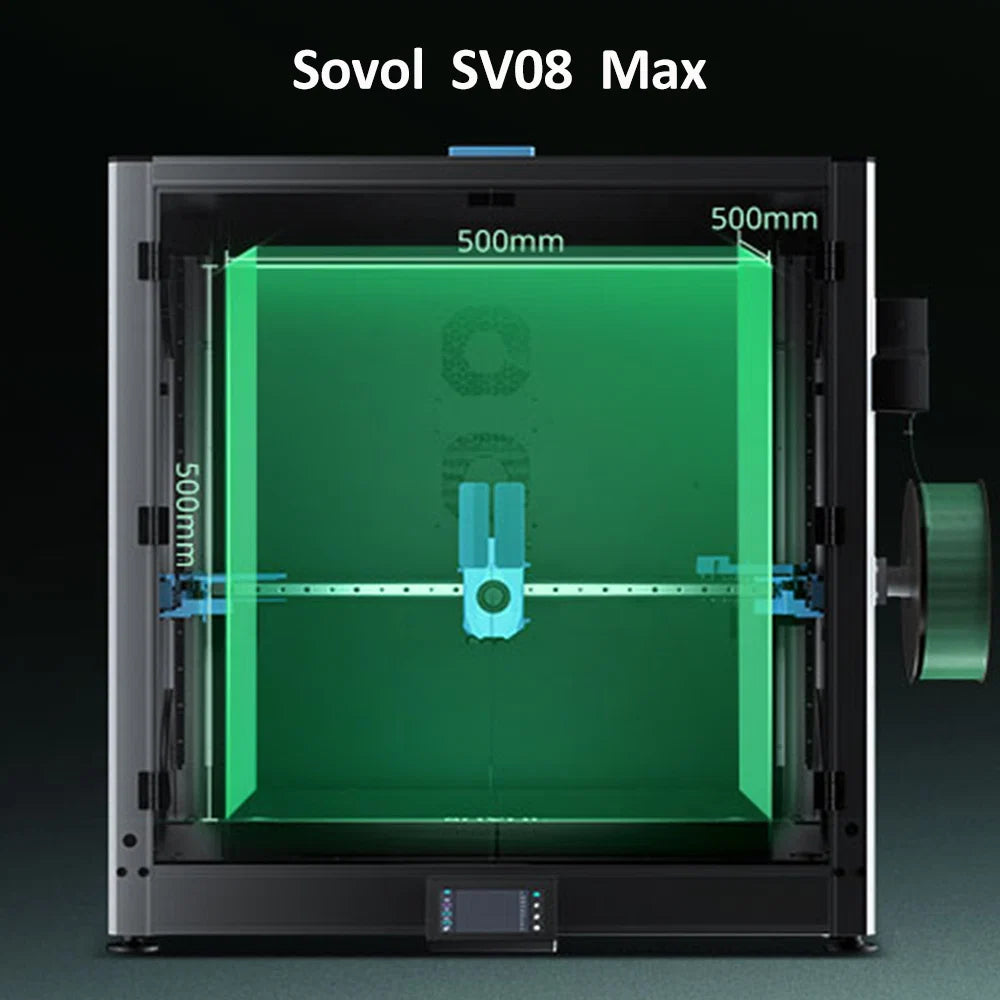
FDM printers offer some of the largest build volumes in the 3D printing industry. Leading models can reach up to 600 x 600 x 500 mm. This size allows users to print bigger parts in one piece, which is not possible with most SLA or SLS printers. SLA and SLS machines usually have smaller build areas, so they cannot match the scale of fdm technology.
- Maximum build volume for top fdm printers: 600 x 600 x 500 mm
- SLA printers: smaller build volume
- SLS printers: smaller build volume, but can print complex shapes
Large build volumes help users create demonstration models, custom panels, and full-size prototypes. Many industries rely on fdm for rapid 3d prototyping when they need to test large designs quickly.
Tip: Printing large parts may cause edge warping or adhesion problems. Users should check nozzle health and adjust cooling fans to improve results.
Functional Prototypes
FDM technology supports the production of functional prototypes and end-use parts across many fields. Companies often print parts in sections and bond them together for large assemblies. Aerospace engineers use lightweight thermoplastics to make cabin components that meet safety standards. Automotive teams print dashboards and engine parts that withstand stress and heat. Medical professionals create surgical tools and planning models with biocompatible plastics.
- Aerospace: Cabin components, military aircraft parts
- Automotive: Dashboards, chassis, suspension, bodywork panels
- Medical: Surgical tools, planning models
- Consumer products: Custom housings, fixtures, functional components
Dash CAE and BAE Systems use fdm to produce motorsport and aircraft parts for testing and production. Large prints sometimes face challenges such as warping, bonding issues, and cooling effects. Careful design and temperature control help reduce these problems during prototyping.
Safety and Ease of Use with FDM
Minimal Post-Processing
FDM printers offer a straightforward post-processing experience. Users often remove supports, sand surfaces, or apply simple treatments. Common steps include cold welding, gap filling, sanding, polishing, painting, and epoxy coating. Support removal is mandatory for FDM, which sets it apart from some other additive methods. Layer lines may appear on prints, but basic sanding or painting can improve surface finish. Studies show that FDM requires less complex post-processing than other additive technologies. This simplicity makes FDM a preferred choice for classrooms and offices. The absence of toxic fumes during printing also enhances safety. Operators can work in well-ventilated spaces without special protective gear. Safety guidelines recommend placing printers on stable, non-flammable surfaces and monitoring the first layers. Regular inspection of wiring and keeping a fire extinguisher nearby further ensures safe additive manufacturing.
User-Friendly Operation
FDM printers rank highest in user-friendliness among additive technologies. The operation is straightforward, with plug-and-play usability and clear instructions. Both beginners and professionals benefit from a large online community and accessible support. The table below compares ease of use and accessibility:
|
Technology |
Ease of Use |
Accessibility |
Notes |
|---|---|---|---|
|
FDM |
High |
High |
Plug-and-play, large user base |
|
SLS |
Moderate |
Moderate |
More complex, higher cost |
Educational institutions and small businesses increasingly adopt FDM printers. The classroom additive market is projected to grow from US$2.2 billion in 2025 to US$4.4 billion by 2032. This growth reflects the popularity of FDM in STEM education and innovative teaching. Users can avoid common errors, such as poor bed adhesion or extruder clicking, by leveling the print bed and cleaning the nozzle. Additive manufacturing with FDM remains accessible, safe, and easy for all experience levels.
FDM printers offer speed, affordability, material flexibility, reliability, safety, and ease of use. Many industries rely on FDM for manufacturing.
- FDM technology captured the largest market share in 2024, showing its popularity in manufacturing.
- About 71% of companies use FDM printers for manufacturing functional parts and tools.
- Airbus uses 3D printing for titanium parts in the A350, reducing weight and cost in manufacturing.
- Boeing includes over 20 3D-printed components in the 787 Dreamliner, making manufacturing parts 50% lighter.
- Oxford Performance Materials creates patient-specific spinal implants, improving manufacturing outcomes.
- The University of Florida’s GRiP group helps students design 3D-printed prosthetics, advancing manufacturing in education.
FAQ
What makes FDM 3d printing a good choice for beginners?
FDM 3d printing offers easy setup and simple operation. Many users find the process straightforward. The technology supports a wide range of 3d materials for different printing needs.
How does 3d printing with FDM compare in cost to other methods?
FDM 3d printing provides a low cost-to-size ratio. Users can print large 3d objects without high cost. This makes 3d printing accessible for many projects and industries.
Can 3d printing with FDM support customization for different projects?
3d printing with FDM allows high customization. Users can adjust 3d models for unique shapes. This flexibility helps with 3d printing of prototypes and custom 3d parts.
Tip: 3d printing with FDM supports both rapid prototyping and full-scale 3d production. Users can achieve customization and efficiency in every 3d project.
|
Feature |
FDM 3d Printing |
Other 3d Printing Methods |
|---|---|---|
|
Customization |
High |
Moderate |
|
Printing Speed |
Fast |
Slower |
|
Printing Cost |
Low |
Higher |
