
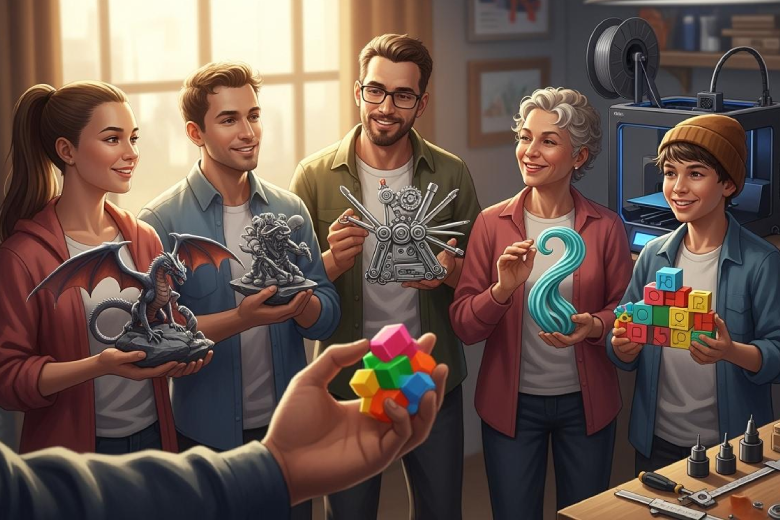
What drives someone to turn a simple idea into a physical reality using 3D printing? Many hobbyists discover unexpected wins when they create models, art pieces, or practical solutions. Their motivations often include:
- Building detailed models for hobbies or collections
- Designing unique jewelry and home decor
- Printing gaming miniatures to personalize gameplay
- Making educational tools for teaching
- Repairing or replacing broken parts at home
3D Printed Projects often begin with curiosity or a need, leading to creative solutions that surprise even their creators.
Key Takeaways
- 3D printing allows hobbyists to solve everyday problems by creating custom parts and organizers, saving money and reducing waste.
- Hobbyists can turn their passion into profit by selling unique items online, starting small, and learning from each sale.
- Joining online communities provides support and resources, helping hobbyists troubleshoot issues and share creative ideas.
- Embracing trial and error is essential; each failed print offers valuable lessons that lead to improved skills and innovative designs.
- 3D Printed Projects encourage creativity and problem-solving, allowing hobbyists to transform simple ideas into practical solutions.
Everyday 3D Printed Projects
Fixing Appliance Parts
Many hobbyists use 3D printing to solve everyday problems at home. They often repair or replace broken parts for appliances that are hard to find or expensive to buy. For example, a person might design a new knob for a washing machine or a missing clip for a vacuum cleaner. These solutions save money and reduce waste.
Hobbyists also create items that help organize their homes. They print custom organizers for tools, cable holders, and drawer dividers. These items fit perfectly in their spaces and make daily life easier. Some people design refillable soap dispensers to cut down on plastic waste. Others print car console organizers to keep essentials in place while driving.
Many hobbyists say that 3D Printed Projects help them live and work better. They enjoy making customized items for their homes and families. These projects often bring ideas to life and encourage creativity.
Here is a table showing some creative uses of 3D printing for everyday problems:
|
Item Type |
Description |
|---|---|
|
Tool Organizers |
Custom organizers for tools that fit perfectly, reducing clutter and saving time. |
|
Refillable Soap Dispensers |
Eco-friendly dispensers that can be reused, cutting down on plastic waste. |
|
Dual Remote Stand |
Keeps remotes organized and accessible, preventing them from getting lost. |
|
Bathroom Phone Stand |
Allows hands-free use of phones while performing tasks like brushing teeth. |
|
Car Console Organizers |
Turns chaotic car consoles into organized storage for essentials. |
|
Drawer Dividers |
Custom-fit organizers that help sort various items, eliminating junk drawers. |
|
Cable Holders |
Tools to manage and organize tangled cables, reducing frustration. |
|
Insect Trap |
A reusable trap designed to catch pests without harsh chemicals, making pest control easier. |
When hobbyists face technical challenges, they use problem-solving skills. For example, if the printer runs out of filament, they change the filament and restart the print. If the filament gets tangled, they untangle it before printing again. These steps show resourcefulness and patience.
Custom Tools for Hobbies
3D printing allows hobbyists to create custom tools for their favorite activities. Many board game fans design inserts for games like Codenames, Pandemic, and Ticket to Ride. These inserts help organize cards, tokens, and pieces, making setup and cleanup faster. Some people upgrade their games with new components, such as organic virus shapes for Pandemic or themed tokens for Cat Lady.
Other hobbyists design gameplay aids. Tile frames for DorfRomantik and player screens for No Thanks improve the gaming experience. People also print organizers and trays for easier game storage and setup. These custom tools make games more enjoyable and personal.
Hobbyists use 3D Printed Projects to solve problems in other hobbies as well. They create custom holders for tools, bag hangers to keep bags off the floor, and personalized cable organizers. These projects show creativity and a desire to improve daily life.
- Organizing tools with custom holders and inserts
- Replacing lost game pieces for board games
- Creating organizers and card trays for easier game setup and storage
- Designing custom miniatures and spell trackers for tabletop RPGs
- Managing cables with personalized cable organizers
- Making custom bag hangers
Hobbyists often measure the impact of their projects by how much they improve home organization and family interactions. They enjoy seeing their ideas become real objects that help in daily life.
3D Printed Projects encourage people to try new things and solve problems in creative ways. Each project teaches new skills and brings a sense of achievement.
From Hobby to Business
Profitable Side Hustles
Many hobbyists have found ways to earn money with 3D printing. They often start by making items for themselves or friends. Over time, they see that others want these items too. For example, one Reddit user began by designing custom cookie cutters for family events. Soon, neighbors and local bakeries asked for more. He opened an online shop and started selling his designs.
Some people use online marketplaces like Etsy or eBay. They sell game pieces, phone stands, or home organizers. These platforms help hobbyists reach customers around the world. Many sellers say that clear photos and good customer service help their shops grow.
Tip: Hobbyists recommend starting small and learning from each sale. They suggest keeping track of costs and time to set fair prices.
Entrepreneurial Journeys
Turning a hobby into a business takes effort and planning. Nicolas, a hobbyist from France, started by printing replacement parts for his bike. Friends noticed his work and asked for help with their own repairs. Nicolas saw a business opportunity. He created a website and offered custom 3D printed parts for bikes and scooters.
Many entrepreneurs face challenges. They must learn about marketing, shipping, and customer feedback. Some join online groups to share advice and support. These communities help new business owners avoid common mistakes.
Here is a table showing steps hobbyists often take when turning 3D printing into a business:
|
Step |
Description |
|---|---|
|
Start Small |
Sell to friends or local buyers first |
|
Use Online Markets |
List products on Etsy, eBay, or similar sites |
|
Build a Website |
Create a simple site to showcase products |
|
Join Communities |
Get advice and support from other hobbyists |
|
Track Expenses |
Monitor costs to keep the business profitable |
3D Printed Projects can lead to new careers and business ideas. Many hobbyists say that the journey teaches them valuable skills for life.
Community Success Stories
Online Sharing and Support
Online communities play a key role in helping hobbyists succeed with 3D printing. Many people join groups on Reddit, Facebook, and Discord servers to ask questions and share their progress. These platforms allow users to post photos, troubleshoot problems, and celebrate their finished projects. Members often give advice and encouragement, which helps beginners feel welcome.
Several websites offer large collections of 3D models and resources. Popular platforms include:
- YouMagine: Offers thousands of open source designs for high-quality prints.
- GrabCAD: Features a huge library of files created by a global community.
- XYZprinting 3D: Provides access to many models for different types of printers.
- 3DShook: Gives subscribers access to a gallery of tested files.
- NIH 3D Print Exchange: Shares free files for science and education.
- 3D Export: Sells premium files and offers some free models.
- Sketchfab: Hosts user-generated 3D models for many uses.
- 3D Warehouse: Specializes in architecture and product design models.
Hobbyists also use slicing software like Cura and PrusaSlicer, and modeling tools such as Tinkercad and Fusion 360. These resources help users prepare and design their own 3D Printed Projects.
|
Resource Type |
Examples |
Description |
|---|---|---|
|
Slicing Software |
Cura, PrusaSlicer |
Tools to prepare 3D models for printing by slicing them into layers. |
|
3D Modeling Software |
Tinkercad, Fusion 360 |
Software for designing 3D models, with options for beginners and advanced users. |
|
Online Communities |
Reddit, Facebook Groups, Discord Servers, Manufacturer Support Forums |
Platforms for sharing tips, troubleshooting, and receiving support from other 3D printing enthusiasts. |
|
STL File Repositories |
Thingiverse, Printables.com, Cults3D, MyMiniFactory |
Websites offering a variety of pre-made 3D models for printing, suitable for beginners. |
|
Recommended Printers |
Creality Ender 3 V2, Prusa Mini+, Anycubic Kobra Go |
Suggested beginner-friendly 3D printers known for their support and ease of use. |
Group Projects and Collaboration
Collaboration brings hobbyists together to work on bigger projects. The Voron community is a strong example. Members share guides, tips, and open-source manuals. This teamwork helps everyone learn new skills and solve problems. People can join group builds, where each person prints a part and then assembles the final product together.
Many projects become popular because they are shared widely. For example, open-source printer upgrades and custom tools often spread through forums and social media. These group efforts make advanced 3D printing more accessible. They encourage more people to try new ideas and improve their results.
Community support helps hobbyists overcome challenges and achieve better outcomes. Sharing knowledge and working together leads to more creative and successful 3D Printed Projects.
Lessons from 3D Printing Wins
Embracing Trial and Error
Hobbyists often learn the most from their mistakes. They see each failed print as a chance to improve their skills. Many find that designing and printing models takes practice. They must think in three dimensions and plan each step. The table below shows common lessons learned through trial and error:
|
Lesson Learned |
Description |
|---|---|
|
Thinking in 3D |
Designing models and printing them is a skill that grows with experience. |
|
Model Size |
Estimating size, time, and filament prevents wasted effort. |
|
Supports Needed |
Using supports helps with complex shapes and overhangs. |
|
Brim Adhesion |
Testing bed adhesion ensures prints stick and finish well. |
Persistence plays a key role in success. Josef Prusa, a well-known maker, spent months solving problems with his printer. He tried many prototypes before he found a solution. His story shows that patience and steady effort lead to breakthroughs.
Hobbyists also learn to avoid common mistakes. They calibrate their printers, update software, and check materials before starting. They know that giving up too soon means missing out on valuable lessons.
Tip: Treat every failed print as a step toward mastery. Each mistake brings new knowledge.
Inspiring Innovation
Innovation often starts with curiosity. Hobbyists notice small problems in daily life, like messy cables or loose handles. They design custom solutions to fix these issues. Many find inspiration by joining online groups or attending maker fairs. These communities spark new ideas and encourage creative thinking.
Hobbyists do not fear failure. They see it as part of the creative process. They try new designs, learn from what does not work, and improve their projects. This cycle of testing and refining leads to better results.
Successful 3D Printed Projects often come from careful planning and a willingness to try again. Hobbyists choose the right materials, monitor their printers, and finish their models with care. They share their results and help others learn, building a strong community.
- Notice everyday problems and design solutions.
- Join groups to share ideas and get feedback.
- Keep improving with each new project.
Stories like Jonas Dalidd’s 3D printed catapult show that anyone can achieve unexpected wins. He turned a simple idea into a competition-winning project and even found ways to sell his design. Many hobbyists help the community grow by sharing their experiences at events and online. This sharing leads to new friendships and business opportunities. New hobbyists can start by choosing a printer, picking materials, learning design software, and gathering post-processing tools. 3D Printed Projects offer endless chances for creativity and learning. Readers can try new ideas and share their own stories to inspire others.
FAQ
What is the best 3D printer for beginners?
Many hobbyists recommend the Creality Ender 3 V2 or Prusa Mini+. These printers offer easy setup and strong community support. Users find them reliable for learning basic skills and printing simple projects.
How do hobbyists find free 3D models?
Hobbyists visit websites like Thingiverse, Printables.com, and MyMiniFactory. These sites provide thousands of free models for download. Users can search by category or popularity to find designs that match their interests.
Can 3D printing help save money at home?
3D printing allows users to create replacement parts and custom organizers. Many people print items like appliance knobs or drawer dividers. These solutions often cost less than buying new products.
What software do hobbyists use for designing models?
Most hobbyists use Tinkercad for simple designs. Fusion 360 offers advanced features for complex projects. Both programs help users create and edit 3D models before printing.
How do online communities support 3D printing hobbyists?
Online groups on Reddit and Facebook offer advice, troubleshooting tips, and encouragement. Members share photos, answer questions, and help others solve problems. These communities make learning easier and more enjoyable.
